Customer Advisory Boards That Actually Generate New Revenue

A practical guide to structuring, recruiting, and facilitating Customer Advisory Boards (CABs) that consistently produce actionable insights and new strategic revenue opportunities


I. Introduction: Why Most CABs Underperform

Most Customer Advisory Boards fail. Not because companies don’t invest in them, but because they fundamentally misunderstand what they are.

In practice, most CABs devolve into relationship theater:

  • Executive dinners disguised as strategy sessions
  • Polished presentations followed by polite feedback
  • “Great conversation” with no measurable business outcome

The result is predictable: high effort, low impact.

The failure modes are consistent across industries:

  • Discussions lack structure and strategic intent
  • Participants are misaligned (too senior to be candid, too tactical to be strategic, or too agreeable to challenge)
  • Outputs are disconnected from revenue, product strategy, or growth initiatives
  • Insights are captured but never operationalized

This is not a CAB problem. It is a design problem.

The reframe is critical:

A Customer Advisory Board is not an event. It is strategic growth infrastructure.

When designed correctly, CABs become:

  • Early warning systems for churn and competitive risk
  • Engines for uncovering unmet customer needs
  • Platforms for co-creating new revenue streams

The difference between underperforming CABs and high-impact ones is not effort, it is intentional architecture.


Chart 1 – The Customer Advisory Board (CAB) Maturity Model.

The difference becomes clear when you look at how CABs actually evolve. Most organizations believe they are operating strategically—but in reality, they remain stuck in early maturity stages. This is shown clearly above in Chart 1 – The Customer Advisory Board (CAB) Maturity Model.

II. Defining the Purpose: From Feedback to Revenue Discovery

The most important decision you make about a CAB happens before the first invitation is sent:

What is this board designed to produce?

Most organizations default to “gathering feedback.”
That is necessary—but insufficient.

World-class CABs are anchored to three explicit business outcomes:

1. Retention Protection

Identify early signals of dissatisfaction, friction, or competitive vulnerability before they appear in lagging indicators like churn.

2. Expansion Discovery

Surface new use cases, unmet needs, and adjacent opportunities that customers are already willing to pay for—but that the organization has not yet productized.

3. Strategic Foresight

Understand how customer priorities, markets, and expectations are evolving—often ahead of internal awareness.

This is where most organizations miss the real opportunity.
Customers don’t hand you fully formed strategy—they provide signals: friction, workarounds, and emerging needs.

“Customers don’t hand you strategy—they hand you signals.”

The role of a well-designed CAB is to convert those signals into:
· Pipeline influence
· Product roadmap prioritization
· New monetizable offerings

Chart 2 - The Customer Advisory Board Value Pyramid

This dynamic becomes clear in Chart 2 – The Customer Advisory Board (CAB) Value Pyramid.

The difference is not in how much feedback you collect—it’s how far you take it.
High-performing CABs systematically move from raw input to monetizable opportunity.


III. Member Selection: Precision Over Prestige

The instinct in building a CAB is to prioritize brand names and seniority.

This is a mistake.

Chart 3 - The Customer Advisory Board Composition Matrix

The effectiveness of a CAB is driven not by who looks impressive on the invitation list—but by who contributes meaningful perspective.  Chart 3 illustrates the best cross-sectional composition of a Customer Advisory Board (CAB).

Ideal Composition

High-performing CABs deliberately balance four archetypes:

  1. Daily Operators
    Experience the product or service in real workflows and understand friction points
  2. Strategic Buyers
    Understand long-term direction, investment priorities, and executive constraints
  3. Executive Innovators / Challengers
    Push boundaries, question assumptions, and introduce non-obvious perspectives
  4. Key Market Influencers and Key Opinion Leaders

Shape or create sentiment, shape perceptions, create positive and negative market perceptions

Segmentation Matters

CABs should be intentionally structured across:

  • Revenue tiers (Platinum, Gold, Growth)
  • Industry verticals
  • Lifecycle stages (new, mature, at-risk)

What to Avoid

  • Over-indexing on “friendly” customers
  • Overrepresentation from a single segment
  • Homogeneous thinking environments

Design Principle: Constructive Tension

The most valuable CABs are not harmonious—they are productive tension environments.

When customers respectfully challenge:

  • Your assumptions
  • Each other’s perspectives
  • Industry norms

…you unlock deeper insight.

Without that tension, you get validation.
With it, you get discovery.


IV. Structuring the CAB: Architecture That Drives Outcomes

World-class CABs operate on a repeatable system, not ad hoc meetings.
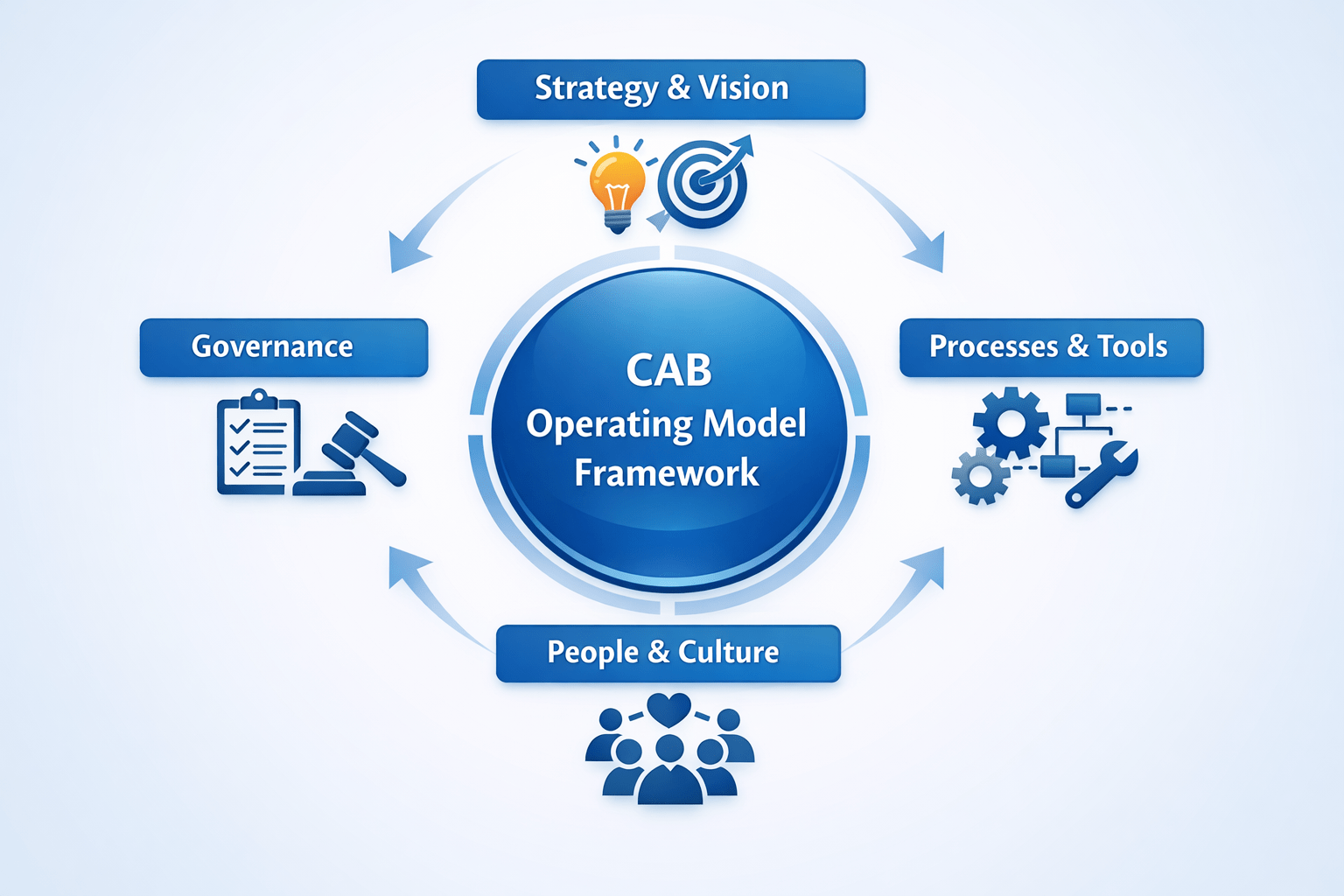
Chart 4 - The Customer Advisory Board Operating Model Framework

Most organizations approach CABs as discrete events.

High-performing CABs are not events—they are systems.

The difference is a structured operating loop that continuously converts conversations into action.

As shown in Chart 4, The Customer Advisory Board (CAB) Operating Model Framework, the optimal operating model definition.

Cadence

  • 2 executive-level sessions annually
  • Quarterly virtual working sessions focused on specific themes

Pre-Work (Critical, Often Missing)

The quality of the session is determined before it begins.

Effective pre-work includes:

  • Insight briefs summarizing known trends and hypotheses
  • Data snapshots (usage patterns, churn signals, adoption gaps)
  • Clearly articulated questions requiring customer input

Without pre-work, CABs default to reactive conversation.
With it, they become strategic working sessions.

Defined Roles

  • Executive Sponsor – signals importance and alignment
  • Facilitator – neutral, structured, not sales-driven
  • Insight Capture Lead – ensures outputs are usable, not anecdotal

Agenda Design

  • 30% validation of known insights
  • 70% exploration and co-creation

Most CABs invert this ratio—and lose value as a result.

The Operating Loop

A high-performing CAB follows a continuous lifecycle:

  1. Define hypotheses
  2. Select members
  3. Distribute pre-work
  4. Facilitate session
  5. Extract insights
  6. Operationalize
  7. Close the loop with customers

The final step—closing the loop—is where trust compounds and participation quality improves over time.


V. Facilitation Techniques That Unlock Real Insight

The difference between a good CAB and a transformational one lies in facilitation quality.

Traditional approaches—open Q&A, roundtable updates—produce surface-level feedback.

Elite facilitation drives depth.

Techniques That Work

  • Scenario-Based Exploration
    “What would have to be true for this to become a top priority?”
  • Forced Prioritization
    Customers rank trade-offs, revealing true value drivers
  • Structured Breakouts with Opposing Views
    Designed to surface conflict and contrast

What to Avoid

  • Vendor-led presentations dominating time
  • Passive “round-robin” sharing
  • Over-polished narratives that suppress honesty

The Core Skill: Extracting Latent Needs

Customers articulate:

  • Symptoms
  • Workarounds
  • Frustrations

They rarely articulate:

  • Root causes
  • Systemic gaps
  • Monetizable opportunities

Your role is to move the conversation down the insight depth curve:

  • Opinions → Feedback → Pain Points → Root Causes → Unmet Needs

The final level is where revenue is discovered—and where most organizations never reach.

Chart 5 - The Customer Advisory Board Insight Depth Ladder

Most CABs never get past opinions and surface feedback. The real value emerges only when you push into root causes and unmet needs—where revenue opportunities actually exist. Chart 5 brings this to life – The Customer Advisory Board (CAB) Insight Depth Ladder.


VI. Converting Insights into Revenue Opportunities

This is where CABs shift from advisory to value creation engines.

Most organizations stop at “insight.”

World-class organizations convert insight into commercial outcomes.

Chart 6 - The Customer Advisory Board Revenue Creation & Conversion Funnel

This is where CABs either create value—or stall. The organizations that win treat insight as the starting point of a structured revenue conversion system. This is shown clearly above in Chart 6 – The Revenue Conversion Funnel.

The Conversion Framework

Insight → Theme → Opportunity → Business Case

Categorizing Opportunities

  • New product features
  • New services or offerings
  • Pricing and packaging innovations

Quantifying Value

Each opportunity should be assessed based on:

  • Willingness to pay
  • Frequency and consistency of need
  • Validation across multiple customers

This eliminates anecdotal bias and creates investment-grade opportunities.

When done correctly, CAB outputs directly influence:

  • Product investment decisions
  • Go-to-market strategies
  • Revenue forecasting

VII. Operationalizing CAB Outputs (Where Most Fail)

This is the most common breakdown point.

Insights are generated—but not embedded.

Chart 7 – Customer Advisory Board (CAB) to Execution System Map.
  • This is the single biggest failure point for most CABs. Without a clear system to translate insight into execution, even the best ideas never reach revenue. This dynamic becomes clear in Chart 7 – CAB-to-Execution System Map.

To avoid this, CAB outputs must integrate into core systems:

Integration Points

  • Product roadmap governance
  • Sales plays and enablement
  • Customer success planning

Required Infrastructure

  • CAB Insight Tracker (owners, timelines, status)
  • Executive reporting cadence
  • Cross-functional accountability

Metrics Alignment

Tie CAB outputs to:

  • Net Revenue Retention (NRR)
  • Expansion revenue
  • Time-to-market improvements

Without operationalization, CABs are episodic.
With it, they become systemic growth drivers.


VIII. Measuring CAB Effectiveness

If CABs are strategic assets, they must be measured accordingly.

Chart 8 - The Customer Advisory Board (CAB) ROI Dashboard

What gets measured gets funded—and scaled. When CABs are tied to tangible inputs and outputs, they consistently demonstrate disproportionate ROI. Chart 8 illustrates The Customer Advisory Board (CAB) ROI Dashboard that measures the value of the overall value of conducting the CAB (cost, revenue).

Leading Indicators

  • Insight quality (depth, novelty, actionability)
  • Participation engagement and candor

Lagging Indicators

  • Revenue influenced or created
  • Retention improvements
  • Expansion rates

The CAB ROI Model

Inputs:

  • Time
  • Cost
  • Executive involvement

Outputs:

  • Revenue generated
  • Churn avoided
  • Pipeline influenced

When measured properly, CABs consistently demonstrate outsized ROI relative to cost.


IX. Case Example: CAB → Insight → Revenue Outcome

Context:
A global enterprise organization was experiencing strong customer satisfaction but plateauing growth.

CAB Insight:
Customers revealed a consistent but previously unarticulated need:
They were solving adjacent problems outside the platform using fragmented tools.

Action:
Through structured CAB sessions, the organization:

  • Identified common patterns across customers
  • Defined a new bundled offering addressing the adjacent use case
  • Validated willingness to pay across multiple participants

Result:

  • New revenue stream launched within 6 months
  • Significant increase in expansion revenue
  • Improved retention due to increased platform dependency

The insight was not hidden—it was simply never structured, surfaced, or validated.


X. Common Pitfalls and How to Avoid Them

Even well-intentioned CABs fail for predictable reasons:

Chart 9 - The Customer Advisory Board (CAB) Failure Modes vs. Best Practices

These failure patterns are not random—they are systemic and repeatable. The organizations that outperform are the ones that deliberately design against them. Shown in Chart 9, The Customer Advisory Board (CAB) Failure Modes vs. Best Practices, demonstrated the operating principles for managing a CAB.

Pitfalls

  • Treating CABs as one-time events
  • Lack of executive alignment and ownership
  • Failure to close the loop with participants
  • Over-reliance on anecdotal input

Best Practices

  • Establish CABs as ongoing strategic programs
  • Ensure executive sponsorship and cross-functional integration
  • Communicate outcomes and actions back to participants
  • Validate insights across multiple data points

Avoiding these pitfalls is less about effort—and more about discipline and design.


XI. The Future of CABs: From Advisory to Co-Creation Ecosystems

CABs are evolving.

Chart 10 – The Evolution of Customer Advisory Boards (CABs).

CABs are no longer periodic advisory forums—they are becoming continuous growth engines.
Organizations that recognize this shift early will outpace those still operating in legacy models. Chart 10 brings this to life – The Evolution of Customer Advisory Boards (CABs).

The traditional model—periodic advisory sessions—is giving way to continuous, integrated ecosystems.

Emerging Trends

  • Always-on digital CAB environments
  • AI-assisted insight synthesis across conversations
  • Customer co-innovation labs

The Evolution Path

Advisory → Insight Engine → Co-Creation Platform → Revenue Ecosystem

In this future state, CABs are no longer a supporting function.

They become a core component of customer-led growth strategy.


Closing Perspective

Most organizations search for growth externally:

  • New markets
  • New products
  • Acquisitions

Yet some of the most valuable opportunities already exist within the current customer base.

Chart 11 – Companies With, and Without Revenue Generation CABs

The difference between companies that unlock this value—and those that don’t—is not incremental. It is structural.

It comes down to whether the CAB is designed to generate revenue—or simply to listen. This is shown clearly above in Chart 11 – Companies With, and Without Revenue Generation CABs

The challenge is not access to customers.
It is the ability to systematically extract, interpret, and act on what they are already telling you.

When designed and managed correctly, Customer Advisory Boards become:

  • A strategic intelligence system
  • A revenue discovery engine
  • A durable competitive advantage

And in a market where differentiation is increasingly difficult, that advantage compounds.

About the Author

Steven Jeffes is a Customer Experience and Customer Strategy executive focused on one outcome: turning customer insight into new revenue.

Over a 40+ year career, he has worked with or consulted for organizations including Accenture, IBM Global Services, PricewaterhouseCoopers, Cox Automotive, and INEOS Automotive, and led CX, CRM, and customer strategy initiatives for global brands such as American Express, Microsoft, Verizon, Pfizer, Capital One, Toyota, Ritz-Carlton, Amazon, and Delta Airlines.

While most companies treat Customer Advisory Boards as feedback forums, Steven designs them as revenue engines—structured systems that uncover unmet needs, validate demand, and convert customer conversations into new products, services, and expansion opportunities.

His work has helped organizations identify and activate hundreds of millions of dollars in new revenue by transforming how they listen to—and act on—their customers.

He partners with executive teams to build customer-led growth engines, aligning Customer Success, Product, Sales, and Marketing around one principle:

Customers will tell you where your next revenue opportunity is—if you know how to listen.

Connect: www.stevenjeffes.com | stevenjeffes@gmail.com, 📞 – 518-339-5857

Customer-Driven Revenue Discovery

How Customer Advisory Boards Reveal New Revenue Streams Hidden in Your Existing Customer Base

Executive Summary

Many companies search for growth through new markets, acquisitions, or product expansion. Yet some of the most valuable revenue opportunities already exist inside their current customer base.

When organizations create structured environments where customers openly discuss challenges, future needs, and industry changes, entirely new revenue opportunities often emerge quickly.

Across multiple Customer Advisory Board (CAB) programs I have designed and facilitated, these conversations have uncovered more than $500 million in previously unidentified revenue opportunities. Additional significant revenue discovery is almost guaranteed in future customer advisory boards given the approach I am about to lay in this and future CAB topic series blog articles.

1. The Untapped Revenue Inside Your Customer Base

Most organizations pursue growth through new products, new markets, or acquisitions. While these strategies can generate results, they often overlook one of the largest opportunities already available: unmet customer needs.

Over the course of facilitating Customer Advisory Boards and executive focus groups across more than fifteen organizations, structured customer discussions have repeatedly surfaced revenue opportunities that were invisible in company data.

The discovery process is illustrated in Graphic 1: The $500M+ Customer Insight Funnel.

Graphic 1 – The $500M+ Customer Insight Funnel

Graphic 1 illustrates how structured customer conversations reveal operational pain points and unmet needs. These insights move through a progression—from identifying unmet demand to validating opportunity areas and ultimately developing new revenue streams. Over time, organizations that systematically capture these insights convert customer conversations into a powerful engine for innovation and growth.

2. The Revenue Discovery Gap

If the opportunity exists within the customer base, why do many organizations fail to discover it? The answer lies in what can be described as the Revenue Discovery Gap.

Most organizations rely on three sources of insight:
• Analytics data – reveals past behavior but rarely unmet needs
• Sales conversations – focused on tactical issues
• Internal innovation sessions – based on internal assumptions

These blind spots create what can be described as the Revenue Discovery Gap, illustrated in Graphic 2.

Graphic 2 – The Revenue Discovery Gap

Graphic 2 highlights the difference between traditional insight sources and direct customer engagement. Analytics and internal brainstorming provide useful information but rarely uncover the deeper operational challenges customers face. Customer Advisory Boards close this gap by bringing customers directly into strategic conversations about future needs.

3. How Customer Advisory Boards Unlock New Revenue

Customer Advisory Boards create a structured forum where organizations engage directly with thoughtful customers about industry trends, operational challenges, and future needs.

The strategic value created through these conversations is illustrated in Graphic 3: The CAB Value Pyramid.

Graphic 3 – The CAB Value Pyramid

Graphic 3 illustrates how CAB programs create value across three layers. The foundation is customer insight, where structured dialogue reveals unmet needs. Those insights drive innovation and revenue creation, which ultimately leads to deeper strategic partnerships where customers become collaborators in shaping future solutions.

Real Examples: Revenue Generators That Emerged From CAB Conversations

Example 1 – Automotive Concierge Ownership Service

During a Customer Advisory Board discovery session with a group of vehicle owners and fleet customers, I asked a simple question that often reveals entirely new opportunities:

“What services would you pay for — or pay more for — that we don’t currently offer?”

The room quickly began discussing the complexity of managing every aspect of vehicle ownership.

Customers described the number of tasks required throughout a vehicle’s lifecycle:

• Scheduling routine maintenance
• Coordinating service appointments
• Arranging transportation while the vehicle is being serviced
• Managing repairs and insurance claims
• Organizing detailing and upkeep
• Transporting vehicles between locations
• Dealing with unexpected breakdowns or logistical issues

One customer summarized the frustration succinctly:

“Owning the vehicle is the easy part. Managing everything around it is the real headache.”

Several CAB members then converged on the same idea: they would gladly pay a reasonable premium for a fully managed automotive concierge service that would handle every operational aspect of vehicle ownership.

The proposed service would function as a single point of coordination for the entire vehicle lifecycle, managing:

• Maintenance scheduling and service logistics
• Detailing and vehicle care
• Transportation to remote or alternate locations
• Insurance and repair coordination
• Lifecycle tracking and vehicle replacement planning

In essence, customers were asking for a “vehicle ownership management service” where they never had to think about the operational details of maintaining their vehicle.

Multiple CAB participants emphasized that the service would not only save time but also reduce stress and uncertainty associated with vehicle ownership.

Several customers indicated they would be willing to pay $1,000–$2,500 per year per vehicle for such a service if it were executed reliably.

Across a large installed customer base, a premium concierge program like this could realistically yield $50–$120 million in new service revenue while simultaneously increasing customer loyalty and retention.

The insight did not emerge from product analytics, surveys, or internal brainstorming.

It emerged from a structured conversation among customers describing the real-world friction they experience every day.


Example 2 – Veteran Affinity Credit Card

In another Customer Advisory Board discovery session involving credit card customers, participants were discussing the emotional connection consumers increasingly want to feel with the brands they support.

Several CAB members raised the idea of financial products tied to causes that customers deeply care about.

One participant suggested an idea that quickly gained traction among the group:

A credit card specifically designed to support U.S. veterans.

Customers explained that many Americans actively look for ways to support veterans and veteran-focused organizations but often lack simple, everyday mechanisms to do so.

The CAB participants proposed a credit card that would direct a portion of card proceeds — such as transaction fees or annual membership fees — to vetted veteran support organizations.

The idea resonated strongly across the group for several reasons.

First, it allowed cardholders to support veterans through everyday spending rather than requiring separate charitable contributions.

Second, it provided a simple way for consumers to align their financial behavior with causes they care about.

Several CAB members indicated they would gladly pay a premium annual fee for such a card, viewing the additional cost as a meaningful way to contribute to veteran causes.

Participants also pointed out that no major financial institution had yet created a credit card explicitly structured around supporting veterans in this way.

Strategic Product Design

The financial institution ultimately designed a new credit card that maximized the benefits available under the Servicemembers Civil Relief Act (SCRA) and the Military Lending Act (MLA).

The product incorporated benefits such as waived annual fees, enhanced rewards programs, charitable contributions to veteran organizations, and other military-focused features that made the card uniquely attractive to veterans, active-duty service members, and the millions of Americans who support them.

By aligning the product design with existing military consumer protection frameworks, the institution was able to create a differentiated financial product while maintaining full regulatory compliance.

This meant the concept could serve not only as a new product offering but also as a powerful market differentiator capable of attracting an entirely new audience of customers motivated by purpose-driven financial products.

CAB participants suggested that the product could appeal not only to veterans and military families but also to the millions of Americans who actively support veteran-focused initiatives.

With the right positioning and partnerships with credible veteran organizations, such a product could realistically yield $30–$75 million in new annual revenue through a combination of annual fees, transaction volume, and expanded card adoption.

More importantly, it would position the issuing financial institution as a brand aligned with a cause that resonates deeply with many consumers.

Once again, the idea did not originate inside the company.

The idea and new revenue stream came directly from customers when they were invited to participate in shaping the future of the products they use.


Example 3 – Predictive Maintenance & Failure Prevention Services

During a Customer Advisory Board discussion involving enterprise equipment operators and fleet managers, participants began describing a common operational frustration: unexpected equipment failures that created costly downtime and disrupted operations.

Several CAB members explained that while existing products performed well, they lacked advanced tools that could predict failures before they occurred.

Customers suggested that if the company could combine equipment telemetry, operational data, and predictive analytics into a monitoring service, they would gladly pay a subscription fee for predictive maintenance insights that would help them prevent downtime.

The proposed solution included:

• Continuous monitoring of equipment performance data
• Predictive alerts for potential failures
• Maintenance scheduling recommendations
• Performance optimization insights across fleets or facilities

Customers emphasized that avoiding even a single major failure could save tens or hundreds of thousands of dollars in operational disruption.

Because of that, they viewed the service not as a cost, but as an operational insurance policy.

Several CAB members indicated they would be willing to pay $500–$2,000 per asset annually for such a service.

When applied across large installed equipment bases, this type of predictive maintenance platform could yield $40–$80 million in annual recurring revenue while simultaneously improving customer uptime and satisfaction.

In many industries, the shift from reactive support to predictive service has become one of the fastest-growing sources of new service revenue.


Example 4 – Industry Benchmarking & Performance Intelligence Platform

In another Customer Advisory Board session involving senior leaders from multiple organizations within the same industry, participants began discussing a challenge many of them shared.

While each company collected extensive internal performance data, they had very little visibility into how their operations compared to industry peers.

CAB participants expressed strong interest in an industry benchmarking and performance intelligence platform that could provide anonymized insights across participating organizations.

The concept included:

• Aggregated industry performance benchmarks
• Operational efficiency comparisons
• Market trend insights across participating companies
• Predictive analytics identifying emerging competitive risks

Customers explained that access to credible benchmarking data would help them make better strategic decisions, justify internal investments, and identify performance gaps earlier.

Several participants suggested they would gladly pay for such insight if it were provided by a trusted industry partner.

CAB members proposed a subscription-based benchmarking service available to participating organizations.

Early estimates from CAB participants suggested companies would pay between $50,000 and $150,000 annually for access to credible industry benchmarking intelligence.

If adopted across even a modest number of customers within the ecosystem, such a platform could yield $25–$60 million in recurring annual revenue, while positioning the provider as a trusted strategic intelligence partner within the industry.

In addition to the direct revenue opportunity, these types of platforms often strengthen customer relationships because they provide ongoing strategic insight rather than simply operational support.

4. The Revenue Discovery Framework

Organizations that consistently uncover meaningful revenue opportunities through CAB programs typically follow a structured process.

Step 1 – Identify the Right Customers
Step 2 – Curate the Advisory Board
Step 3 – Design the Discussion
Step 4 – Facilitate Discovery

Step 4 – Facilitate Discovery (deeper dive, sample content of next blog topic on CABs)

Even with the right participants and discussion topics, the role of facilitation remains critical. The quality of insights generated during a Customer Advisory Board (CAB) session depends heavily on whether participants feel comfortable sharing candid perspectives—even when that feedback may challenge existing products, services, or strategies.

To create an environment where honest dialogue can occur, I begin every CAB session by establishing a simple set of ground rules designed to encourage openness, respect, and constructive debate.

CAB Ground Rules for Productive Discovery

Ground Rule #1 – Radical Honesty Is Expected
All ideas and comments are welcome, no matter how negative they may be. If we are going to improve, we need complete honesty. I often remind participants of an old saying: only your best and most trusted friend would tell you that you have a dirty face or bad breath. The same principle applies here—honest feedback is a sign of trust.

Ground Rule #2 – Candor Will Never Be Penalized
No feedback, regardless of its severity, will ever cause leadership to view participants negatively. On the contrary, those who share completely honest perspectives will be valued as trusted advisors to the brand.

Ground Rule #3 – Challenge Assumptions
Participants are encouraged to speak openly and challenge assumptions. Many of the most valuable insights emerge when customers question ideas that organizations have long taken for granted.

Ground Rule #4 – Respect Every Voice
Only one person speaks at a time, and all participants must respect each other’s viewpoints and perspectives. Productive CAB sessions depend on thoughtful listening as much as thoughtful speaking.

Ground Rule #5 – Think Like Owners
As with brainstorming, no suggestion or criticism is off-limits. Every idea will be treated with respect and serious consideration. During the session, participants are not simply customers, they are co-CEOs helping shape the future of the company.

Segueing from this final ground rule, I then introduce an exercise designed to shift the mindset of the room even further.

Graphic 3A – Example CAB Session, company Ownership Certificate

Graphic 3A – Participant Certification of Company Ownership.

To shift the conversation from customer feedback to strategic thinking, each participant receives a Certificate of Ownership above that symbolically appoints them as the temporary owner and CEO of the company for the duration of the CAB session.

After distributing the certificates, I explain:

For new customer led problem identification and rectification focused sessions, the question becomes“For the next few hours, you are the owners of this company. You can change anything you want—products, services, pricing, policies, strategy, or how we operate.”

For customer led new revenue focused sessions, the question becomes “For the next few hours, you are the owners of this company. You need to focus on new revenue generation ideas that would sell easily – new products, services, premium services, events, partnerships, etc.”

Participants are then asked a simple but powerful question:

“If you owned this company, what changes would you make on day one, week one, and month one?”

This exercise immediately moves participants from the mindset of customers providing feedback to owners responsible for improving the business. The result is more candid conversations, more strategic thinking, and insights that rarely surface in traditional customer meetings.

A deeper look at the full methodology behind designing and facilitating high-impact CAB sessions, including facilitation techniques, session structures, and insight extraction frameworks will be covered in the next article in this series:

“Designing & Facilitating World-Class Customer Advisory Boards.”


Step 5 Convert Insights Into Revenue

This process is illustrated in Graphic 4: The Revenue Discovery Framework.

Graphic 4 – The Revenue Discovery Framework

Graphic 4 above shows how organizations move from customer insight to measurable revenue creation. Each stage builds upon the previous one, transforming structured customer conversations into a repeatable pipeline for innovation and growth.

5. Strategic Benefits Beyond Revenue

While CAB programs are powerful engines for uncovering new revenue, their impact extends far beyond innovation alone. They strengthen customer relationships and can serve as an early warning system for emerging risks.

This dynamic is illustrated in Graphic 5: The Loyalty Multiplier Effect.

Graphic 5 – The Loyalty Multiplier Effect

Graphic 5 shows how including customers in strategic conversations creates a reinforcing cycle of engagement, advocacy, and loyalty. When customers help shape solutions, they often become advocates for the brand and long‑term partners in its success.

6. Types of Revenue Opportunities CABs Reveal

Revenue opportunities uncovered through CAB discussions typically fall into four categories:

• New services
• Premium offerings
• Product enhancements
• Entirely new offerings These categories are illustrated in Graphic 6: The Revenue Opportunity Spectrum.

Graphic 6 – The Revenue Opportunity Spectrum

Graphic 6 demonstrates how CAB insights often begin with incremental opportunities such as services or premium offerings and can expand into entirely new products or businesses.

7. Why Customer Insight Beats Internal Brainstorming

Internal brainstorming generates ideas, but it often lacks market validation. Customer Advisory Boards introduce perspectives internal teams cannot replicate.

The difference between internal ideas and customer‑validated insight is shown in Graphic 7.

Graphic 7 – The Innovation Reality Gap

Graphic 7 highlights how internal brainstorming often produces ideas based on assumptions, while customer‑driven innovation begins with real operational problems and validated demand.

The Strategic Imperative

Many successful growth strategies begin in the same place: a room full of customers sharing honest perspectives about their challenges and future needs.

The overall strategic impact of customer‑driven discovery is summarized in Graphic 8, Strategic Impact of Customer‑Driven Discovery.

Graphic 8 – Strategic Impact of Customer‑Driven Discovery

Graphic 8 reinforces the central idea of this article: when organizations systematically involve customers in shaping their future, they unlock new revenue streams, stronger loyalty, and long‑term strategic partnerships.

“Every company has untapped revenue hiding inside its customer base.
The companies that discover it first are the ones willing to ask their customers the right questions.”

The Experience Behind This Perspective

The ideas presented here are grounded in more than four decades of work in customer strategy, customer experience, consulting, and technology leadership.

I have worked with or consulted for organizations including Lockheed‑Martin, Carrier, General Electric, IBM Global Services, PricewaterhouseCoopers, Unisys, Accenture, Cox Automotive, Wave Systems, INEOS Automotive, American Express, Microsoft, Samsung, AT&T, Verizon, Pfizer, Capital One, Toyota, Amazon, Google, Oracle, Adobe, Southwest Airlines, Delta Airlines, Siemens, Wells Fargo and many others.

An Invitation to C‑Suite Leaders

If you are a CEO, Chief Customer Officer, Chief Revenue Officer, or senior executive seeking to uncover new growth opportunities while strengthening customer relationships, I would welcome the opportunity to speak with you.

Steven Jeffes
Customer Experience & Customer Strategy Executive
Founder, LegendaryCX
http://www.stevenjeffes.com | 518‑339‑5857 | stevenjeffes@gmail.com

What Comes Next

Customer Advisory Boards are one of the most powerful, and most underutilized, strategic tools available to executive leadership teams.

When designed and facilitated correctly, CAB programs do far more than generate feedback. They uncover entirely new revenue streams, reveal emerging market risks before they become crises, and transform customers into strategic partners in shaping a company’s future.

Over the past four decades working with global enterprises across industries—including financial services, automotive, technology, healthcare, and manufacturing—I have helped organizations design and lead Customer Advisory Boards that have revealed hundreds of millions of dollars in new revenue opportunities while simultaneously strengthening long-term customer loyalty and advocacy.

In the next three articles in this series, I will go deeper into the mechanics behind these outcomes, including:

  1. How to Design and Run World-Class Customer Advisory Boards that consistently produce strategic insight and breakthrough ideas.
  2. How Leading Companies Convert Customer Insight Into Revenue, transforming CAB conversations into new services, premium offerings, and entirely new business models.
  3. The Hidden Strategic Value of Customer Advisory Boards, including how trusted CAB members can serve as early-warning systems for emerging operational, regulatory, and market risks.

Because when companies move customers from the sidelines into the strategy room, they don’t just learn more about their markets.

They start discovering opportunities their competitors haven’t even seen yet.

The Top 10 Best Practices in the Development of Customer Experience (CX) Excellence Programs (CEEPs)

Customer Experience (CX) is becoming a greater focus for many companies world-wide. WHY? The development of Customer Experience Excellence has been demonstrated to enable marketplace competitive advantage and to create fiercely loyal customers who are willing to advocate for the company and its brands and are also willing to pay more for their products and services in exchange for uniquely excellent customer service. In addition, when customers are provided with truly exceptional/memorable customer service time and time again, they repeatedly tell positive stories about their amazing customer experience, telling as many people as they can influence about your company, how their experience made a positive difference in their lives and how your company cares about them vs. your competitors. In essence, delighted customers transition themselves into adjunct company marketing and sales agents for the company that is equal to millions in company paid efforts, plus their grass-root and viral influence is judged at least 5-10x more credible/believable vs. company paid advertising, marketing and sales.


The chart below is a small sample of the benefits gained by my clients and many other companies as a result of the systemic implementation of a customer experience excellence program. In addition to the above, employees are found to be much more content working for a company who truly cares about the well being of their customers and the service they are receiving.  It makes employees, as a client employee once said in a leadership meeting, “ I am Part of it, Proud of it”. In essence, making customers happy in turn makes employees feel satisfied.

Benefits of Having an Excellent Customer Experience

As a result of my experience developing Customer Experience Excellence and CRM Programs for numerous Fortune 500 companies including {American Express, Intuit Software, HP, Ritz-Carlton, Pfizer, Wells Fargo, AT&T, Starwood Hotels, Marriott, JC Penney, Macy’s, Toyota of America, Nissan, General Motors, Lenox, Southwest Airlines, Astra-Zeneca, Bristol-Myers Squibb, Welch Allyn Medical Systems, Vanguard, Citibank, Allstate, AXA Insurance, SONY, Siebel & Oracle Systems, SAS Software, Unica Software, Neopost, Bank of America, Samsung, Chrysler, Toyota, Nissan, Hilton, etc.}, I have developed the following set of top 10 best practices in relation to the development of a customer experience excellence program:


1. The program must be advocated, supported and championed at the CxO level. This is evidenced by the increases in staffing of the position called the “Chief Customer Experience Officer” that most top companies now have.

WHY?:  Forrester reports that 76% of executives say improving CX is a high or critical priority and many companies have established a C-level position to oversee it. Great read, source: “Why every company needs a Chief Customer Experience Officer”, Harvard Business Review: https://hbr.org/2019/06/why-every-company-needs-a-chief-experience-officer


2. A set of balanced scorecard metrics must be developed to measure the ongoing effectiveness of the program so that it may be continuously improved. A heavy emphasis must be placed on customer ratings of the program and associated service delivery.

WHY?: The metrics are the vision of the program and without these, the program is flying blind on whether the program is resonating with the customer.


3. The customer must be invited, as a brand-company partner, to participate in the program development, roll-out and ongoing evolution.

WHY?: Without really asking the customer about what they want/need directly, all other attempts or approximation of customer needs through analytics or intuition based decision making are merely guesses of what the customer really needs and wants and are likely to miss their mark.


4. The program must be benchmarked against, and kept competitive with, all companies who are considered to be world-class customer experience companies.

WHY?: You might feel you have a great customer experience program, but without quantitatively benchmarking it against the best of the best companies, you will have no idea how really good it is, whether it is falling behind with current/leading practices, etc.


5. Customer Excellence procedures, policies (SOPs) and standards must be developed that are in total alignment with the customer service vision statement and overall strategy.

WHY?: Customer experience excellence procedures are the bridge and playbook that takes the higher level customer service vision and strategy and translates into the behaviors (culture) and major actions are needed on a daily, weekly, monthly, quarterly basis to bring this vision and strategy to life and make it real to every employee.


6. Employees must be supported in the delivery of customer experience excellence by a set of training and development programs that certify them to be able to deliver on the customer service and experience excellence standards, policies, SOPs, etc.

WHY?: The customer experience excellence training programs translate the higher-level customer experience excellence procedures and policies into a detailed playbook of specific and tactical employee actions and interactions that are required to deliver an exceptional customer service experience. In essence, these are the detailed ‘how-to’ of customer experience excellence delivery that makes the program real for front-line and customer facing employees.


7. The program must be underpinned and supported by best of breed technology infrastructure to capture customer knowledge and intelligence, mine customer information, automatically deliver relevant customer information real-time, allow customer to set preferences, etc.

WHY?: Technology will not only become the longitudinal memory for customer insights including needs, wants, preference, etc., but it will also serve to automate the delivery of intelligent customer interactions such that the program doesn’t become burdensome (vs. simple) to operate as it evolves and grows.


8. Related to #7 above, the program must be sophisticated in delivering on the various customer segment needs and wants, yet needs to be simple to engage and manage for customers and employees.

WHY?: People do business with companies that make it easy to do business with – fast, efficient, responsive companies are sought out more than those that are not. In addition, a program that is difficult to administer is at risk for execution errors by employees or by them short-cutting or avoiding the process.


9. The organizational culture at all levels must be created that is supportive of the customer experience excellence standards and all incentives must be aligned to encourage employee excellence in its delivery.

WHY?: Research by Gallup shows that work units in the top quartile in employee engagement outperformed bottom-quartile units by 10% on customer ratings, 22% in profitability, and 21% in productivity — and they experienced lower employee turnover, absenteeism, and safety incidents. In other words, it is difficult (impossible?) to deliver excellence customer service without a great corporate culture.  Original Source:  https://www.gallup.com/workplace/236927/employee-engagement-drives-growth.aspx


10. The CEE program must be viewed holistically that takes into consideration people, process, technology and culture (PPTC) capabilities as well as all customer segments across all customer preferred channels of interaction.

WHY?: Pure and simple, a great program is implemented with the full (holistic) spectrum of capabilities considered. Focusing on only 1 or 2 of the 3 pillars of CEE (refer to CEEF framework chart below) will sub-optimize its performance.

Symptoms of a Poor Customer Experience

Symptoms of a Poor Customer Experience

While the previous chart pointed to benefits of implementing customer experience excellence, the above chart, while self-explanatory, highlights a few negative impacts of having poor customer experience delivery. In addition to the above, companies that have a poor customer experience also experience the following:

  1. Market share erosion

  2. Declining customer acquisition success

  3. Declining cross-sell and up-sell success

  4. Customer social sentiment that is increasingly negative across an array of social media platforms

The above chart illustrates that in order to effectively gauge the effectiveness of your current customer experience program, you must be measuring across a number of company areas to determine what is working and what is not. Sound familiar?   2) ” A set of balanced scorecard metrics must be developed to measure the ongoing effectiveness of the program so that it may be continuously improved. A heavy emphasis must be placed on customer ratings of the program and associated service delivery.”

Best Practice Customer Experience Framework

Best Practice Customer Experience Framework

The above chart is a best practice Customer Experience Framework that depicts the major pillars that enable customer experience excellence.

  1. The first pillar is the customer knowledge and insights that enable you to provide the customer with the right interaction at the right time and by the right channel of their choice.

  2. The 2nd is a robust customer strategy and delivery model to define the desired level of customer service delivery and how you will enable it.

  3. The 3rd and last is the development of a customer oriented culture to nurture and expand customer relationships that not only provides a differentiated customer experience, but also drives increased sales, loyalty and spend per customer.

I use this chart above, along with others, to develop the customer strategy, vision, policies, etc. Sound familiar?  5) Customer Excellence procedures, policies (SOPs) and standards must be developed that are in total alignment with the over developed customer strategy.

Key Deliverables in the Development of a  Best Practice Customer Experience

Key Deliverables in the Development of a Best Practice Customer Experience

The above chart is the waterfall development method I use to develop customer experience excellence. With few exceptions, each of the top level items must be mostly developed before the following lower level items can be developed.

For example, the top level CEE program vision, strategy and goals must be developed first, to be used as a guide for the development of its supporting standards, policy and guidelines.  All of these customer experience excellence deliverables align with the ten (10) best practices we covered at the beginning of this article.

Best Practice Customer Experience Development Approach & Methodology

Best Practice Customer Experience Development Approach & Methodology

Above are the depicted major work-streams I employ to develop customer experience excellence for my clients. These major work-streams align to delivering the top 10 CEE best practices as well as my waterfall deliverable development schema in the previous chart.

Summary:

In summary, improving your customer experience delivery doesn’t have to cost a great deal, can start slowly, can now be measured and the return on investment is generally in multiples (2-10x+) of the cost. Without a delivering an exceptional customer experience (via an exceptional corporate culture),  you will be unable to acquire and retain great employees, will have more costly sales and marketing efforts and your customers will not be acquired as quickly or remain as loyal (vs. competitors). With all this being true, do you really have any excuse at all remaining not to actively work on ensuring you are delivering the best company customer experience possible as to create competitive marketplace advantage?!

If your organization is seeking experienced assistance in measuring and improving your customer service and customer experience, then give me a call or e-mail me at 518-339-5857 or stevenjeffes@gmail.com

Lastly, this is just one article of 40+ total I have written on customer strategy, customer experience, CRM, marketing, product management, competitive intelligence, corporate innovation, change management – all of which I have significant experience in delivering for Fortune 500 companies.  In fact, my blog is now followed by nearly 121,000 world-wide and was just named one of the top 100 CRM blogs on the planet by Feedspot, alongside Salesforce.com, Infor, Microsoft, SAS, etc. – Reference this informative site here: https://blog.feedspot.com/crm_blogs/

The Future of Marketing and Customer Engagement – Introducing the Emerging and Rapidly Growing Practice of the Customer Defined Experience

Did you ever consider the following questions related to the future of marketing and customer engagement?:

  • What are the levels of progression of an organization’s customer engagement and marketing capabilities – from the most basic to advanced?

  • What percentage of companies fall into each customer engagement & marketing capability level?

  • What is beyond the current advanced level of customer engagement and marketing capability and the wave of the future?

  • How do you simultaneously and significantly reduce the overall cost of customer engagement and marketing delivery while also significantly increasing your overall customer engagement and marketing effectiveness?

  • What does the future look like in terms of increased customer engagement and marketing ROI?

  • What is the most effective method for creating maximized customer engagement?

If you did, then this blog is for you as it succinctly answers these questions and more.

Future Leading Practice: The Customer Defined Experience

The above chart depicts the 3 primary & existing levels of customer engagement sophistication as well as the wave of the future which is The “Customer Defined Experience”. These four (4)  levels of organizational customer engagement capability are as follows:

1) Level 1 – “Shotgun Customer Experience”, very unsophisticated, yet inexpensive. Practiced by approximately 25% of companies.

2) Level 2 – “Segmented Customer Experience”, somewhat sophisticated and moderately expensive. Practiced by a majority of companies, approximately 70%.

3) Level 3 – “1-to-1 Customer Experience”, very sophisticated & expensive, Practiced by <5% of companies.

4) Level 4 – “Customer Defined Experience  which is an emerging leading practice, only practiced by <01% of companies, but the number of companies that are moving toward this capability level is growing fast. I am predicting that this will be, by far, the most effective method in terms of both ROI and cost effectiveness.

The Customer Defined Experience, Marketing Illustration

The Customer Defined Experience Using Marketing as an Example

We will now isolate marketing as a functional example (vs. customer service, sales, etc.) to illustrate how the customer defined experience will be different than traditional marketing practices. The above chart depicts the traditional levels of marketing sophistication and the expected ROI of each level. The newest trend in marketing and customer experience is also revealed in future level called “Customer Defined Experience, Marketing”. Each level consists of the following marketing practices:

  • Level 1: Primary focus on “Shotgun” marketing (approximately 25% of companies). In this approach, companies  send the same offer to as many people as possible with the hope that some of them might take the offer being put forth. With this practice, companies send the same offer to customers and prospects, regardless of their unique interests, needs, wants, history, etc.

  • Level 2: Primary focus on “Segment Marketing” (approximately 70% of companies). This approach models the behavior and history of customers in order to group them into unique ‘tagged’ needs groups. They are then sent offers that appeal to that distinct segment group.

  • Level 3: Primary focus on “1-to-1 marketing” (<5% of companies). This approach combines sophisticated modeling techniques and artificial intelligence to ascertain the unique needs of each customer or micro-segments (depending on the level of marketing technology sophistication, pure 1-to-1 marketing might not be able to be achieved). Companies that use this level of sophistication are few and we can point to major credit card companies, Amazon, Google as models utilizing this type of approach.

  • Level 4: Future Emerging Practice “User Defined Marketing”. (<.01% of companies, but growing fast) Companies like Bank of America, Wells Fargo, Marriott and Southwest Airlines are headed in this direction with the increasing querying of their customers on preferences, needs, wants, likes, etc. The extension of this is to allow customers to define their own experience – how/when they would like to be marketed to, by which channel, which content/tone they prefer, etc. As evidenced by increasing numbers of customer insights groups, this is the trend of the future. Instead of expending all of the effort in modeling/AI/etc. to attain 1-to-1 marketing which attains a 80+% match, why not ask your customers what they want/prefer which will ensure a 100% match to their needs nearly 100% of the time? Research I have conducted has indicated that 72% of customers want a more interactive ‘relationship’ with the companies they do business with, including defining their own customer-company experience – across all of their company touch-points: sales, marketing, customer service, warranty claims, etc. More on this point later in this article.


Customer Defined Experience, Marketing Example

Customer Defined Experience, Marketing Example

The above chart is arranged by the levels of marketing sophistication across the top with the following categories arranged on the left for each marketing level:

  • Primary Marketing Focus – What marketing activity do organizations at this level of capability primarily focus their efforts?

  • Marketing Proactivity, Analysis Main Focus: For each level of marketing capability, how proactive is the marketing organization and what is the major focus of their marketing analysis?

  • Primary Marketing Technology Enabler: For each level of marketing capability, what are the primary technology enablers in order for them to achieve their marketing goals?

  • Main Marketing Metric: For each level of marketing capability, what are the most important marketing metrics?

  • Expected Marketing Approach ROI: For each level of marketing capability, what is the expected ROI and return on marketing for following this approach.

Level 1 Capability -Shotgun Marketing

Level 1 Capability – Shotgun Marketing

Shotgun Marketing Practices

Shotgun Marketing Practices


Let’s examine the first level of marketing capability, that being Shotgun Marketing. These organizations have the following organizational characteristics:

Primary Marketing Focus: The primary focus for these organizations is to expand their pool of those who will receive their marketing promotions so that there will be likely someone in the mix who will be interested and respond to their canned & generic offer. I heard a comment from a marketing organization I worked for whereby the general manager (overall leader) of the business actually said to me – “just widen the list and I don’t care if Mickey Mouse is on the list, as long as we have 1,000,000’s of folks to send our e-mail to.”

Marketing Proactivity, Analysis Main Focus: The main orientation and focus for organizations at this level is generally a reactive,  whereby the main focus is post campaign execution analysis and ‘seeing how we did in terms of number of responses they had to their offer(s)’.

Primary Marketing Technology Enabler: As you would expect at this level of marketing capability, technology  is generally very basic, rudimentary and inexpensive and would typically include simple and flat file (i.e. Comma Separated Value (.CSV) files) list generation using MS Access or Excel for list generation and very similar and simple spreadsheet type tools for post campaign analysis.

Main Marketing Metric: Since the focus noted above is reactive and post campaign focused, the main metric almost obsessed on by organizations at this marketing capability level is response rates (vs. true sales lead creation rates and actual conversion rates).

Bottom Line with Shotgun marketing organizations: With approach you save $$ by relying on very unsophisticated marketing personnel, processes, technology but this approach rarely produces a high marketing ROI with response rates generally in the 1-2% range due to the inherent high outbound volume. This approach also annoys customers and marketing recipients with mostly irrelevant offerings, products, services, etc., customer risking opt-outs, complaints, ignoring any/all offers by customers/prospects from the same (annoying) company, etc.

Level 2: Segment Marketing
Level 2 Capability: Segment Marketing

Segment Marketing Practices

Segment Marketing Practices

The 2nd level of marketing capability, is Segment Marketing. These organizations have the following organizational characteristics:

Primary Marketing Focus: The primary focus for these organizations is to ensure that the right marketing and sales offers are deployed against the appropriate segment group in order to ensure a marketing lift vs. shotgun marketing practices. An example of this is sending the frugal buyer segment offers for saving $$ by buying quantity of product or by sending offers for products that are discounted (i.e about to be discontinued products) vs. full price products.

Marketing Proactivity, Analysis Main Focus: The main orientation and focus for organizations at this level is generally what I call a ‘retrospective plus’ organization whereby the main focus is post campaign execution analysis and determining the quantitative results (response metrics, plus  perhaps ROI metrics) PLUS the main root cause analysis as to why the campaign yielded in these quantitative results.

Primary Marketing Technology Enabler: At this level of marketing capability, technology in use is fairly sophisticated such as using SAS for building segment models and customer deciles and tools for campaign execution like Salesforce.com and post campaign analysis tools like Adobe and Tableau.

Main Marketing Metric: Since the focus noted above is quasi-reactive and post campaign, the main metric  obsessed on by organizations is overall campaign and segment level response rates as well as ROI if the organization has built a direct response attribution model for campaigns (matching campaign responses to actual customer purchases).

Bottom Line with Segment marketing organizations: By utilizing this approach you spend more $$ by relying on somewhat sophisticated marketing personnel, processes and technology.  This  approach also produces a higher marketing ROI than basic shotgun marketing with response rates generally greater than the 3% range. This approach also ensures segments and marketing recipients within those segments are receiving mostly relevant offerings, products, services, etc. in respect to their needs, wants, preferences, etc.

Level 3 Capability: 1-to-1 Marketing

1-to-1 Marketing Practices

The 3rd level of marketing capability is 1-to-1 Marketing. These organizations have the following organizational characteristics:

Primary Marketing Focus: This strategy strives to ensure that the right marketing and sales offers are deployed against the appropriate individual customer (vs. segment groups)  in order to ensure additional marketing lift vs. segment marketing practices. An example of this is recommending a product that uniquely suits and individual customer’s needs when they are your website for another reason (customer service, billing, warranty claim, etc.).

Marketing Proactivity, Analysis Main Focus: The label is place on organizations at this capability level is generally what I call a ‘proactive predictive’ organization whereby they are recommending items to customers in real-time based on their specific needs profile. The analysis focus of this type of organization is real-time algorithmic learning by analyzing the effect of the real-time offers and then adapting algorithms to further refine the offer (e.g. slightly different product, slightly different price, better warranty coverage, etc.)

Primary Marketing Technology Enabler:  The technology in use for 1-to-1 marketing is very sophisticated and correspondingly expensive.  The goal is to use artificial intelligence for building individual customer profiles based on observed customer behavior.  Automated response engines are then used for real-time customer interactions and offer generation as well as ‘adaptive learning’ algorithms based on offer acceptance/rejection.

Main Marketing Metric: Since the focus noted in 1-to-1 marketing is proactive and real-time, the main metric is customer longitudinal behavior and associated key metrics like lifetime value, loyalty rates, etc.

Bottom Line with 1-to-1 marketing organizations: With this approach you spend a great deal more $$ up-front by relying on very sophisticated artificial intelligence with automated customer analytics and offer engine technology.  This approach does produce a much higher marketing ROI than segment marketing with response rates conservatively greater than the 8-10+% range.  This approach also ensures customers and marketing recipients are receiving extremely relevant offerings, products, services, etc. in respect to their needs, wants, preferences, etc.

Level 4 Capability: Customer Defined Marketing

Level 4 Capability: Customer Defined Marketing

Customer Defined Marketing Practices

Customer Defined Marketing Practices

The 4th level of marketing capability is The Customer Defined Marketing (& Experience). These organizations have the following organizational characteristics:

Primary Marketing Focus: The primary focus here is to ensure, for those customers who are willing to co-define their own experience with your company and brands, that there is an opt-in conduit whereby customers can self-define what type of marketing and customer experience they will have across all touch-points. Examples of this is allowing customers to define, through their own personalized ‘preference portals’, customer experience parameters such as the following:

1) Their tolerable periodicity of how often they want to be marketed to;

2) Selecting the channels they prefer for marketing, customer service, product recalls, etc. ;

3) Preferred time of day, week that they would like to receive marketing, communications;

4) When it is warranted to override their current opt-out settings (i.e. critical product defects notifications).

5) The specific types of content customers are interested in subscribing to;

6) The types of offers customers would like to receive – closeouts, higher end products, types of products/services, etc.;

7) …Many more customer defined parameters.

By enabling these customer-defined preferences above, you are approaching 100% in terms of ensuring the customer receives the right offer, by the right channel, at the right time, etc.

Marketing Proactivity, Analysis Main Focus: The main orientation and focus for organizations at this level of (future) capability is generally what I call a ‘proactive, holistic, continuous’ organization whereby the company is continuously seeking to deliver the desired customer experience with the goal from each customer is rating the company as being rated as extremely open, engaging, encouraging proactive listening, is a good and reliable brand partner, drives high levels of customer satisfaction, etc.

Primary Marketing Technology Enablers: With this level of marketing capability, the technology is not as sophisticated (or expensive) as in 1-to-1 marketing, but requires a paradigm shift back to aligning with the basic premise that the customer is always right and enabling customers to self-define their preferred marketing and overall customer experience through preference portals (enabling the self-defined experience) and through business process rule workflow engines like Pega Systems to deliver the customer defined experience.

Main Marketing Metric: Since the organizational orientation as noted above is proactive and continuous, the main metric almost obsessed on by organizations at this marketing capability level will be ongoing levels of customer engagement, satisfaction and loyalty.

Bottom Line with Customer Defined Marketing (& Experience) organizations: With this approach you spend less $$ by relying on sophisticated marketing personnel, processes, and technology.  The strategy  is expected to produce a much higher marketing ROI than all other marketing capability levels by enabling the customer defined experience and inherently having 100% accuracy rate (customer defined needs/preference = delivered customer marketing/experience).  This approach also ensures customers and marketing recipients are receiving TOTALLY (self-defined)  relevant and preferred offerings, products, services, and communications.

In implementing this solution, companies will have to take into account the following considerations:

1) Not all customers will want to opt into defining their own experience. By using lucrative opt-in incentives companies have been able to achieve nearly 70% participation rates by customers. The remaining customers can be managed by simultaneously utilizing any of the two previous capability levels of segment marketing and/or 1-to-1 side-by-side with customer defined marketing.

2) Delivering a unique customer experience, once defined, will be difficult. By utilizing automated work-flow and business rules engines in conjunction with marketing automation and service automation tools, pathways (e.g. customer use cases) can be set up to automatically deliver the desired customer experience for sets of customers with the same defined preferences.

3) The customer really doesn’t know what they want. I constantly hear  from business leaders and CxOs that the customer doesn’t really know what they want/need so why waste the time and expense to ask them. These are the same executives who are shocked when I provide customer insights or focus group feedback that consistently and totally contradicts their own perception of how the customer perceives their company and brand(s). I applaud the business leader brave enough to ask for these insights since the majority of business leader tout their great pulse on their customer base to internal stakeholders without ever validating these claims with actual customers. In addition, customers today are extremely savvy, sophisticated and aware and want to be in control of their own company/brand experience.

4) Customer won’t really spend the time to tell us what they need/want. A customer insights group I helped developed has 5,000 current members who are required to volunteer several hours a week providing a Tier 1 US bank with feedback on different pre-market launch products, services and approaches. There are another several thousand on a waiting list waiting to join this insights group to volunteer several hours a week to provide company/brand insights. Additionally, the loyalty level of this insights group toward the bank is 57% higher than non-members with members providing verbatim feedback on their participation in the insights group as follows:

1) “Finally a bank that listens to its customers”

2) “We consider bank {xyz} to be a great brand partner”

3) “{xyz} bank totally breaks the paradigm of most ivory tower banks just throwing products at you to buy, they actually care about our opinions and listen to us”

4) “They actually give us feedback on how our suggestions are shaping their future products and services – WOW!”

Therefore, the bottom line is that customers today are very eager to become a brand-partner provided you ask them, allow their direct company-brand participation.

Expected Marketing ROI Per Capability Level

The above graphic points to the fact that, with every increase in marketing sophistication and accuracy in providing your customers and prospects what they need/prefer, the increase in ROI also rises dramatically. The holy grail of this is the practice of Customer Defined Marketing and the abandonment of the expense and exercise of hypothesis building and refinement (iteratively guessing at what your customers want/need) and simply providing a conduit in order that your customers tell you precisely what they want/need/prefer. My research has shown that over 70% of a typical sophisticated customer base is more than willing to tell you what they want/need from your company.

Join the ranks of market leader like Wells Fargo, Marriott, Southwest Airlines, Ritz-Carlton, Bank of America and many more joining the customer defined experience future who query their customers on their wants, needs, preferences, likes/dislikes, etc.

Therefore, instead of your company spending a great deal of $$ on ever more sophisticated hypothesis building (intelligent guessing) what your customers want and prefer, just simply ask them and join the ranks of these market leaders that are participating in the emerging practice of the future – the customer defined experience.

Change Management Best Practices & World-Class Change Deployment Methodology


slide1

Best Practice Change Management Framework


Any change initiative should employ a proven & world-class change management implementation framework

slide2

Best Practice Change Management Project Approach & Plan – Define Goals, Obtain Buy-In

Change Management Methodology: Any change initiative should employ a proven & world-class change management implementation framework. Best Practice Steps to Define Change Goals and Obtain Buy-In for the Change

slide4

Best Practice Change Management Project Approach & Plan – Design Change Approach

Change Management Methodology: Best Practice Steps to Designing a Solid Change Approach

slide5

Best Practice Change Management Project Approach & Plan – Develop and Deploy Change

Change Management Methodology: Best Practice Steps to Developing and Deploying Change

slide6

Best Practice Change Management Project Approach & Plan – Deliver Change Results

Change Management Methodology: Best Practice Steps to Delivering Change Results

slide3

Management’s Crucial Role In Supporting Change

Management Must Have Clearly Articulated Roles in Facilitating and Supporting any Change

slide7

Organizational Change Alignment Possible Outcomes

The graphic above depicts the various change outcomes possible. Following a solid change methodology can ensure the optimal state of “total alignment”

slide8

Change Initiative Ranking Analysis Techniques

A best practice change approach includes proven methods and techniques to evaluate potential change initiatives to undertake

slide9

Typical & Critical Change Initiative Roles & Organizational Structure

A world-class change approach includes mapping out change roles and delivering sufficient training and role change orchestration. This approach ensures that aspect of the organization is pulling together in synergy on every level following the implementation of the change.

slide10

Change Management Initiative Resource Plan

A world-class change approach includes mapping out a change implementation organization including the organizational inter-relationships, special committees and groups as well as specific roles and responsibilities.

slide11

The Role of Middle Management in Change Management

A world-class change approach must include middle management inclusion strategies

slide12

Managing & Mitigating Organizational Change Resistance

Careful Considerations must be made to anticipate and mitigate change resistance, including from middle management

slide13

Executive Support for Change Management

A world-class change approach includes planning how executive support will be applied during any change initiative

slide14

Change Management Strategies for Institutionalizing Change

Best practice change methodologies and strategies can mitigate the pitfalls associated with not institutionalizing a change which risks, over time, organizational drift away from the desired change state.

Win a Customer for Life by Employing the 5 R’s of Customer Loyalty


slide1

The 5 “R’s” of Customer Loyalty

slide2

Ensure Your Company is 5 “R” Customer Compliant

Following the 5 R’s of Customer Loyalty Will Enable Your Company to Attract and Keep Customers for Life


slide3

Ensure Your Company is Customer R-Reliable


slide4n

Top Steps to Ensuring Your Company is R-Reliable

The First “R” of Customer Loyalty Is Setting High Quality Customer Standards (External) and Goals (Internal) and then Delivering on that Customer Promise for Each and Every Customer Interaction as well as the overall & long-term customer relationship


slide5

Example of How a Company Demonstrates Customer R-Reliability


slide6

Example of How a Company Demonstrates Customer R-Reliability (continued)


slide7

Ensure Your Company is Customer R-Responsive


slide8

Top Steps for Your Company to Become Customer R-Responsive


The 2nd “R” of Customer Loyalty Is Ensuring That Customer’s Expectations Are Met: Needs, Concerns, Quality, Cycle Time Expectations, etc.


Example of How a Company Demonstrates Customer R-Responsiveness

Example of How a Company Demonstrates Customer R-Responsiveness


slide10

Example of How a Company Demonstrates Customer R-Responsiveness (continued)


slide11

Ensure Your Company is Customer R-Recognizable


slide12

Top Steps for Your Company to Become Customer R-Recognizable

The 3rd “R” of Customer Loyalty Is Ensuring That Your Brand and Company has Distinctive and Positive Characteristics such that it drives positive emotions (driving repeat business, customer referrals, word-of-mouth adverting, etc. 


slide13

Example of How a Company Becomes Customer R-Recognizable


slide14

Example of How a Company Becomes Customer R-Recognizable (continued)


slide15

Ensure Your Company is R-Relationship Oriented


slide16n

Top Steps for Your Company to Become Customer R-Relationship Oriented

The 4th “R” of Customer Loyalty Is Ensuring That Your Brand and Company develops a high quality and mutually beneficial relationship with your customers based on mutual respect, customer insights, an ongoing and open dialogue and a model that encourages a partnership between your brand & company and your customers 


slide17

Example of How a Company Demonstrates That It Is Customer R-Relationship Oriented


slide18

Example of How a Company Demonstrates That It Is Customer R-Relationship Oriented (continued)


slide19

Ensure Your Company is Customer R-Rewarding


slide20

Top Steps for Your Company to Become Customer R-Rewarding

The 5th “R” of Customer Loyalty Is Ensuring That Your Brand and Company rewards mutually beneficial customer behavior (greater share of wallet, spend, brand partnership activities, etc.) such that it drives further and longer-term customer loyalty.


slide21

Example of How a Company Demonstrates Customer R-Rewarding


slide22

Example of How a Company Demonstrates Customer R-Rewarding (continued)


slide23

Is Your Company Ready to Take the 5 “R” Pledge?

SUMMARY: If you take the pledge above to adhere to the 5 R’s of customer loyalty, you will enhance your ability to attract and retain customers for life. Key to this is developing the capabilities to be best in class for each “R” and ensuring that you are (cost effectively) maintaining a major qualitative advantage in each customer R vs. your competitors.