Stop Running Customer Service as a Cost Center: Start Running It as a Revenue Engine

If Your Company Has a Revenue Problem and Service Isn’t Part of the Growth Strategy, Fire the Leadership Team

How Leading Companies are leveraging sales in service revenue engine

Customer service is not a support function.
It is the most underutilized revenue engine in the business.

Most organizations don’t have a demand problem.
They don’t have a product problem.

They have a customer monetization problem.

Every day, thousands of customer interactions occur across service channels—
moments where intent, timing, trust, and context converge.

And in most companies, those moments are handled correctly…
but never monetized.

Not because the opportunity isn’t there.
But because the operating model isn’t designed to capture it.

This is not “selling in service.”

This is precision

The right offer
To the right customer
At the right moment
Through the right channel

And when orchestrated correctly,
those moments don’t just resolve issues—

They generate millions in incremental revenue.

Before we break down how to do this, step back and look at the system holistically.

👉 This is what a fully engineered “sales in service” revenue engine actually looks like in Chart 1:Revenue Growth Engine Funnel

Chart 1 - Revenue Growth Engine Funnel

This model makes one thing clear:

Service doesn’t operate alone.
It becomes powerful when it aggregates intelligence from across the enterprise and converts it into precision revenue actions in real time.


The Sales in Service Revenue Engine: 10 Commandments of High Performance

To operationalize this, elite organizations follow a disciplined model.

👉 Here is the complete blueprint in Chart 2, The 10 Commandments of Sales in Service:

Chart 2 - The 10 Commandments of Sales in Service

Now let’s break down what this actually means in practice.


1. Redefine Service as a Revenue Engine

If your service organization is still measured primarily on cost efficiency, you’ve already lost.

Tie service directly to:

  • Net Revenue Retention (NRR)
  • Expansion revenue
  • Attach rates
  • Lifetime value

Industry benchmarks from OpenView Venture Partners show that top-performing SaaS and service organizations consistently outperform peers by prioritizing Net Revenue Retention (NRR) as a primary growth metric. Link to article: https://openviewpartners.com/saas-benchmarks/

This is not a support function.
It is a monetization layer embedded inside customer interaction. It is leveraging sales in service revenue engine


2. Sell Outcomes, Not Products

Customers don’t buy because you offered something.

They buy because:

  • You identified a gap
  • You framed the impact
  • You solved something immediate

Diagnosis precedes monetization—always.


3. Engineer “Moments of Receptivity”

Not every interaction is sellable.

Top-performing organizations know exactly when customers are most open:

  • Post-resolution success moments
  • During friction discovery
  • At onboarding inflection points
  • Near renewal or value realization

Timing is the multiplier.


4. Arm Agents With Full Customer Intelligence

Without context, every offer feels random—and customers know it.

You need a true 360° view:

  • Usage patterns
  • Support history
  • Health scores
  • Lifecycle stage

This is where most organizations break.

Because that intelligence doesn’t live in one place.


WHERE THE MODEL ACTUALLY BREAKS (AND HOW TO FIX IT)

Most companies don’t fail because of intent.
They fail because their customer intelligence is fragmented across functions.

👉 Here’s what’s really happening inside your organization today as depicted by Chart 3, Organizational Collaboration / Customer Service Hub

Chart 3 - Organizational Collaboration / Customer Service Hub

This chart exposes the truth:

  • Finance owns pricing signals
  • Product owns usage data
  • Marketing owns triggers
  • Sales owns targets
  • Engineering owns constraints
  • Customer Success owns health

And none of it is unified in real time.

Best-in-class organizations fix this by turning customer service into the central intelligence hub.

That’s when service becomes a revenue activation layer, not just a response function.

Research from Deloitte reinforces this shift, showing that organizations transforming service into a centralized intelligence hub are significantly more likely to drive revenue growth alongside customer satisfaction. Link to Deloitte article: https://www2.deloitte.com/us/en/insights/focus/customer-experience/contact-center-transformation.html


5. Replace Scripts With Decision Frameworks

Scripts create robotic interactions.

Frameworks create intelligent ones:

  • “If X, explore Y” logic
  • Problem-to-solution mapping
  • Conversational pathways

This is guided judgment—not scripted selling.


6. Train Agents to Be Advisors, Not Order Takers

This is where most companies fail.

Agents must:

  • Diagnose
  • Ask intelligent follow-ups
  • Position value credibly

This is consultative selling embedded in service.


7. Align Incentives Without Destroying Trust

Over-incentivize, and you destroy the model.

Best-in-class approaches:

  • Balanced scorecards (CX + revenue)
  • Team-based incentives
  • Guardrails for customer-first behavior

Trust is the asset.
Revenue is the outcome.


8. Integrate Seamlessly With Sales and Customer Success

Service should:

  • Generate qualified expansion signals
  • Route warm opportunities
  • Close the loop

This is not handoff.
This is orchestration.


9. Deploy AI as a Precision Layer (Not a Replacement)

AI changes everything—but only if used correctly.

According to McKinsey & Company, AI-driven customer engagement is rapidly shifting from cost reduction to revenue generation, with leading organizations using AI to personalize offers and improve conversion in real time. Link to McKinsey article: https://www.mckinsey.com/capabilities/growth-marketing-and-sales/our-insights/the-value-of-getting-personalization-right-or-wrong-is-multiplying

It enables:

  • Real-time propensity scoring
  • Next-best-offer recommendations
  • Contextual insights during live interactions

AI answers instantly:

  1. What should we offer?
  2. Who should we offer it to?
  3. When should we offer it?
  4. How should we deliver it?

But the key:

AI sharpens human judgment—it doesn’t replace it.


10. Measure What Actually Drives Growth

Most companies track the wrong metrics.

Track:

  • Revenue sourced from service
  • Conversion rates
  • Post-interaction sentiment
  • Long-term retention impact

Because the goal is not to sell more.

It’s to:
increase revenue because the experience improved.


WHAT THIS LOOKS LIKE WHEN DONE RIGHT

This is not theoretical.

When engineered correctly, this model produces measurable, repeatable revenue impact.

👉 Here’s a real-world example as shown in Chart 4, $34M Revenue Accelerator Case Study:

Chart 4 - $34M Revenue Accelerator Case Study

In this case:

  • A 10-week campaign
  • Targeted bundled premium offering
  • Delivered through service interactions

Results:

  • $34M in net new revenue
  • 86% service-led conversion rate
  • +15% uplift in NRR
  • 130% ROI

This is what happens when:

  • Timing is precise
  • Offers are relevant
  • Intelligence is unified
  • Agents are empowered

THE BOTTOM LINE

The companies that dominate the next decade will not be the ones with the biggest sales teams.

They will be the ones that:

  • Understand customers at a granular level
  • Operationalize that insight in real time
  • Turn every interaction into a value moment

And yes—
monetize those moments intelligently.


FINAL PROVOCATION

If your customer service organization is not generating meaningful revenue today, one of two things is true:

  • You don’t have the data
  • Or you don’t have the operating model

Either way— you are leaving millions on the table.

Your Customer Service-Focused AI Is Saving Money and Potentially Destroying Your Customer Base

Reduce cost, not loyalty: How to effectively deploy AI without eroding your customer base.

How many times have customers contacted a company…

…and been immediately pushed into interacting with AI that has no real understanding of their situation, only to get routed in circles, repeating themselves, and never actually getting their issue resolved?

Is that good customer service? Of course not.

What starts as a simple interaction quickly turns into something else entirely:

  • Customers get stuck in loops
  • They’re misrouted to the wrong solutions
  • Frustration builds with every interaction
  • And eventually—they disengage altogether

This isn’t random. It’s a predictable pattern.

…and many companies are currently falling into this AI trap where they’ve underestimated the effort and steps necessary to shore up the foundation upon which AI operates. Without undertaking this foundational first step in implementing AI, companies are rushing toward the shiny object of immediate cost reduction, while planting a long-term time bomb of much higher customer churn driven by frustration with AI that doesn’t serve their needs.

AI can reduce cost, or it can improve customer outcomes.

Very few companies are doing both.

Chart 1 - The Customer Frustration Spectrum / Degradation Curve

Customers don’t go from satisfied to churn overnight.
They move through this progression, often unnoticed, until they disengage completely. So why are so many companies deploying AI in ways that feel exactly like this?

Read on to understand where companies are getting this wrong, and how to implement AI the right way without frustrating the hell out of your customers.


The Real Problem Isn’t AI – It’s How You’re Implementing It

Most organizations didn’t get AI wrong because the technology failed.

They got it wrong because they skipped the foundational prerequisites required to make AI effective in a customer environment.

Instead, they:

  • Deployed AI into broken processes
  • Optimized for cost instead of customer value
  • Measured success with the wrong KPIs
  • Ignored adoption, context, and customer intelligence

The result?

AI is performing exactly as designed, efficiently reducing cost, while simultaneously eroding customer relationships.


The Root Cause: Missing the 8 Prerequisites for AI Success

AI in Customer Experience is not a plug-and-play solution.

It is an amplifier of your operating model.

If the foundation is flawed, AI scales the flaw. Remember the old adage, Garbage In, Garbage Out? This applies to AI implementation as well.

If the foundation is strong, AI scales value.

The difference comes down to whether you’ve established these 8 Prerequisites for AI implementation:


The 8 Prerequisites to Implementing AI the Right Way

Before you can implement AI effectively, you need the right foundation in place.

These are the essential components that determine whether AI drives better customer outcomes, or quietly creates risk  of customer churn.


Chart 2 - The Essential 8 Foundational Steps to Successful AI Implementation

Chart 2 – The Essential 8 Foundational Steps to Successful AI Implementation


Miss any one of these—and AI stops creating value and starts creating problems.


1. A Clearly Defined Customer Outcome Strategy (Not a Cost Reduction Strategy)

Before AI can improve anything, you need to be clear on what success actually looks like for your customers. Most organizations start with cost targets, but customers don’t measure you on cost, they measure you on outcomes.

Customer Impact:
If this isn’t defined, the customer experiences faster responses but not better outcomes. Their issue may be “handled”, from the company’s myopic perspective, but the customer’s problem is not actually solved.

If your AI initiative starts with:

  • “Reduce cost”
  • “Deflect tickets”
  • “Replace agents”

You’ve already lost.

AI must be anchored to:

  • Retention (GRR / NRR)
  • Expansion
  • Time to Value (TTV)
  • Adoption depth
  • Customer effort
  • CSAT per AI interaction

AI should optimize for customer value creation, not cost extraction.


2. A Unified, Multi-Source Voice of Customer (VoC) System

AI can only be as effective as the data it learns from. If customer information is scattered across systems, teams, and touchpoints, AI never sees the full picture and, therefore, can rarely solve the customer’s request efficiently or effectively.

Customer Impact:
The customer has to repeat themselves across channels because no one, and no system, has the full picture of their history, context, or prior interactions.

AI is only as good as the data feeding it.

  • Most companies rely on fragmented inputs:
    • Support tickets
    • Surveys
    • CRM notes

That’s insufficient.

You need a single converged Voice of the Customer (VOC) system integrating:

  • Behavioral data (usage, adoption)
  • Interaction data (support, sales, training)
  • Sentiment signals (NPS, CSAT, qualitative feedback)
  • Operational data (delivery, onboarding, success plans)

When unified, this becomes:

A predictive engine for churn, expansion, and experience breakdowns (97%+ accuracy is achievable).


3) Clean Ticket Taxonomy & Interaction Classification

Before AI can understand your customers, it needs a clear and consistent way to categorize what those customers are actually contacting you about.

Customer Impact:
The customer gets routed incorrectly, receives irrelevant answers, or is forced through multiple loops because the system doesn’t even understand what their issue actually is.

That’s what a ticket taxonomy is.

It’s simply a structured way of labeling every customer interaction, the why they reached out, what the issue was, and how it was resolved, using standardized categories across your entire organization.

Without this structure, your data becomes inconsistent and unreliable. The same issue might be labeled five different ways by five different people or systems.

And when that happens:

Your AI isn’t learning patterns, it’s learning confusion.

To be effective, a ticket taxonomy must be intentionally designed and consistently applied across the organization.

At a minimum, it should standardize how every interaction is classified across the following dimensions:

  • Standardized reason codes across all channels
  • Consistent tagging (intent, root cause, outcome)
  • Alignment across support, success, product, and training
  • Elimination of “miscellaneous / other” black holes

If your taxonomy is broken, your AI is learning the wrong patterns at scale.

4. Clean, Structured, and Governed Data Architecture

Even with the right data sources, AI still depends on how clean, consistent, and structured that data is. If your data is incomplete, inconsistent, or owned by no one, AI will scale those problems quickly.

Customer Impact:
The customer receives inconsistent or conflicting answers depending on where they interact because the underlying data is incomplete, outdated, or mis-aligned.

Garbage in → scalable garbage out.

Before AI:

  • Standardize data definitions
  • Eliminate silos
  • Persistent customer IDs across all interaction channels
  • Address and geographic area standardization (For customers living in Pennsylvania the state is standardized consistently as “PA” (vs. Penn, Penna, Pennsyl., etc.)
  • Ensure data completeness and integrity
  • Establish governance and ownership
  • Owned customer product and engaged services sources from the standard product and services hierarchy and catalog.

Without this:

AI doesn’t create insight, it creates noise at scale.


5. Customer Segmentation & Value-Based Treatment Models

Not all customers are the same, and they shouldn’t be treated the same. Yet most AI implementations apply a one-size-fits-all experience, regardless of customer value, risk, or lifecycle stage.

Customer Impact:
A high-value, key market influencer or at-risk customer gets the same automated experience as everyone else when what they actually need is priority handling or a human interaction.

Not all customers should experience AI the same way.

Yet most deployments treat:

  • High-value enterprise clients
  • At-risk accounts
  • Market influencer customers
  • New customers

Exactly the same.

You must define:

  • Segmentation (tiering, lifecycle stage, risk profile)
  • Differentiated engagement models
  • AI vs. human interaction thresholds

AI without segmentation = commoditized customer experience.


6. Intelligent Escalation & Human-in-the-Loop Design

AI should not replace humans, but rather it should know when to bring them in. The goal isn’t maximum automation. It’s making sure the right issues get the right level of attention at the right time.

Customer Impact:
The customer knows they need a human, but the system keeps forcing automation, increasing frustration and effort with every failed attempt to resolve the issue.

The goal is not maximum automation.

The goal is optimal intervention.

AI must be designed to:

  • Detect complexity
  • Identify emotional friction
  • Recognize high-value customers
  • Trigger escalation early

Without this:

You automate frustration instead of resolving it.


7. Integration with Customer Success, Training, and Adoption Systems

Customer service is only one part of the customer journey. If AI is not connected to onboarding, training, and adoption, it’s solving surface-level issues while deeper problems go unaddressed.

Customer Impact:
The customer keeps contacting support for the same issue—not because support is failing, but because they were never properly onboarded or enabled in the first place.

This is where most organizations fail—and where the biggest opportunity exists.

AI cannot sit only in customer support.

It must connect to:

  • Onboarding and implementation
  • Training and enablement
  • Adoption tracking
  • Success planning

Because:

Customers don’t churn because support failed— they churn because they never realized value.


8. Closed-Loop Actionability (From Insight → Execution → Outcome)

Insights alone don’t create value, action does. If AI identifies problems but nothing changes as a result, you haven’t improved anything.

Customer Impact:
The customer provides feedback or signals frustration but nothing changes. The same issues continue to occur, reinforcing the belief that the company either doesn’t care and/or isn’t listening.

Most AI systems stop at insight.

That’s useless.

You need:

  • Trigger-based workflows (risk, expansion, adoption gaps)
  • Automated and human-led interventions
  • Feedback loops into product, training, and CX design
  • Measurable outcomes tied to action

If AI doesn’t change behavior, it doesn’t change results.

The biggest risk with AI isn’t immediate failure.

It’s that the damage happens gradually—and most companies don’t see it until it’s too late.

Chart 3 - The Hidden Timeline of AI-Driven Customer Churn

Chart 3 – The Hidden Timeline of AI-Driven Customer Churn

By the time churn shows up in your metrics, the customer made that decision long before.


What “AI Done Right” Actually Looks Like

Coincidentally, I had a very different experience just yesterday, and it perfectly illustrates what AI looks like when it’s implemented correctly.

I had to call SiriusXM regarding a complex billing and contract renewal issue, the kind of situation that typically breaks most AI systems.

When the AI answered, I’ll be honest, I cringed.

Based on my recent experiences, I fully expected to get trapped in another frustrating loop.

So, I did something intentional.

I explained the entire issue in full detail—six sentences, including dates, billing discrepancies, contract terms, and my interpretation of the problem.

In other words:
Exactly the kind of complexity that usually causes AI to fail.

What happened next genuinely surprised me.

The AI responded with a complete and accurate understanding of my issue, not a partial match, not a guess, but a clear articulation of what I was trying to resolve.

Then it recommended a specific path to fix it.

At that moment, I thought:
“Okay, here’s where I get transferred to a live agent to actually make the change.”

But that didn’t happen.

Instead, the AI executed the change itself.

It updated my contract.
It corrected the billing issue.
And while I was still on the call, I received a confirmation email validating the resolution.

I literally paused and thought:

“This is how AI is supposed to work.”

I went from expecting frustration…to experiencing what can only be described as surprise and delight.


Why This Worked

Experiences like this don’t happen by accident.

They are the result of doing the foundational work outlined above:

  • The AI clearly understood complex, natural language input
  • It had access to clean, structured customer and contract data
  • It was integrated into backend systems capable of taking action
  • It operated within a well-defined decision and resolution framework based on a clearly defined set of business rules for allowable solutions.
  • And critically, it was empowered to complete the solution-outcome, not just deflect the interaction

The Contrast Couldn’t Be Clearer

Across more than a dozen other companies I recently contacted:

  • AI misunderstood intent
  • Forced me into predefined “closest match” categories
  • Could not handle edge cases or complexity
  • And required escalation after increasing frustration

In this case:

  • The AI understood
  • The AI resolved
  • The AI delivered the outcome end-to-end

That’s the Standard

This is the difference between:

  • AI as a cost-reduction tool vs.
  • AI as a customer experience and value engine

One creates frustration at scale.
The other creates loyalty at scale.

What Happens If You Skip These?

You get what most companies are experiencing today:

  • Lower cost per interaction ✅
  • Faster response times ✅
  • Higher deflection rates ✅

And simultaneously:

  • Lower retention ❌
  • Reduced expansion ❌
  • Increased customer effort ❌
  • Silent churn ❌

AI didn’t fail—you deployed it into an incomplete system.


The Bottom Line

AI is not a customer service tool.

It is a customer intelligence and value optimization engineif implemented correctly.

The companies that win will not be the ones that deploy AI fastest.
They will be the ones that build the right foundation before scaling it.


Final Thought

AI will not fix a broken customer experience. It will scale it.

AI didn't fail - You deployed it ontop of broken processes, incomplete customer information, non-standard and "dirty" data.

The question is:

Are you scaling efficiency and cost reduction—or are you scaling customer value?

“If your AI is frustrating your customers, it’s not a technology problem—it’s a capability design problem.” –Steven Jeffes

The Experience Behind This Perspective

The ideas presented in this article are grounded in more than four decades of work across customer strategy, customer experience, consulting, technology, and—more recently—AI-driven customer intelligence.

Over the course of my career, I have had the opportunity to work with or consult for organizations such as Lockheed Martin, Carrier Air Conditioning, General Electric, IBM Global Services, PricewaterhouseCoopers, Unisys, Accenture, Cox Automotive, Wave Systems, and INEOS Automotive, as well as lead CX and CRM transformation initiatives with global brands including American Express, Intuit, Microsoft, HP, Samsung, Sony, AT&T, Verizon, Macy’s, Pfizer, Capital One, AstraZeneca, Best Buy, Vanguard, Dell, Toyota, Ritz-Carlton, Amazon, Google, General Mills, Oracle, Adobe, Southwest and Delta Airlines, Regent Cruise Lines, Siemens, Wells Fargo, and many others.

Across these engagements, I have helped organizations:

  • Transform customer service operations from cost centers into profitable, revenue-generating functions
  • Architect end-to-end customer experience and customer success operating models
  • Design and implement Voice of Customer systems that convert fragmented data into predictive insight
  • Deploy AI-enabled customer service and customer intelligence capabilities that improve both efficiency and customer outcomes
  • Uncover hundreds of millions of dollars in new revenue opportunities through structured, customer-driven insight programs

Across every one of these initiatives, one lesson has remained remarkably consistent:

Technology alone does not create better customer outcomes.
It’s how that technology is designed, integrated, and acted upon that determines success or failure.

The organizations that get AI right are not simply automating interactions.

They are building systems that understand their customers better, act on those insights faster, and continuously improve the experience over time.


An Invitation to C-Suite Leaders

If you are a CEO, Chief Customer Officer, Chief Revenue Officer, Chief Marketing Officer, or other senior executive looking to implement AI in a way that drives measurable customer and business outcomes—not just cost reduction—I would welcome the opportunity to connect.

I work with executive teams to:

  • Design AI-enabled customer experience and customer success operating models
  • Build and operationalize Voice of Customer and customer intelligence systems
  • Align customer service, training, and customer success into a unified, outcome-driven model
  • Identify and activate revenue growth opportunities within existing customer bases
  • Ensure AI implementations improve retention, expansion, and long-term customer value

The companies that will outperform in the next decade will not be those that deploy AI the fastest.

They will be the ones that implement it the smartest—grounded in customer understanding, operational discipline, and a relentless focus on outcomes.


Steven Jeffes

Customer Experience & Customer Strategy Executive
Founder, LegendaryCX

www.stevenjeffes.com
518-339-5857
stevenjeffes@gmail.com

Helping organizations turn customer intelligence into measurable growth, loyalty, and competitive advantage.

Introducing: The Customer Bill of Rights

Covered in this blog article:
A) The brand promise
B) Customer bill of rights definition
C) Why the customer bill of rights is needed and important
D) Company mantra, tagline, and brand promise examples
E) The hierarchy of company mantra, tagline, brand promise and customer bill of rights
F) Customer bill of rights company examples
G) Internal service organization customer bill of rights treatment standards
H) How to get started creating your own customer bill of rights

  1. The Familiar Brand Promise:
    We have all heard of a brand promise and have an idea of what this is all about. Simply put, a brand promise is the definition of the high-level quality of experience a company’s customers can expect to receive during every interaction with the company and its customer facing employees. The brand promise speaks to the brand’s purpose and speaks to the value that the brand will deliver.
  1. Customer Bill of Rights Why Needed & A Simple Definition:
    The downside of a brand promise is that it is short of specifics on what the customer can expect during their interactions with the company. To bridge the gap between the higher-level brand promise and to explain what the customers can specifically experience when interacting with the company, we introduce the relatively new customer bill of rights. Here is a simple definition of what a customer bill of rights is:

A customer bill of rights is a public statement designed to communicate to customers what specific service level standards and guarantees the company is going to provide to them.

  1. Hierarchy: Company Mantra, Tagline, Brand Promise and Customer Bill of Rights:
    To first explain how a brand promise ties into the customer bill of rights I thought it important to review the hierarchy of company-customer experience value statements starting with the Company Mantra at the highest level. Simply put, a company mantra states what the company stands for and why they exist. Here are some examples of company mantras that demonstrates “their why”. (a great related read on this “Finding your Why” by Simon Sinek):

A) Company Mantra Examples:
Disney: “Fun, Family Entertainment.”
Nike: “Authentic Athletic Performance.”
McDonald’s: “Fun, Family, Food.”
Next down in the hierarchy of company-customer experience statements comes the company tagline that supports the company mantra. A tagline is a very short and memorable phrase used to convey the value of a brand experience or its products. Here are some examples of the same set of companies and their taglines that demonstrates their why:

B) Company Tagline Examples:
Disney: “The most magical place on Earth.”
Nike: “Just do It.”
McDonald’s: “I’m lovin’ it.”
Next down in the hierarchy of company-customer experience statements is the brand promise, that at a high level, clearly and concisely states the quality of experience a company’s customers can expect to receive during every interaction with the company and its customer facing employees.

C) Company Brand Promise Examples:
Disney: “to create happiness through magical experiences.”
Nike: “To bring inspiration and innovation to every athlete in the world.”
McDonald’s: “make delicious feel-good moments easy for everyone.”

While the company mantra, the tagline and the brand promise all support alignment to the company/brand and its values, it does little to speak to the customer on what specifically they can expect while interacting with the company and its customer facing employees. Hence, last, in the hierarchy of company-customer experience statements we introduce a relatively new tool called the customer bill of rights that explicitly states the specifics the customer can expect when interacting with the company and its customer facing functions and employees.

Hierarchy of Customer Experience Statements: Company Mantra – Tagline – Brand Promise – Customer Bill of Rights

Since it is relatively new to the customer experience world, we are going to break from the 3 previous companies we illustrated (Disney, Nike, McDonalds) and instead highlight some innovative companies who have been bold enough to create and display their customer bill of rights.

  1. Customer Bill of Right Examples:
    Here are some great small business examples that illustrate exactly what a customer bill of rights is all about:
    A) Herb’s Auto:

Herb’s Auto Customer Bill of Rights

Source: https://herbsauto.biz/specials/details/herbs-auto-customer-bill-of-rights

Herb’s is a great example in that it combines their goals from a customer experience standpoint Delivering “fast, Courteous Service” along with specifics on what a customer is to expect “Lifetime Oil, Filter, Lube $12.99*”.


B) Here is another great example from Eden Prairie Painting Company:

Eden Prairie Painting Company Customer Bill of Rights

Source: https://edenprairiepaintingcompany.com/about/customer-bill-rights/

I absolutely love this example as it combines a mantra/tagline along with attractive and high quality visuals of what customer can expect as well as some service level agreements and standards (e.g., “we will begin painting within 3 weeks”, “no less than 4 years experience before working in the field for our customers”) as well as a contact number clearly visible for customers to contact them (i.e. clear call to action). .

C) Here is a 3rd example from C&R Tire:

C&R Tire Customer Bill of Rights

Source: https://www.candrtire.com/About/Customer-Bill-of-Rights

The C&R tire resonates with me personally due to the last item above. How many times have you gone into a tire or auto service establishment’s dirty/dingy waiting room waiting for service and feel like you are in the actual service bay with all the grease, oil, and grime. Some auto establishment’s waiting rooms are truly cringe worthy. That last item on their customer bill of rights is the masterful capitalization on other competitor’s weakness and making it differentiator for your own business by putting directly into in a customer bill of rights!

D) Next up, we have this small business example from a service organization, Chautauqua Opportunities:

Chautauqua Opportunities Customer Bill of Rights

Source: https://www.chautauquaopportunities.com/customer-bill-of-rights/

“Chautauqua Opportunities is an organization established under the Economic Opportunity Act of 1964 to fight America’s war on poverty.” This community service organization tailors their bill of rights around service standards that are appropriate for the constituencies they serve. I particularly like their statements on the delivery of their service in a way that is “non-discriminatory” and “without bias” and safeguards their constituency’s privacy, etc. which is highly applicable to their constituents.

E) Next up, we have this small business example from Capital Homes, Inc.:

Capital Homes, Inc. Customer Bill of Rights

Source: https://capitolhomeideas.com/customer-bill-rights/

F) Leading the charge for larger businesses, we have the excellent and innovative customer bill of rights from Jet Blue:

Jet Blue Customer Bill of Rights

Source: https://www.jetblue.com/magnoliapublic/dam/ui-assets/p/Bill_Of_Rights.pdf

Having consulted and worked for numerous Fortune 500 companies, this bill of rights from Jet Blue is absolutely my favorite. This combines the commitment on informing customers and under what circumstances, details different customer impacting events and what customers can expect for the occurrence of each event type, but most importantly details the exact specifics the customer can expect for each customer disrupting event. Behind the scenes, I can safely predict that their revenue/finance department pre-calculated the cost of the specific customer considerations (vouchers) by multiplying the cost of each consideration by the historical incident rates and customer volumes for each type of event (departure delays, cancellations, etc.). In essence, it is solidifying a predictable revenue model while communicating this to their customer base to gain competitive advantage which is brilliant.

G) My Customer Bill of Rights Examples:

Here are some sanitized (removed client identifiable information) examples from companies I have recently worked for:

Client Customer Bills of Rights – Company Commitment

H) Customer Service Organization (internal) Customer Bills of Rights Example:

At a customer service representative level, I have created the following in terms of what type of specific customer treatment we will uphold and what the customer can expect from each and every one of our customer facing people and functions:

Our Customer Service & Experience Experts Make the Following Promises to Our Customers

Customer Service Customer Treatment Bill of Rights

5. How to Get Started, Create Your Own Organization’s Customer Bill of Rights

Does your company (large or small) have a Customer Bill of Rights? This is not in a company mantra, tagline, or brand promise, but rather a simple set of rules, standards and guidelines that details the specifics of your customer service and customer experience delivery and helps set specific customer <–> customer-service expectations.

Start by discussing this possibility with your upper management and with your customer support organization. Challenge your organization to create 5-10 customer service expectations that your customers can specifically expect from your company and team. Then make sure that every employee knows and understands it is their obligation to deliver on those expectations. Key to this is aligning your internal standards, process, employee incentives and technology infrastructure to support the pledge, training your frontline employees, and recognizing customer service employee stars who are exceptional in upholding your customer service standards and pledges to your customer.

6. Summary

We have all heard of and mostly understand customer experience terms like the company mantra, tagline, and brand promise. These terms while effective in communicating the values of the company and the brand(s), these fail to communicate what the customer is to specifically expect when interacting with the company and their frontline employees for various customer needs. To address this gap in helping customers understand what specifics the company will deliver from a customer service perspective the increasing use of the customer bill of rights has been introduced by a growing number of companies. The many examples of a customer bill of rights presented in this article will give you food for thought in terms of what your own might look like. It is easy to get started to create your own and can start as simple as with a conversation with your customer facing team and upper management. If you do create a customer bill of rights, you must ensure all capabilities are in place to deliver on these customer promises, otherwise it will be judged as just a company marketing gimmick that nobody believes and you risk losing a great deal of marketplace credibility and customer faith.

7) Need help in creating your own customer bill of rights?

If your organization is seeking a proven resource in measuring and improving your customer service and experience via a customer bill of rights, then give me a call or e-mail me at 518-339-5857 or stevenjeffes@gmail.com.

Lastly, this is just one article nearly 60 articles I have written on customer strategy, customer experience, CRM, marketing, product management, competitive intelligence, corporate innovation, change management – all of which I have significant experience in delivering for Fortune 500 companies. In fact, my blog is now followed by nearly 106,000 world-wide and was just named one of the top 100 CRM blogs on the planet by Feedspot, alongside Salesforce.com, Infor, Microsoft, SAS, etc. – Reference this informative site here: https://blog.feedspot.com/crm_blogs/.

Improving Customer Service and Customer Experience Through Robotic Process Automation (RPA)

Robotic Process Automation (RPA) Illustration

A. What is RPA, a simple definition.
B. The customer experience and business benefits of RPA.
C. RPA market growth/trends.
D. RPA Use Cases & Examples of how RPA Enables Better Customer Service & Experience.
E. Top Companies embracing the use of RPA.
F. Top RPA Solution Platforms.
G. Top RPA System Integrators, Service Providers.
H. How to get started in leveraging RPA.
I. RPA Best Practices
J. RPA, 911 & where to get immediate RPA assistance and additional insights.

A) What is RPA, a simple definition:

Robotic process automation (RPA) is the automation of relatively basic, repetitive, and traditionally lower value business functions and tasks.

RPA automation is achieved through software or hardware systems that deliver several functions and processes that human resources would traditionally accomplish.

B) The customer experience and business benefits of RPA

RPA allows companies to offload an array of manual and repetitive tasks so that company team members can be freed up to focus more exclusively on important higher value-added functions including improving customer service and experience. Tasks that are automated include both front-office and back-office tasks and range in function from sales to finance to HR to customer service. Verticals that are more heavily invested in RPA currently include retail, telecommunications, and financial services. There are numerous use cases for RPA and I cover samples of these use cases more in depth in section E of this article. The chart below is a great summary of both the customer experience and business benefits of RPA.

Customer Experience and Business Benefits of Robotic Process Automation (RPA)

C) RPA Market Growth/Trends:


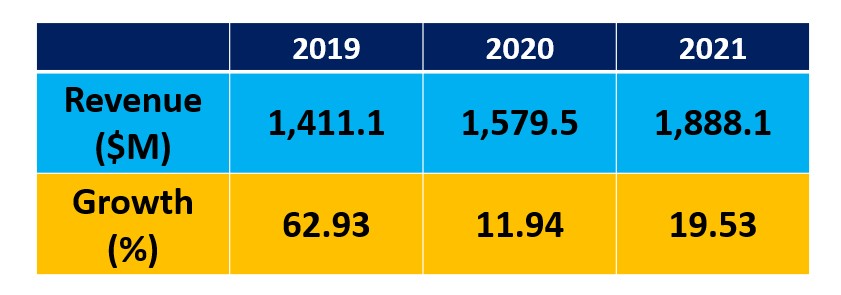
• Gartner Says “Worldwide Robotic Process Automation Software Revenue to Reach Nearly $2 Billion in 2021

• Garner also states that the “RPA Market Forecast to Grow at Double-Digit Rates Through 2024 Despite Economic Pressures from COVID-19”

Table 1. Worldwide RPA Software Revenue (Millions of U.S. Dollars)

Robotic Process Automation (RPA) Market Growth, Source: Gartner (September 2020)

• The pandemic and ensuing recession increased interest in RPA for many enterprises. Gartner predicts that 90% of large organizations globally will have adopted RPA in some form by 2022 as they look to digitally empower critical business processes through resilience and scalability, while recalibrating human labor and manual effort.

Source: https://www.gartner.com/en/newsroom/press-releases/2020-09-21-gartner-says-worldwide-robotic-process-automation-software-revenue-to-reach-nearly-2-billion-in-2021

• According to the Research and Markets Report 2020, the Global Robotic Process Automation Market is expected to grow to $7.2 billion by 2025 at 32.6% CAGR.

Source: https://www.cmcglobal.com.vn/next-gen-technologies/top-rpa-technology-solution-providers/

D) RPA Use Cases & Examples of how RPA Enables Better Customer Service & Experience

1) RPA Use Case 1: Customer and Employee Onboarding:

Customer and Employee Onboarding RPA

The common tasks associated with employee and customer onboarding are very standard, structured, and repeatable. Therefore, these standard and repeatable tasks are perfect candidates for RPA. For example, RPA can handle the following customer and employee tasks:

a) Customers: RPA can be leveraged to establish customer profiles (e.g., segment, purchased products/services, payment and invoice financial accounts, credit worthiness checks and authorizations, etc.) and needed onboarding services (onboarding training, welcome kit delivery, initial sales account visits, etc.). Many of these customer onboarding processes are very standard with very few permutations and therefore are very likely candidates for the application of RPA.


b) Employees: RPA can be used to take employee and customer identifying information and update multiple information systems (payroll, emergency contacts, state employment and tax compliance, timesheet systems, training systems, security/access management, etc.). This behind-the-scenes RPA updating can save hours of valuable company resource time.

2) RPA Use Case 2: Customer Invoice and Payment Processing Automation:

Customer Invoice and Payments RPA

Customer invoicing and payment processing is a highly standardized and repeatable process. Take for instance the case of paying on an auto lease or financed purchase. The customer invoice and payment amounts are generally the same every month, usually at the same time of the month unless changed by request and, the calculation of the amount paid and remaining amount left to pay, a simple math exercise. The same is true for many other regular invoice and payment cycles: utilities, insurance, health plans, etc. These are all candidates for RPA whereby the robotic processing can automate the delivery of the standard customer process and experience delivery (vs. specialized 1-to-1 delivery). Some sophisticated rules-based RPA tools even allow for several complex permutations in the process invoice/billing amounts, timing, periodicity, etc.

3) RPA Use Case 3: Automation of Customer Calls:

Customer Call Center RPA

The Covid-19 pandemic has accelerated the acceptance of online self-service by customers, and they expect simple point and click solutions for inquiries, ordering, payments, providing feedback, pointing out issues and problems, etc. In short, they expect one and done customer service. Multi-channel customer interaction center (legacy term was call center) customer representatives have SLAs to meet in terms of time on call metrics (average time spent on each customer contact).

Much of the work of customer contact agents is standard and includes commonly performed tasks across all customer contacts. These common and repeatable tasks lend themselves perfectly to RPA to enable the contact agents to work on tasks that are higher value to the customer. Here are examples of customer contact center tasks that are likely candidates for RPA:
A) Data entry or update tasks
B) Generating customer acknowledgement or thank you notes
C) Completing a call after relevant customer information has been collected.
D) Populating customer order forms and invoices


There are many virtual attendant RPA solutions that make the job of the customer contact center agent easier while simultaneously enhancing the customer experience.

4) RPA Use Case 4: Customer Banking Automation:

Customer Banking RPA

Just like applying RPA to common and simple tasks for invoicing/payments and customer interaction centers, banking has numerous common tasks that are easily adaptable to RPA and IoT (reference my other blog article on IoT here: https://bit.ly/3DwQz2i ).

The common, routine, and repeatable banking tasks applicable for RPA include the following:
1) Opening and closing bank account.
2) Processing deposits.
3) Processing withdrawals.
4) Processing welcoming messages for new customers, customer buying new products.
5) Processing account updates or simple inquiries.
6) Processing account addendums (i.e., adding checking to savings).

5) RPA Use Case 5: Customer Order Management Automation:

Order Management RPA

How many times have you ordered items on the internet from online retailers and found the process very routine and repeatable? Well guess what? If you guessed this is a perfect process adaptable to RPA, then you are getting the concept. From a company’s perspective, the processing of orders manually is both time and cost intensive while not really adding much to the customer experience. Today, people want simple, fast, point and click instant self-service without having to rely on a human to get what they need. The common, routine, and repeatable order management tasks that are candidates for RPA include the following:
1) Processing orders.
2) Scheduling fulfillment and shipping.
3) Sending order status messages to customers (e.g., ordered, shipped, delayed, etc.),
4) Handling payments.
5) Processing returns and refunds.
6) Processing defect and warranty claims.

E) Top Companies Embracing the Use of RPA:


Here is a sampling of 20 of the more popular non-RPA service providers or consulting companies who are embracing the use of RPA:
1) Whirlpool
2) Siemens
3) Quest Diagnostics
4) LinkedIn
5) Linium (Now Cognizant (staffing))
6) Intel
7) Hewlett Packard Enterprise
8) Hess
9) General Motors
10) Dell
11) Comcast
12) Boston Scientific
13) AT&T
14) Adobe
15) Xerox
16) Vodafone
17) Ambit Energy
18) Avande
19) Zodiac Aerospace (now Safran Group)
20) Latam Airlines
Source: https://www.askeygeek.com/companies-using-robotic-process-automation/

F) Top RPA Solution Platforms:


Search the internet and you’ll find a great deal of rankings for the top RPA solution platform providers. Below is just one ranking of many that lists the top 10 vendors from a very well done article that lists the top 5 RPA service providers as UiPath, Automation Anywhere, Microsoft, EdgeVerve and Blue Prism (Softomotive removed since it was purchased by Microsoft, listed in #3 below, in 2020):

  1. UiPath (Gartner “Leaders” Magic Quadrant)
  2. Automation Anywhere (Gartner “Leaders” Magic Quadrant)
  3. Microsoft Power Automate (Gartner “Leaders” Magic Quadrant)
  4. EdgeVerve
  5. Blue Prism (Gartner “Leaders” Magic Quadrant)
  6. WorkFusion
  7. Kofax
  8. NICE
  9. Another Monday (Purchased by Hyland in 2020)
  10. Pegasystems
    Source: https://www.datamation.com/artificial-intelligence/top-15-robotic-process-automation-rpa-companies/

G) Top RPA Service and Consulting Companies:

Beyond the top RPA solution platform providers article listed in the previous section, there are very few articles that focus on the RPA service providers that help a company implement RPA. Below are the findings from a very well done analysis that puts the top 5 RPA service providers as EY, Capgemini, KPMG, TCS and Accenture. Below is the list of the entire ranked top 10 RPA service providers from this analysis:

Top 10 Ranking:
1) Ernst & Young
2) Capgemini
3) KPMG
4) Tata Consulting Services (TCS)
5) Accenture
6) IBM
7) Deloitte
8) Symphony Ventures (Now Sykes)
9) Cognizant
10) Infosys

Tata Consulting Services (TCS) is bolded above since I feel they are at the very top of services firms who can help other companies implement RPA.

Tata Consulting Services (TCS)

Source: https://www.horsesforsources.com/TOP-TEN-RPA-SERVICES-2018_120218

H) RPA Best Practices & How to get started in leveraging RPA:

Below is a simple step-by-step process I developed to help you get started in implementing RPA (vs. optimizing which is a separate list):

  1. Focus on tasks that are easy to implement, yet deliver high value impact
    Develop a list of tasks that are likely candidates for the application of RPA per the information provided above – simple/common tasks, repeatable tasks, few permutations to a task, etc. For each potential task listed create two additional columns as follows:
    A) Value to the organization and customers for task automation
    B) Ease of implementation
    Those chosen to move forward should be those easy to implement that create the highest value. I call these tasks the RPA “low hanging fruit” that are no brainers for automation.
  2. Start with small RPA pilots to demonstrate the proof of value
    Next find a way to limit the scope of the initial RPA pilot to include only exposing a limited (segment) of customers, choosing a task that is infrequently exercised (which still providing high value), or limit the time for testing the task automation (2-5 days, 1 week, etc.). Once the limited pilot is completed, document the results and value delivered from the pilot to build excitement and justification for full roll-out while make RPA adjustments based on lessons learned from pilot execution before going to full rollout.
  3. Measure, measure, measure – improve, improve, improve
    Similar to measuring the results from the pilot and refining the RPA components to further optimize the value derived from automating a RPA pilot, a continuous measurement & improvement process cycle should govern all RPA pilots, implementations, rollouts, etc.
  4. Focus on the simultaneous optimization of the internal organization and customer relationships
    A value delivery matrix should be developed that balances how to optimize the existing organization and labor costs such that resources are focused on delivering simultaneously the highest customer value and customer experience vs. focusing on routine and low value tasks.
  5. Obtain the advice and help of RPA consultants, professionals
    Just like the saying “don’t try this at home”, I don’t recommend tackling RPA initially without the help of a professional services/consulting firm that has a great deal of experience implementing RPA that closely resembles what you are seeking to accomplish. Refer to section G above for a great list of highly qualified RPA experts and services companies.

I) Summary:


1) RPA is the automation of repeatable, common, and typically lower value tasks to free up company resources to focus on higher value and strategic tasks like delivering improved customer experience and customer service.
2) The benefits of RPA are numerous, but RPA decreases company operating costs by reducing labor and labor costs while enabling better levels of customer intimacy, customer service and customer experience.
3) RPA, while not growing as fast as the complimentary IoT market, is very rapidly growing after taking a short growth respite in 2020 due to the Covid-19 pandemic.
4) There are many examples of RPA use cases that enhance customer service and experience and include invoice and payment processing, consumer banking, employee and customer onboarding, contact and call center automation, and order management .
5) The top 10 platform vendors include UiPath, Automation Anywhere, EdgeVerve, Blue Prism, Softomotive, WorkFusion, Kofax, NICE, Another Monday, and Pegasystems.
6) The top 10 RPA service and consulting companies include Ernst & Young, Capgemini, KPMG, Tata Consulting Services (TCS), Accenture, IMB, Deloitte, Symphony Ventures, Cognizant, and Infosys.
7) RPA quick start best practices include starting with tasks that deliver high value that are easy to implement, start with limited pilots to build excitement and prove the value of RPA, measure the results to continually improve, focus on the simultaneous optimization of the company organization and customer relationships, and hiring the support of RPA service firms and consultants to aid your RPA planning and deployment.

J) RPA 911 & where to get immediate RPA assistance and additional insights:

If you are seeking some quick advice on RPA, I can help point you in the right direction, provide some summary advice and am more than willing to help others beginning on this journey.

If your organization is seeking experienced assistance in lowering your overall cost to serve and increasing CSAT with automated and RPA, AI and/or IoT powered customer service, then give me a call or e-mail me at 518-339-5857 or stevenjeffes@gmail.com.

Lastly, this is just one article of over 55+ articles I have written on customer strategy, customer experience, CRM, sales excellence, marketing, product management, competitive intelligence, corporate innovation, change management – all of which I have significant experience in delivering for numerous Fortune 500 companies. In fact, my blog is now followed by nearly 105,000 world-wide and was just named one of the top 100 CRM blogs on the planet by Feedspot, alongside Salesforce.com, Infor, Microsoft, SAS, etc. – Reference this informative site here: https://blog.feedspot.com/crm_blogs/.

The IoT Revolution: Improving customer convenience & customer experience while reducing business cycle times and cost.

Topics covered in this blog:
1) The simple definitions for the Internet of Things (IoT) and Telematics
2) Illustration of IoT personal and business devices, uses
3) IoT Trends
4) IoT Growth in Spend and Market Size
5) IoT enablers and why IoT has become so pervasive
6) How does IoT work
7) The benefits of IoT
8) The positives and negatives of IoT
9) The most Popular IoT Architecture Platforms in 2021
10) The 10 Hottest Industrial IoT Platforms Of 2020
11) The most Popular IoT Services Companies for 2021
12) Sample IoT Use Cases that illustrate the Customer Experience Benefits
• Customer, Personal IoT Digital Assistants Use Case Benefits
• Business, Fleet Management IoT Benefits Use Case:
• IoT Dashboard Example with Customer Experience Benefits:
13) How to get started in improving your IoT driven Customer Experience

A) Simple Definitions of IoT and Telematics:

One new term I keep hearing about over and over is the “Internet of Things”, known shorthand as IoT. I thought this was a strange term at first and was puzzled about what it stood for. As a result, I set forth to research the topic and create a simple definition for IoT as well as “Telematics” which is frequently mentioned in the context of IoT.


1) IoT Definition: IoT is short for the Internet of Things and describes physically connected objects, that contain embedded sensors, processors, software, and other technologies, and that connect and exchange data with other devices and systems over the internet or by other communications networks.


2) Telematics Definition: Telematics is the practice of sending, receiving, and storing information using telecommunication devices to control remote IoT objects.
In other words, and more put more simply, Telematics is the practice of managing information collected from an array of IoT devices (i.e., connected thermostats, GPS in an automobile, Alexa, Siri, etc.). For the rest of this article, IoT and supporting Telematics I will simply refer to as IoT.

Consumer & Business IoT

{click on image to expand}

B) IoT Trends and why IoT has become so significant:

  1. With 1.3 billion projected subscriptions by 2023, IoT is about to experience another boost by the 5G technology.
  2. By 2021, 35 billion IoT devices will be installed around the world.
  3. The number of connected devices in 2021 will be 46 billion. (Juniper Research)
  4. Households have ten connected (IoT) devices on average and will rise to 50 in 2021, (Economic Times)
  5. Spending on IoT Endpoint Security solutions will reach $631M in 2021, (Gartner)
  6. The Smart Home IoT market will grow to $53.45 billion by 2022, (Statista)
  7. Worldwide IoT spending surpassed $1 trillion in 2020 alone, (Sdx central)
  8. Companies could invest up to $15 trillion in IoT by 2025, (Gigabit)
  9. The biggest reason for IoT investment is cost-reduction, (IoT Analytics)

1-4 above, source: https://techjury.net/blog/how-many-iot-devices-are-there/#gref
5-9 above, Source: https://findstack.com/internet-of-things-statistics/


C) What has made IoT possible:

The next set of questions you might have are:

1) What are the driving forces behind all this IoT growth?
2) Why has IoT usage grown so much now?
3) What has enabled IoTs to be integral in almost everything we do, touch, etc.?

The simple answer is that the rapid increase in technological capabilities, miniaturization of devices, increased computing capacity and 24x7x365 high bandwidth are the enablers. The real reason is that this drives multiple win-wins including the decreased business cost and cycle times coupled with increases in accuracy and customer experience delivery. The chart below sums up these trends very succinctly.

IoT Enablers, Why Now

D) How does IoT work

IoT systems consist of web-enabled smart devices that use embedded systems (that include processors, sensors, data storage/management hardware, and communication hardware, to collect, send and act on data they acquire from the surroundings where they are embedded. IoT devices either share the sensor data they collect to the cloud to be analyzed or the data is made available locally to be analyzed.

In certain instances, these IoT devices communicate with other related IoT devices and act on the information they compile and aggregate from each another. These IoT devices perform most of their own processing and decision making without the need for human intervention, although persons can interact with the devices to either install them, provide updated instructions, or access and monitor the data associated with the systems they are overseeing and/or controlling.

E) The benefits of IoT, the IoT Revolution

Never has there been such a win-win enabled by technology than with the explosion of the use of IoT. Businesses win by enabling greater efficiency and accuracy while driving costs and time to market simultaneously lower. At the same time, companies can increase the ease of doing business with them through increased customer convenience along with increased customer experiences (marketing, sales, customer service, products, services, etc.) by having greater IoT enabled insights into what customer really need and want. The following chart captures some of the IoT enabled win-wins both for business and customers.

Business and Consumer Benefits of IoT

F) The Balanced Positives and Negatives of IoT

To not just present benefits of implementing IoT in the above chart, I also developed the following chart to show additional IoT positives balanced with negatives. For example, for business the benefit is the decreased maintenance cost and equipment downtime, while a negative is the risk of hacking and hijacking of IoT devices connected data and systems, etc. for both customers and businesses.

Balanced Business and Customer Positives and Negatives of IoT

G) Most Popular IoT Architecture Platforms in 2021

Here is a list of the most popular IoT platforms In 2021 from SoftwareTestingHelp.

  1. Google Cloud Platform
  2. OpenRemote
  3. IRI Voracity
  4. Particle
  5. ThingWorx
  6. IBM Watson IoT
  7. Amazon AWS IoT Core
  8. Microsoft Azure IoT Suite
  9. Oracle IoT
  10. Cisco IoT Cloud Connect
  11. Altair SmartWorks
  12. Salesforce IoT Cloud

In the article from SoftwareTestingHelp, (source: https://www.softwaretestinghelp.com/best-iot-platforms/), there is a detailed description for each platform as well as high level pricing for each platform.

H) The 10 Hottest Industrial IoT Platforms Of 2020

If you’re a larger industrial company, you’ll also want to view this list of top enterprise level IoT platform providers listed below:

  1. Altizon Datonis
  2. Amazon Web Services IoT (also on the most popular list in G, 7) above
  3. Flutura Cerebra
  4. Hitachi Vantara Lumada (Listed in Gartner’s “Leader” Quadrant)
  5. IBM Watson IoT (also on the most popular list in G, 6) above
  6. Litmus Edge
  7. Microsoft Azure IoT (Listed in Gartner’s “Leader” Quadrant)
  8. Oracle IoT Cloud Service, (also on the most popular list in G, 9) above
  9. PTC ThingWorx (Listed in Gartner’s “Leader” Quadrant), also on the most popular list in G, 5) above
  10. Software AG Cumulocity

Source: https://www.crn.com/slide-shows/internet-of-things/the-10-hottest-industrial-iot-platforms-of-2020

I) Most Popular IoT Services Companies for 2021:

Enlisted below are some of the most popular IoT Software Solutions and Services Companies worldwide.


List of Best Internet of Things Companies

  1. ScienceSoft (USA & Europe)
  2. iTechArt (New York, US)
  3. Oxagile (New York, US)
  4. Indium Software (USA, UK, Singapore)
  5. Softeq (Houston, Texas, USA)
  6. Style Lab IoT Software Company (San Francisco, CA)
  7. HQ Software Industrial IoT Company (USA & Europe)
  8. PTC (Boston, Massachusetts)
  9. Cisco (San Jose, CA)
  10. ARM IoT Security Company (Cambridge, Cambs)
  11. Hawei (Shenzhen, Guangdong)
  12. GE Digital (San Ramon, California)
  13. Bosch IoT Sensor Company (Farmington Hills, MI)
  14. SAP (Walldorf, Germany)
  15. Siemens IoT Analytics Company (Berlin and Munich, Germany)
  16. IBM (New York, U.S.)
    Source: https://www.softwaretestinghelp.com/top-iot-companies/

I would also add to the top of the list Tata Consulting Services (TCS) as a company who excels in IoT strategy and integration consulting.

Tata Consulting Services (TCS)

J) Example Companies Going all In on IoT

While there are many companies embracing and adopting the concept of IoT, one stands out in particular. Honeywell has made IoT a centerpiece of their future company strategy and has developed a new IoT platform called Honeywell Forge. You may have seen some of the ads they are currently running online, on cable channels and in print. Honeywell plans to roll out versions of this IoT platform for the airline, industrials and buildings verticals.

I interviewed with Honeywell a while back for a Director of Customer Experience position and was impressed at how passionate they are was about IoT and how well they understood that it enabled much higher levels of customer experience. Other companies who have introduced IoT platforms include GE, Siemens and Johnson Controls (competitor to Honeywell).

K) Sample IoT Use Cases that illustrate the Customer Experience Benefits

1) Customer, Personal IoT Digital Assistants Use Case Benefits:

The user of at home personal digital IoT assistants like Amazon’s Alexa, Google’s Assistant, Apple’s Siri, Microsoft’s Cortana and Samsung’s Bixby have exploded in the past 5+ years. They have enabled an entire new level of convenience for consumers. The increased customer intimacy and insights gathering comes with the potential balanced decrease in privacy. Users of digital personal assistants are generally aware and ok with this tradeoff due to the delivered convenience and enhanced customer experience. The chart below illustrates a sample of delivered customer experiences based on the potential to learn about users/customers and the enabled delivery of great customer experiences based on leveraging these enhanced insights.

Personal Customer Experience Benefits of IoT, Personal Assistant Example

2) Business, Fleet Management IoT Benefits Use Case:

The user of IoT in fleet management has also increased dramatically in the past several years. The use of these fleet management IoT solutions have enabled an entire new level of convenience for both their business users as well as the customers they serve. The chart below illustrates a sample of delivered customer experiences based on the potential to learn about users/customers and the enabled delivery of great customer experiences based on leveraging these enhanced insights.

Business Customer Experience Benefits of IoT, Fleet Management Example

3) IoT Dashboard Example with Customer Experience Benefits:

IoT Dashboard Example

Source: https://www.sisense.com/dashboard-examples/manufacturing/iot-live-energy/

Above is a superb example of an IoT insights power management dashboard created via Sisense, a company that “Builds custom analytic experiences” and “Embeds actionable intelligence anywhere.” to “Transform the way you work.”

In this power management example, the Sisense enabled dashboard displays all the performance measures associated with the IoT monitoring devices such as the following:

1) Device A, B, C Power usage, voltage, frequency, and current
2) Average Power by device (A, B, C)
3) Energy Consumption over time by device (A, B, C)
4) Current over time by device (A, B, C)
5) Voltage over time by device (A, B, C)

In this example above, a customer user can remotely monitor systems and proactively watch for performance measures that show power supply or regulation degradation. In times past, instead of the IoT performing the monitoring, the monitoring would instead have to be accomplished by sending a person to manually monitor 3 devices (Device A, B, C) on a periodic schedule to ensure they are operating correctly and to manually intercede if they are malfunctioning.

In the same manner that businesses have benefitted by an increase in convenience and business (B2B) customer experience, IoT has enabled the consuming public to be able to interact with their vehicles, home security systems, personal assistants, smart phones, etc. to also improve their lives through increased convenience and improved personal (B2C) customer experiences. Smarter IoT devices become smarter in automating tasks, maintaining our needs, preventing malfunctions and breakdowns, ensuring we get what we need when we need it, increasing our safety and security, while bring us life’s needs at the sound of our voices while going about our normal routines.

L) Summary

  1. IoT stands for the “Internet Of Things” and is simply smart devices that monitor, control, and interact for a variety of functions that collect and transmit data from an array of IoT devices through telematics.
  2. IoT has emerged as one of the fastest growing technology segments in the last several years and will continue this pace of massive growth for the next 5-10 years.
  3. IoT rapid market diffusion has been enabled by even smaller and more powerful device level processing capacity, aided by IoT enabled cloud technology.
  4. IoT has been embedded in almost every aspect of our day-to-day lives including cars, homes, critical infrastructure, personal wearables, etc.
  5. IoT has delivered a tremendous amount of benefit to businesses in terms of reduced cycle times and costs.
  6. While IoT has delivered many benefits, there are a set of downsides to IoT that must be considered and actively managed like the increased risk of hacking and hijacking.
  7. While many businesses would point to the reduction in costs and cycle times as the major business case justification, the common denominator for both business and consumers is the increased convenience and improvement in customer experiences.

The bottom line for IoT is, as stated by the title of this article simultaneously improves customer convenience and customer experience while simultaneously decreasing business cycle times and overall cost. This statement clearly sums up why we are in the midst of an IoT revolution and why the market for IoT has and will continue to experience explosive growth.

M) Need help getting started in improving your IoT driven Customer Experience?

If your organization is seeking a proven resource in measuring and improving your customer service and experience via IoT, then give me a call or e-mail me at 518-339-5857 or stevenjeffes@gmail.com

Lastly, this is just one article of 50+ articles I have written on customer strategy, customer experience, CRM, marketing, product management, competitive intelligence, corporate innovation, change management – all of which I have significant experience in delivering for Fortune 500 companies. In fact, my blog is now followed by nearly 106,000 world-wide and was just named one of the top 100 CRM blogs on the planet by Feedspot, alongside Salesforce.com, Infor, Microsoft, SAS, etc. – Reference this informative site here: https://blog.feedspot.com/crm_blogs/

Leverage Customers as the Chief Customer Officer (CCO) While Increasing Customer Diversity and Inclusion

How & why top companies are inverting their organization charts and putting their own customers in charge of customer operations while increasing Customer Diversity & Inclusion (D&I).

How and why this practice also leads to the following ratings:

1) Higher NPS,
2) Increased customer loyalty,
3) Increased customer satisfaction levels & CSAT,
4) Growth in customer zealots that virally promote your brands and company,
5) Increased customer diversity and inclusion (D&I).

The top 10 things you will learn by reading this blog:
1) The spectrum of customer first cultures – find out where you stand on this spectrum.
2) The trends in developing customer insights and customer feedback via customer inclusionary programs and customer onramps.
3) How customer onramps support customer diversity and inclusion (i.e., customer D&I programs).
4) Customer Experience metrics from real companies who have developed and deployed these customer onramps.
5) Creative win-wins to make your customer experience more fun, engaging, educational, rewarding, and inclusive.
6) Innovations in creating customer communities that increase brand loyalty, customer referrals.
7) Market leading companies and their case studies in leveraging customers as the Chief Customer Officer (CCO).
8) The customer organization Inversion and customer empowerment of the future.
9) Quick & easy wins in getting started in the customer inversion that will create customer zealots and a customer experience 2nd to none.
10) The top 10 things you should immediately consider implementing to increase Customer Satisfaction (CSAT) levels, NPS and customer loyalty rates by double digits.

A) The Customer Organizational Inversion-Revolution:

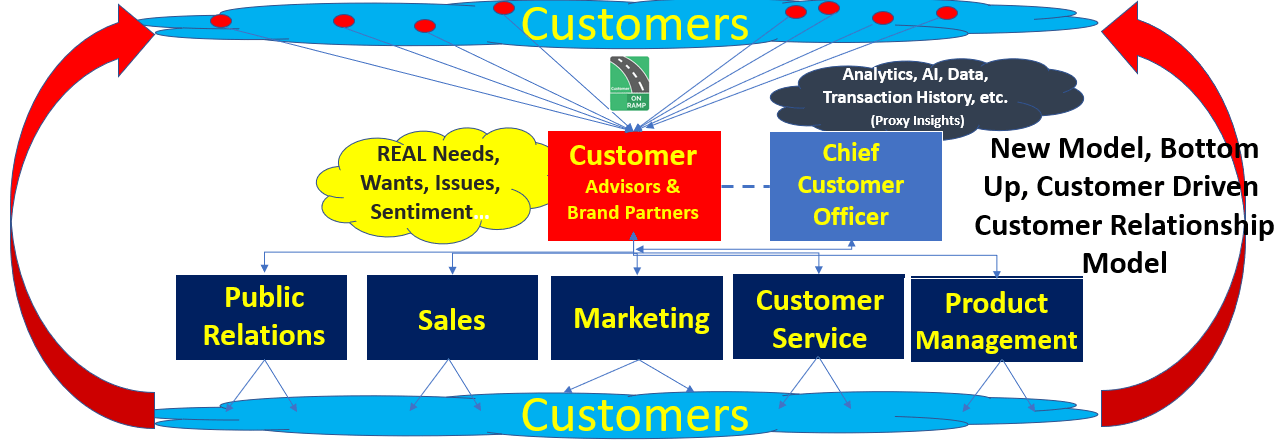
There is an organizational customer inversion-revolution going on and it will only accelerate in the future. What this revolution entails is a complete inversion of the customer decision making structure for companies, one where the customers (vs. the company) are in charge, leading the design of customer strategy and future customer programs. I call it the customer inversion revolution. This inversion looks something like the chart below. We will detail this customer organization inversion-revolution in following sections of this blog.

FROM:

Traditional Customer Service Organization

TO:

Customer Service Organization Inversion-Revolution

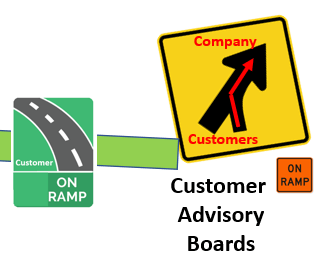
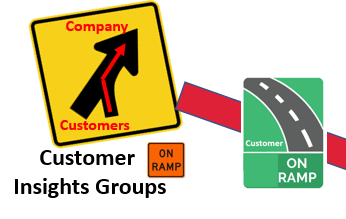
Key to implementing this customer organizational inversion-revolution is the development of customer inclusionary “on ramps” (shown in the green symbol above) that allows customers to participate and join the company team as brand partners, advocates, insights experts, advisors, etc. We will cover this more in depth in following sections but hence forward, customer on ramps will be designated by this symbol below:

Customer Inclusionary Onramp

These onramps detailed in the following blog increase customer inclusion by their very nature of creating an array of customer chosen methods for these customers to contribute to and participate in the company’s success. The enhanced diversity is derived from tapping into and leveraging the diverse set of perspectives and needs from existing customers that represent a cross-section of different cultures, races, genders, ages, political views, national origins and religions, etc. so that the best product and/or services are engaged in the marketplace.

Many companies have omitted these onramps in the vetting of new products, services, marketing campaigns, etc. and have ended up offending and alienating their own customers and potential prospects. A great web article points to how companies have fielded expensive and disastrous marketing campaigns and ads in the past only to have to quickly pull them from the market. These campaigns/ads are often a result of corporate myopathy and not taking into account a multitude of diverse perspectives enabled by an array of customer D&I onramps: “7 of the most controversial ads of our time” https://www.thedrum.com/news/2019/04/08/7-the-most-controversial-ads-our-time. A major West Coast bank vets all of it marketing concepts through a customer insights group (covered below) before ever releasing the ad and/or campaign into the market. Only after the CIG group (onramp) has weighed in and provided their approval and feedback will this bank to go market with their marketing concepts.

Bottom line, these onramps enable your customers to become brand and company partners/advocates who, through time and continued onramp participation, develop an ever increasing vested interest in the brand(s) and company success.

To be receptive to this change and to get onboard with customer leaders who are in the process of putting customers in charge and implementing the customer organizational inversion-revolution, you must first have a foundational customer centric culture. Companies that are implementing this customer centric change and building customer brand partners include Apple, Southwest Airlines, Ritz Carlton, Amazon, Marriott, Bank of America, Wells Fargo, etc. Let us first explore what a customer centric culture is and the spectrum of companies on the customer centric continuum.

B) The Customer First, Customer Centric Culture

To begin with, almost every company claims to be customer centric, that their customers are their most important asset, customer satisfaction is a priority, etc. In practice I have found that there is a spectrum of truth to these public statements ranging from treating customers as a necessary commodity to the other end of the spectrum and treating customers as equal and respected partners and treating customers as a true extension of the company-employee team.

Referring to the chart below, we can see that spectrum of company cultures and their treatment of customers based on these different company customer cultures. To simplify this illustration, I have only included 3 types of companies as follows (along top of chart):

Customer Centric Company Spectrum

  1. “Customers are our most valuable asset”: Companies that truly value their customers and view them as an integral part of their team and company’s success. This type of company also maintains a true customer first culture, policies, standards, etc. (right side of chart, spectrum).
  2. “We Value our Best Customers”: Companies that only strive to cater to their most valuable customers since these customers benefit the company the most (middle of chart, spectrum).
  3. “Customers are a Necessary Commodity”: Companies that interact and ‘deal with’ customers when it benefits them (they pay lip service to slogan ‘customers are their most important asset’), left side of chart, spectrum.

On the left side of the above chart, we have a number of customer facing dimensions including the following:

1) “Customer Input”: How the company views and approaches soliciting customers for insights, input on new programs, detailed feedback (i.e., focus groups, crowdsourcing, etc.), etc.
2) “Customer Complaints”: How the company views and approaches the handling of customers complaints.
3) “Customer Inclusion, Partnership”: How the company approaches being customer inclusive by offering customers ways to partner with the company including online communities, customer co-blogging, customer spotlights, etc.
4) “Customer Engagement”: How the company approaches customer communication and creates a rewarding and engaging customer experience.

Companies located on the far-right side of the chart have the following belief that is not only a slogan, but embodied in the company culture, operations, practices, standards, rewards systems, etc.:

“Customers are our Most Valuable Asset”.

For the first customer dimension on the left side of the chart, “Customer Input”, a comment that I heard from a CEO with this type of culture is as follows:

“We make no (major) decisions (that will impact the customer) without the customer’s direct input”.

For the first customer dimension of “Customer Complaints”, a company CEO said the following,

“Customer complaints are a valuable insight and gift to help us improve, beat our competition”.

You can read the comments for each type of company aligned to each customer dimension. Bottom line, without a foundational customer first mindset, rewards and incentive system and culture, you will be impeded on implementing the effective customer inclusion program with many possible customer onramps detailed in the remainder of this blog.

C) Mainstream Customer Inclusionary Programs & Onramps:

As I mentioned before, once you have established a totally customer centric culture, the 2nd step is to build customer incremental onramps for the customer to become a brand partner and an integral part of the customer team. These onramps invite the customer to participate in a number of activities that will increase customer satisfaction (CSAT), loyalty, NPS, viral referrals, etc. Based on my experience, building these customer inclusionary onramps can net your company huge increases in key customer measures as follows:

1) NPS: +14 to 49
2) Customer Loyalty: + 4% to 36%
3) Customer Positive Sentiment: +12% to 71%
4) Customer Viral Referrals: +11% to 26%

Customer On-Ramp: Customer Advisory Board Program

1) Customer Advisory Board Program:

A Customer Advisory Board (CAB) is the composition of a group of trusted, and generally top customers, who meet on a regular basis (i.e., Quarterly) to advise the company on strategic direction such as the product and/or service roadmap and on upcoming major new programs. Customer advisory boards (a.k.a. trusted customer advisors) can also be a conduit to award top customers for their input, loyalty, spend, referrals, etc.

At a top US automotive company, we invited our top and most open/honest customers to these focus group and advisory events, paid their travel expenses, hosted a nice dinner reception and, at the end of the session, gave them an appreciation gift for their continued participation and loyalty. We also had Platinum private customer events for our top 1% spend customers which were meetings with the EVP and above for open-ended candid feedback & insights gathering discussions.

Customer On-Ramp: Customer Insights Group Program

2) Customer Insights Group Program:

A Customer Insights Group (CIG) is the composition of a wider cross-section of customers or specific customer segment(s) who meet on a regular basis (i.e., weekly, quarterly) to advise the company on new tactical programs, proposed sales campaigns, and marketing concepts, provide feedback on existing program effectiveness, provide customer experience insights based on their own actual experience, etc. Customer insights groups are usually on a voluntary enrollment basis and typically come with some sort of incentive to participate (i.e., participate and be entered in a drawing for a gift certificate).

A top 5 US bank uses these extensively and there is a directive from the CMO that no new marketing programs/materials/etc. will be fielded without first getting the input of this insights group. After implementing this program, marketing effectiveness increased by an overall 27% and the loyalty of the group increased by a whopping 38% as compared to non-CIG participants. When surveyed, 92% of CIG members indicated that they told 26+ about their positive perception of this bank CIG program (survey choices were 0-5, 6-10, 11-15, 16-25 or 26+).

Amazingly enough, 5,000 participants volunteer up to 8 hours of their time per week to participate with another 5,000 eagerly waiting in the wings for their term to participate (participation is limited to a 2-year term).

In addition, by tapping into a diverse customer set, the bank was able to avoid potential marketing disasters by stopping the fielding of proposed marketing materials that were deemed offensive and culturally insensitive by members of the customer insights group.

Customer On-Ramp: Customer Co-blogging & Co-Authoring Program

3) Customer Co-Blogging & Co-Author Program:

Customers telling their story (the voice of the customer) about their success in using your product/service and their customer experiences are 5-7x more credible than coming from the company. In addition, customer authors bring with them an entirely new audience sphere (their friends, connection, relatives, etc.) which will result in a dramatically increasing your website traffic, SEO, referrals, etc. Customers love the opportunity to be spotlighted and write their own story (with helpful company editing of course) when it comes to their experience interacting with the company. Co-blogging can also be about customer stories with a human-interest side to it vs. always being business oriented. Customer co-authored articles can be about topics such as how to gain the most value from the product/service, tips/tricks they have learned, the value they have gained from using same, etc.

We recently used this for a struggling newsletter program that had only penetrated 27% of our customer base. Six months after I implemented the co-blogging program, the newsletter distribution grew to 56% of our customer base and we experienced a simultaneous increase of 17% in new visitor web traffic.

Customer On-Ramp: Top Customer Appreciation & Recognition Program

4) Top Customer Appreciation & Recognition Program:

Remember the movie “Up in the Air” with George Clooney? He was a top traveler who strived to be in the 1% club in terms of air miles flown per year on a particular airline whereby, if he achieved this distinction, he would then be invited to an awards dinner with the CEO of the airline and be showered with a whole host of flying perks after achieving that level of spend/loyalty. Banks, hotels, brokerage firms, etc. all have an array of top customer loyalty rewards programs.

For the very top customers, there are more hands-on personal perks like a dedicated/private concierge assigned to customers like for the American Express Black credit card which can only be obtained by direct invite by American Express (i.e. not via request). A top US air conditioning company I used to work for had top distributorship recognition events for the distributors who sold the highest revenue generating air conditioning units. While focused internally for a company, many salespersons have benefitted from such top achievement loyalty programs by achieving the distinction as top salespersons for their companies and being rewarded with trips, cash, luxury items, cars, etc. as a thank you for their contributions.

Customer On-Ramp: Customer Product/Service Beta Group Program

5) Customer Product/Service Beta Group Program:

Before top companies like Microsoft and Apple ever release a new product into the market, they first try these new products with limited volunteer beta groups. They gather feedback from these beta test groups and then continuously improve the beta product before releasing the product to mitigate potentially disastrous consequences of releasing products with potential flaws that internal testing failed to consider via their test cases.

Customer On-Ramp: Customer Success Program

6) Customer Success (Spotlight) Program:

Does your company have successful customers using your product and/or service? Why not showcase or spotlight this success by detailing what they did, how they did it and the value they were able to derive from doing so? Challenge customers to submit their success stories for selection to spotlight in the newsletter, website, articles, FAQs, consideration for prizes for the top stories, etc. The more customers witness real customer successes, the more other customers will want to figure out how to acquire your product/service to emulate the success of other customers.

Customer On-Ramp: Ambassador Program

7) Customer Ambassador Program:

The Syracuse University (SU) admissions and student success programs received a big boost with the adoption of its Alumni ambassador program whereby successful alumni would volunteer to host regional recruiting events, student college send-off events, and answer questions from interested students in their area. Alumni ambassador groups increased the level of excitement and enthusiasm for new students and families while simultaneously decreasing the levels of anxiety and confusion among students and families.

The entire ecosystem of a customer first, customer inclusive company that has inverted the customer organizational structure and has built a comprehensive set of customer onramps to be able to put customers in charge of customer operations would look something like the following chart:

Customer Inclusionary & Participatory Programs, Onramps

D) Other Customer Inclusionary Programs & Onramps:

In addition to the more popular and mainstream customer inclusionary programs above, there are several other programs that I have encountered that were effective by increasing the levels or customer loyalty and creating many customer-brand zealots (those who actively and aggressively advocate for the brand/company).

Customer On-Ramp: Creative Council Program

1) Customer Creative Council Program:

Many customers have a wide range of creative talents outside of simply being a customer. A company with a large customer base tends to have customers who are very creative such as artists, craftspeople, etc. A large SaaS software firm I consulted for would solicit creative ideas for new campaign concepts from the creative group among their customer base (and sometimes from their employees) to get the best creative concepts as possible. Many times, customers would develop far more appealing creative concepts than their own dedicated creative talent working within the company. Why not source from the best of the best, including creative customers?! This would allow the company to harness this creativity while allowing creative customers to be spotlighted for their hidden talents and feel valued by the company.

Customer On-Ramp: Talent Showcase
Program

2) Customer Talent Showcase Program:

Beyond just being creative, a company with a large customer base typically includes customers who are also poets, book authors, those with interesting and varied professions such as paramedics, volunteer firefighters, food bank volunteers, world travelers, iron men or women, triathletes, extreme cyclists, paragliders, scuba divers, treasure hunters, etc. Many companies I have worked with have conducted customer showcases that highlight the interesting lives of their customer base beyond merely being a customer. These personal story showcases add a human-interest side to the customer base and tend to make customers feel more connected to and understood-appreciated by the company.

Customer Journey Customer Co-Mapping

3) Customer Involved Customer Journey Mapping & Continuous Improvement Program:

Are you planning on creating a customer journey map and want to know what the important steps and metrics are in that journey? Why not invite the customer to join in on these development sessions to provide the team with some insights, feedback, important items to consider? I have used this approach quite effectively and have developed far more qualitative customer journeys as a result. I used this approach to develop a brand new and innovative customer journey map I have labeled “The Quantifiable Customer Journey Map”. Refer to my previous blog article for insights here: https://bit.ly/3bvPRal

The Quantifiable Customer Journey Map

Bottom line, without the customer’s input, the high quality achieved in the final customer journey map would have been much more difficult and time consuming to achieve.

Customer Diversity & Inclusion Council

4) Customer Diversity & Inclusion Council:

A few companies I have worked with in the past have managed and conducted employee diversity councils whereby employees would provide their perspective on how the company can be more diverse, culturally sensitive, and overall inclusive.

A few companies have taken this further and included their own customers into the diversity council along with their employees. In this manner, the company ensures that it is considering the widest possible perspective on D&I and not falling victim to company group think.

Regardless of whether you include a formal customer diversity council, what all the above illustrated customer onramps do in essence is help build a company culture that supports customer diversity and inclusion (D&I) as follows:

1) Enables the assembling of a diverse set of perspectives, based on unique and diverse set of customer experiences, needs, etc.
2) Provides diverse feedback on potential new customer programs, marketing, etc. that might be perceived as offensive and discriminatory to certain customer groups.
3) Enables customers to showcase their diverse backgrounds, talents, interests, viewpoints.
4) Enables a voice of the customer cultivation that represents the full cross section of diverse customers.
5) Enables the delivery of the best of the best solutions by allowing feedback on proposed programs from a wide and diverse set of customers.

If your organization is seeking experienced assistance in creating these customer onramps and a more diverse and inclusive and customer first organization where customers are leveraged to assist the insights Chief Customer Officer (CCO) and are transitioned to full brand-partners/advocates/participants/etc., then give me a call or e-mail me at 518-339-5857 or stevenjeffes@gmail.com. I am also a Certified CultureTalk (https://culturetalk.com/) consultant that can help you develop and/or improve a customer-oriented, customer first culture.

Steven Jeffes, Certified CultureTalk Consultant

Lastly, this is just one article of over 50 articles I have written on customer strategy, customer experience, CRM, sales excellence, marketing, product management, competitive intelligence, corporate innovation, change management – all of which I have significant experience in delivering for numerous Fortune 500 companies. In fact, my blog is now followed by nearly 107,000 world-wide and was just named one of the top 100 CRM blogs on the planet by Feedspot, alongside Salesforce.com, Infor, Microsoft, SAS, etc. – Reference this informative site here: https://blog.feedspot.com/crm_blogs/ .

Introducing: The Quantifiable Customer Journey Map

The top 10 things you will learn by reading this blog article:
1) What a customer journey map is and what it is used for.
2) What a customer service map is and what it used for.
3) The business benefits of developing a best practice customer journey.
4) How a customer journey map and a customer service map relate and map to each other.
5) Best practices in the development of customer journey maps and customer service maps.
6) How to build a hierarchy of customer journey map levels such that a customer service map is a natural outcome of the customer journey mapping process.
7) What completed examples of customer journey maps and service maps look like.
8) What critical components are missing from many customer journey maps.
9) How the invention, development and rollout of the quantifiable customer journey map is the wave of the future adding tremendous new business and customer value to its usage.
10) How this new quantifiable customer journey map is the most comprehensive and quantifiable method to come along.

One of the relatively newer tools for larger companies and enterprises in the customer experience professional’s toolbox is the practice of customer journey mapping as well as customer service mapping. First, a complete and simple definition of both of these tools is as follows:

1) Customer journey map definition:

A customer journey map is the pictorial representation, from the customer’s viewpoint, of their experience of interacting with a company for various customer service needs.

2) Customer service map definition:

A customer service map is the pictorial representation, from the company’s (internal) viewpoint, of the capabilities and processes used to fulfill various customer service needs.

Difference Between the Two Definitions Above: The major difference between the two techniques above is the perspective as follows:

Journey mapping is from the customer’s external viewpoint (interacting with the company for various customer service needs), while the service map is an internal viewpoint (company provision of services for various customer needs).

One key point is that service mapping is much less valuable if constructed prior to building the customer journey map. A best practice customer journey map documents the major paths the customer uses to obtain service from the company, the various reasons customers interact with the company, gaps in the current delivery of customer service, best practices that should be kept and strengthened and most importantly, it should map and track customer health metrics that customers indicate are most important to them. Once this journey is documented and mapped, then the current state and future state service maps can be constructed to determine how and how well the company is serving the customer including any service gaps that need to be filled.

It is worthy to note that there are now a number of emerging tools that automate the development of a customer journey map. While these accelerate the timeline of the development of the customer journey map, the automation of this process can shortchange the most valuable parts of the team map development exercise which include the following (sample):

  1. Team discussion & agreement on the overall current state of customer service and experience.
  2. Team customer journey point of view discussion, socialization and consensus building.
  3. Team prioritization of the top future state customer service programs and processes.
  4. Developing team concurrence on the matrix of cost to serve vs. service quality delivery levels.

I have used these customer experience tools extensively in the past during numerous client consulting engagements and found them very useful. Some of the business benefits for utilizing these tools are as follows:

1) Provides a comprehensive pictorial of the various paths the customer transits through to obtain service from the company.
2) Provides a great assessment of the current state of customer practices and customer health.
3) Provides a great assessment of the future (needed) state of the optimal way to provide customer service that would enhance the service quality level vs. current state.
4) Provides a gateway to be able to map out internal service pathways as well as to document existing gaps and opportunities in those pathways.
5) (New) The “Quantifiable Customer Journey Map” now provides the best assessment of the current state of customer health across all major customer journey phases.
6) (New) The “Quantifiable Customer Journey Map” now provides the best snapshot of both the current state of customer health as well as needed future state program capabilities based directly on customer input and feedback.

One of the major historical gaps in producing customer journey maps was that many times the journey map merely documented the customer journey and experience without regard to the measurement of customer relevant metrics that can be leveraged to increase customer loyalty, spend, share of wallet, CSAT, NPS, etc. The exercise to measure customer health was often performed separately or in parallel to the customer journey mapping process. In order to bridge this gap in many existing customer journey maps, I have developed a new and innovative way to map a customer journey while simultaneous accomplishing the following:
1) Cultivating and documenting the customer metrics that matter most to the customer.
2) Delivering current state quantification of those top customer metrics.
3) Delivering feedback from the customer on what capabilities future state customer programs should contain.

Introducing: The NEW Quantifiable Customer Journey Map

The following graphic is the final version of a new quantifiable customer journey map I have developed which now includes the discrete measurement of customer health as part of the customer journey map development process. I will break down and detail each best practice component of this new customer journey map in later sections of this article.

The Quantifiable Customer Journey Map

Best Practice Customer Journey Detailed Components
Next we will detail each component of this new “quantifiable customer journey map”.

First let’s detail how the components of a customer journey map are determined. The structural framework components of a customer journey map exist along the x and y axis of the map. The components you will find in both the x-axis and y-axis of a customer journey map are actually highly variable based on the type of customer journey map being constructed. Below is a sample list of the most common types of customer journey maps.

Existing Types of Customer Journey Maps:

1) Current state map
2) Future state map
3) Macro map (strategic),
4) Micro-level map (tactical)
5) User experience maps
6) Customer emotion map
7) Day in the life map

This new and more effective quantifiable customer journey map I will cover takes into account many of the following from above (1-4) plus something new & innovative:

1) Current state map
2) Future state map
3) Macro-map (strategic)
4) Micro-level map (tactical)
5) New & Innovative: Quantifiable current state of customer health across all journey phases.

This last customer journey map component (5) is missing from many other customer journey maps but has been incorporated into this new quantifiable customer journey map. This new method in my opinion is by far the most comprehensive snapshot you can take of current customer health as well as simultaneously taking into account both macro and micro customer journey map components. This new method also integrates customer service mapping in a single synergistic exercise.

Quantifiable Customer Journey Map Detail Components (x-axis)

The first component of the quantifiable customer journey map exists along the top (horizontal) portion of the map, representing the major stages the customer transits through in a common customer journey. Customer journey phases exist along the x-axis commonly for many, but not all, customer journey maps. Typically several major top-level (level 1.0) customer journeys exist to document critical and common customer paths such as new customer, renewing customer, customer obtaining customer service, etc. Depicted below are the major phases (level 1.0) for a new customer journey for a client who sells SaaS market analytics/AI software. Remember, a customer journey map is a structural framework that, no matter the type variation, should always be constructed from the customer’s (vs. the company’s) viewpoint.

Quantifiable Customer Map Journey Customer Stages (x-axis)

Quantifiable Customer Journey Map Detail Components (y-axis)
The y-axis of the quantifiable customer journey map contains the following components (developed from the customer’s perspective and via customer direct input):
1) Sub Level Customer Journeys – The level 1.1, 1.2, 1.3, etc. sub-journeys that the customer experiences as they typically transit each phase of the top 1.0 level customer journey.
2) New! Top 2-3 Customer Needs and Drivers – Driven by direct customer input and feedback, the top 2-3 needs and drivers (i.e. what is most important) for each phase of the customer journey
3) New! Customer Ratings and Metrics (rating scale of 1.0 to 5.0) – Driven by direct customer input and feedback, the current (snapshot) quantification of the top 2-3 customer needs and drivers for each phase of the customer journey.
4) Current State Best Practices – Driven by direct customer input and feedback, the top best practices that are operating well within each phase of the customer journey. These best practices should be retained and continuously improved to maintain a competitive edge.
5) Suggested Future State Programs – A comprehensive review of the current state gaps for each customer journey phase such that future state customer experience programs can be implemented to improve customer satisfaction levels.

Quantifiable Customer Journey Map Framework Components (y-axis)

Sub-Micro Customer Journeys
The first detail in the y-axis customer journey is the documentation of which customer sub-journeys can be broken down to the 1.1, 1.2, etc. level for each major (level 1.0) customer journey phase. For example, under the first customer journey stage of “Customer Purchases”, there exists the sub-phases (level 1.1) of the following:
1.1 Customer Discovery (we will show an example of this sublevel drill-down later in this article)
1.2 Customer Deep Dive Q&A
1.3 Customer Trial/Evaluation
1.4 Customer Explores Purchase Options
1.5 Customer Contract Evaluation, negotiation, closure
1.6 Customer On-Boarding Preparation
We detail how to drill down and further detail these customer journey sub-phases later in this article.

Quantifiable Customer Journey Map, Level 1.0,
Customer Stage Sub-Journeys (y-axis, row 1)

The next two intricately tied y-axis components (rows 2 & 3) are the key components in this quantifiable customer journey:

1) The Top 2-3 Customer Needs and Drivers (Row 2) (for each 1.0 level customer journey phase):
These are determined by querying a cross segment of customers (via customer feedback-focus groups) about what is most important to them during that particular customer journey phase. These key customer needs and drivers then formulate the current state metrics that need to be, not only collected in an as-is current state assessment, but also collected systemically moving forward via automated customer health dashboards to determine ongoing and longitudinal customer health.
Continuing the drill down on the 1st phase, “Customer Purchases”, we find that customers are most concerned with, in order of importance:
a) How well the software covers their business requirements and business use cases (vs. price when against business requirements coverage %)
b) The Quality Perception of the Product/Brand/Company they are buying into for enterprise level software
c) Ease of Doing Business with the Company/Brand they are doing business with. Described another way in focus groups “we want to buy software from a company that values and respects our time and is easy (and a pleasure) to do business with”

Quantifiable Customer Journey Map, Level 1.0,
Top 2-3 Customer Needs and Drivers (y-axis, row 2)

2) The Current State Customer Ratings and Metrics (Row 3) (for each of the top customer phases needs and drivers):
This component is the current state quantification of the top 2-3 customer relevant measures from above as determined via direct customer measurement. In continuing with the previous example we find that the quantification of the top 3 measures for this particular client were as follows:
a) Price vs. functional fit index rating of 3.8 which indicates the company is meeting most of the needs of their customer’s use cases and needs. This client thought it important to gauge price along with functional fit rather than succumb to the ‘build it at any price’ product management quagmire.
b) Quality Perception index rating by customers of 1.9 is a low and concerning score that needs to be rectified
c) The ease of doing business CSAT score of 3.3 which, while slightly above average, still warrants some focus for improvement.

Quantifiable Customer Journey Map, Level 1.0,
Customer Ratings and Metrics (y-axis, row 3)

As previously mentioned, once the current state snapshot is taken via the customer journey mapping process, the top 2-3 customer needs and drivers need to be incorporated into an overall automated “customer health metrics dashboard” that systemically and automatically tracks and monitors these metrics across all level 1.0 customer journey phases.

The quantification of customer health across all customer journey stages can quickly point to areas needing major improvements like the 2nd stage (“Customer On-boards”) highlighted in red below. Of particular concern is the very low metric of “Brand Support Education” at a rating of 1.7.

Next up are the yellow highlighted areas of 1 – “Customer Purchases” and 3 – “Customer Uses” and are the 2nd area where customer average phase ratings are less than superior (3.0 and 3.4 respectively). Of particular concern under the 1 -“Customer Purchases” stage is the low customer rating for the intra-phase detailed metric of “Quality Perception” with a score of 1.9.

Best Practice: Many companies often use the customer journey phase total metric as a measure of customer health (i.e. 1 -“Customer Purchases” and 3- “Customer Uses” ratings of 3.0 and 3.4 respectively), but a best practice is to also measure customer journey intra-phase sub-metrics like “Quality Perception” (rating of 1.9) under “Customer Purchases”. In this manner major specific and critically important customer service sub-processes can be measured and adjusted to ensure their continued effective operation.

Lastly, stages highlighted in green are 4 – “Customer Engages Brand”, 5 – “Customer Engages Support” and 6 – “Customer Renews “might be subject to ongoing continuous improvement since they are approaching superior ratings (3.8 averages for all 3 phases).

The sum totals of all level 1.0 ratings are as follows:
1 – Customer Purchases – 3.0
2 – Customer On-Boards – 1.7
3 – Customer Uses – 3.4
4 – Customer Engages Brand – 3.8
5 – Customer Engages Support – 3.8
6 – Customer Renews – 3.8
For an executive summary dashboard metric of 3.25 ((3.0+1.7+3.4+3.8+3.8+3.8)/6) for all level 1.0 customer journeys.

Quantifiable Customer Journey Map, Level 1.0,
Highlighted Customer Ratings and Metrics (y-axis, row 3)

Full view of Customer Needs & Drivers with Ratings and Metrics (y-axis, row 3 & 4)

While the next two sections might appear to be constructed from the company’s point of view, these were carefully constructed via direct customer feedback and inquiry. By asking a cross section of customers a series of multi-dimensional questions (sample questions* below) these highly valuable insights were cultivated.

*Sample questions: “what is working well?”, “what were the top factors in your purchase (or renewal) decision?”, “what were the detractors in your decision to purchase (or renew)?”, “what else could we do to improve our functionality, processes, capabilities”, “what is missing vs. what you consider our competitor’s best practice?”, “what did you like most about the renewal process?”, etc..

While this inquiry results in additional cost and extends the timeline in the development of a customer journey map, the value of the insights generated are worth 2x-20x the investment.

Existing Best Practices (Row 4)
The next row (4) in the quantifiable customer journey map is the top best practices that are operating effectively and efficiently within each phase of the customer journey. These best practices should be maintained and continuously improved in order to maintain a competitive edge. Continuing with the drill-down on the 1st, “Customer Purchases” customer journey phase, we find the following best practices being employed that should be maintained and continuously improved:
1) Maintaining functionality considered within the top 5% of all competitors as rated by (name of rating company purposely omitted, client confidential).
2) Maintaining and continuously improving the flexible and highly optioned payment purchase plans.
3) Maintaining and strengthening the Gartner relationship such that we remain on their radar in a favorable way, get top recommendations for adoptions, market ratings.

Quantifiable Customer Journey Map, Level 1.0,
Existing Best Practices to Maintain, Strengthen (y-axis, row 4)

Suggested Future Changes (Row 5)
The next row (5) in the quantifiable customer journey map is the top “Suggested Future Programs” that need to be implemented within each phase of the Level 1.0 customer journey map. Continuing with the drill-down on the 1st, “Customer Purchases” phase, we find the following improvement programs should be implemented:
1) In addition to the strong relationship we have with Gartner, maintaining and strengthening the relationship with several other top respected & independent software reviewer companies (names client confidential) such that we remain on their radars in a favorable way, get top recommendations for adoptions, market ratings.
2) Perform a multi-dimensional performance and “solution comprehensiveness” benchmark study vs. other top competitors and publish in a white paper and publish to 3rd party reviewers.
3) Continue to build out our product road map with the top rated desired customer functionality, taking into account the PY business case for the build-out of these functions.

Quantifiable Customer Journey Map, Level 1.0,
Suggested Future Improvement Programs (y-axis, row 5)

Customer Journey Micro Stage Drill-Down (1.0 –> 1.1)
In order to fully document the customer journey process, it is important to drill down and document all major customer journey sub-levels where the customer receives a major different customer experience based on path chosen to fulfill their needs. The sections following demonstrate this technique and components but does not fully show all of the quantification components (y-axis) as shown in the above examples.

Below is the depiction of the mapping of the 1st customer journey phase of “Customer Purchases” under level 1.0 into the journey map that covers these sub-phases in customer journey map level 1.1

The sub-phases under this 1.1 level consist of the following:
1.1.1 Customer Discovery
1.1.2 Customer Deep Dive Q&A
1.1.3 Customer Trial/Evaluation
1.1.4 Customer Discusses Purchase Options
1.1.5 Customer Contract Evaluation, Negotiation, Closure
1.1.6 Customer On-boarding Preparation

Quantifiable Customer Journey Map, Level 1.0,”Customer Purchases”
Drill-Down to Level 1.1 Customer Journeys

Customer Journey Micro Sub-Stage Drill-Down (1.0 –> 1.1–> 1.2.1)
Here is the depiction of the drill down to the level 1.1 “Customer Discover” sub-phase under level 1.0 “Customer Purchases” that further details these sub-phases as follows:
Customer:
1.2.1 Visits Website
1.2.2 Calls Sales Team
1.2.3 Calls Account Team
1.2.4 Completes Web Query Form to Learn More
1.2.5 Requests 3rd party attestation information
1.2.6 Requests software demonstration (variants: scripted or unscripted)
These sublevels then can be further detailed and documented down to the 1.2.1.1 levels if necessary.

Quantifiable Customer Journey Map, Level 1.1,”Customer Discovery”
Drill-Down to Level 1.2.x Customer Sub-Journeys

Hierarchy of Strategic Customer Journey Map to Tactical Map to Customer Service Map
Here is the full depiction of the hierarchy of the top level customer journey map major phases down to the sub-levels as well as to the service map we developed to document and diagnose how well the company was delivering upon their service level commitments and requirements (SLAs). Again, note that the customer journey map is typically and mostly from the customer’s viewpoint while the service map is constructed from an internal standpoint of HOW that service is provided to the customer.

One key take-away from this is that the service map documentation should align to the lowest logical level of customer journey map as to document all service map path permutations in order to ensure adequate customer service coverage as well as to document any gaps in the variants of service that are provided to the customer.

Quantifiable Customer Journey Map, Relationship & Hierarchy from Level 1.0 to Level 1.1 to Level 1.2 to the Customer Service Map Detail

Best Practice Customer Service Map
Here is a depiction of a portion of the customer service map that aligns to the 1.2.x level of the customer journey map. While this graphic is not the full service map for “Customer Discovery”, it illustrates the major components of a service map. The service map is constructed from an internal standpoint of HOW that service is provided to the customer via the various methods and channels.

A future blog topic will cover more in-depth the best practices associated with the development of a customer service map, following on from this specific client example.

Best Practice Customer Service Map Example

Summary:

In summary, measuring your customer experience quality/effectiveness must be guided by a set of effective best practice tools, diagnostic techniques as well as a solid methodology. The use of customer service maps and customer journeys with embedded customer experience journey analytics is an emerging best practice to accomplish this goal. The new tool of a “Quantifiable Customer Journey Map” is being introduced as the latest tool in the toolkit for customer experience architects and professionals to address gaps in previous customer journey map’s framework designs (measurement of customer health). In the practice of developing a customer journey map, the customer’s viewpoint, input and feedback is critical to developing any credibility and value.

By utilizing this new quantifiable customer journey tool and methodology there are vast improvements to be uncovered and implemented that will enable your company to leapfrog the competition and to become the market leader in customer service delivery. Market leading companies like Apple, American Express, Costco, Zappos, Intuit, Southwest Airlines, Wegmans have all adopted this customer first viewpoint and company culture and have benefitted tremendously by doing so. With all of the benefit to be achieved by your company, there is no excuse to not actively work on creating a better customer experience and adopting this new & innovative tool and associated methodology by assessing your customer health via the quantifiable customer journey map.

If your organization is seeking experienced assistance in assessing the state of your customer health including best practices, gaps, top & relevant customer measures and future state program design then give me a call or e-mail me at 518-339-5857 or stevenjeffes@gmail.com.

Lastly, this is just one article of over 50 articles I have written on customer strategy, customer experience, CRM, marketing, product management, competitive intelligence, corporate innovation, change management – all of which I have significant experience in delivering for numerous Fortune 500 companies. In fact, my blog is now followed by nearly 107,000 world-wide and was just named one of the top 100 CRM blogs on the planet by Feedspot, alongside Salesforce.com, Infor, Microsoft, SAS, etc. – Reference this informative site here: https://blog.feedspot.com/crm_blogs/.

Company Market Leadership via ABC Alignment: Archetype, Brand, Customer

How a company’s primary Archetype drives an authentic brand and the delivery of exceptional customer service and customer experiences

After being hired as a consultant and researching numerous companies, I have discovered the following as to why some achieve market leadership while others do not. What I have discovered is that market leading companies like Amazon, Intuit, American Express, Apple, Southwest Airlines, Wegmans, Gartner, Nielsen, Lego, Hallmark, Disney, etc., have all achieved a high degree of alignment between their ABCs – their organizational Archetype, their corporate Brand and their Customer presence. They are all authentically aligned, in-synch and balanced both internally through the experienced corporate culture as well as externally through the brand and customer experience. Through my experience with many companies and brands I have also found that when these items are misaligned or not balanced, there is a negative reaction to company by the employees, customers and stakeholders.

To draw an analogy to people you meet, ask yourself, if you have ever meet or run into someone who meets the following characteristics:

1) Is a self-proclaimed advocate for protecting against sexual harassment and then makes inappropriate glances or comments as an attractive person passes by?
2) Describes themselves as a person of tolerance and acceptance but speaks in a manner that is condescending or hurtful to others, etc.?
3) Maintains they are for protecting the environment, global warming, etc. but in practice they throw litter onto the sidewalk or out of their car window and have a older automobile that pollutes a great deal?

If you have, you might walk away saying the following:

“That was totally unexpected!”
“They are a phony, fake”
“That person was totally disingenuous, not authentic!”

Not surprisingly, the same thing happens upon interacting with inauthentic companies as follows:

1 The company states that their customers are their #1 focus yet their delivered customer service is horrible and totally frustrates their customers.
2 The company indicates that they are for the environment from a corporate culture perspective, but print many of their marketing and other materials on physical paper stock and is not recycling on a systemic and/or widespread basis.
3 The company’s advertisements are very funny, engaging and/or professional, yet customers are offended and upset when they interact with the company’s rude and apathetic customer service representatives.
4 The company states that their culture promotes employee work life balance, but as an employee, you hardly ever see you family due to crushing workloads.

As a customer or as an employee, you’re likely to have the same reflex as when you encounter an inauthentic person. You would probably react by registering your displeasure with the company and avoid the next interaction or defect from the company as soon as possible.  

In stark contrast, companies who are market leaders achieve what I call authentic ABC alignment. In this, there is perfect alignment and synergy between their ABCs as follows:
1) Archetype (company’s main personality, attributes)
2) Brand (projected company image (external) and reflected culture (internal))
3) Customer service and experience delivery (company attitude, manners, empathy, etc.)

The following chart illustrated this perfect ABC alignment:

ABC Alignment, Balance, Authenticity

Organizational Archetypes represents a company’s dominant personality types, sometimes driven disproportionally by the CEO or CxO team in the case of smaller companies. The organization’s archetype is the true identity and personality of the company, who they truly are, what makes them go from a strengths perspective, what shadows hold them back, etc. These archetype traits are hidden to an organization until revealed through the lens of analysis tools like “CultureTalk” (https://culturetalk.com/). Performing a “CultureTalk” Analysis applies a set of lenses to be able to clearly reveal, in 20/20 clarity, a set of a company’s main personality types. Below is a chart that reveals the 12 Archetypes that a company can align to as well as examples of companies that align to each Archetype.

12 CultureTalk Archetypes, with Organizational Examples

Above Graphic courtesy of CultureTalk

Swiss psychologist Carl Jung used the word “archetype” to refer to the recurring patterns found in our universal stories. He identified the themes, symbols, and imagery as part of the human psyche. More recently, Dr. Carol Pearson built out Jung’s work with a body of research that examined archetypal attributes within organizations. CultureTalk, based on the work of Jung and Pearson, takes centuries of understanding and translates it for today’s business leaders. The result is a framework of 12 Archetypes that a company can align to in terms of its dominant personality type(s).

Organizationally, CultureTalk assessments answers the questions: What type of company are we, what do we stand for, what dominant traits represent the authentic company? There aren’t good or bad Organizational Archetypes, but each has a strength and shadow side that we need to understand in order to drive maximized organizational effectiveness.

12 CultureTalk Archetypes, Highlight: Lego Organizational Example

Lego Creator Archetype

Above Graphic courtesy of CultureTalk

As an illustration, the Creator Archetype above is described in the graphic below is focused on “the creation of things, ideas, approaches, experiences, art work and solutions” and is well represented by the very familiar and popular company Lego. Below is a more detailed description of the main characteristics (strengths) of this Creator Archetype.

The Creator Organizational Archetype

Above Graphic courtesy of CultureTalk

Lego is in perfect alignment and balance with this Archetype, driven by invention, creation, designing, dreaming, etc.

The shadows of a creator Archetype company like Lego are as follows:

Creator Organizational Archetype Shadows

Above Graphic courtesy of CultureTalk.

The full list of strengths and shadows of a creator Archetype company like Lego are as follows:

Full List of Creator Archetype Strengths and Shadows

Above Graphic courtesy of CultureTalk

It is important that a company’s Brand image be in authentic alignment with their main Archetypes, otherwise they are striving to portray an image that is out of alignment with their main personality type – trying to portray as something they are inherently not, being inauthentic to the world. This brand image is manifested in two different dimensions as follows:


1) Outside the company: The image that is being presented to the world, it stakeholders, employees, customers, etc.
2) Inside the company: The image reflected via its experienced company culture

In order to be an authentic company, it is important for a company to have its brand in alignment with its dominant Archetypes, otherwise they are portraying themselves as something they are not truly comfortable with, something they are not, being inauthentic to their main personality types and strengths.

Continuing the Lego example, we see perfect and authentic alignment with their main archetype and their brand messaging.

About the Lego Brand

Source: https://www.lego.com/en-us/aboutus/lego-group

The Lego Brand supports driving of innovation and creativity to their customer base which encourages the creator individual archetypes. For the public to be comfortable with the brand they have to be truly and heartfelt dedicated toward driving the creativity and the passions of their customer’s creator archetypes.

About the Lego Culture

Source: https://www.lego.com/en-us/aboutus/lego-group/the-lego-brand

The C stands for the manner in which a company delivers its Customer service and Customer experiences. Continuing with the previous Lego Creator Archetype, here is a customer service example of how the Lego Customer Brand and Culture is driving an equally consistent and authentic creator customer experience.

Here is a letter sent to Lego by a 7 year old boy named Luka who is a Lego customer regarding him losing one of his Lego figures.

Letter to Lego Customer Service

Source: “https://beloved-brands.com/2016/06/18/lego-letter”

Here is the skillfully crafted reply to Luka, written in a manner that is completely in alignment with and, appealing to, Luka’s creator archetype.

Letter from Lego Customer Service

Source: “https://beloved-brands.com/2016/06/18/lego-letter”

The article from Beloved Brands, where this information was sourced from, notes:

“For Lego, in the world of social media, this type of story does wonders for continuing the magic of their brand. And it’s a great example of going above and beyond. What I like in the letter is how they please the boy, but also give a solid wink to the parent who is likely the bigger target of this letter. The dad ended up tweeting about the story, lots of viral hits and then picked up in the mainstream media including TV and newspapers in the UK, US, and Canada. And now millions are reading about this story (including you right now.)”

Equally important as the exceptional “surprise and delight” customer service going viral and generating a great deal of positive company and brand buzz, is that the tone and manner in which the customer service letter is written. The letter was masterfully crafted to be in perfect alignment with the organization’s primary Creator archetype, but simultaneously encourages and supports the customer’s (Luka’s) creator Archetype.

Here are additional examples of authentic alignment between an organization’s primary archetype and their brand and/or customer service and experience delivery;

1) When interacting with Disney, we expect authentic customer interactions to deliver magical and exciting customer experiences due to their primary organizational archetype being a Magician.

Source: The Disney Institute, Service Policy

The above service guidelines could have been written in the typical boring manner like many other company directives as follows:

1) We will make eye contact and smile when encountering any of our guests.
2) We will welcome each Disney guest with the following greeting “xxxx” upon meeting them.
3) Etc., etc.

Disney instead wrote these in a way to communicate the service standard, but did so in a way consistent with the Magician Archetype by illustrating the Magic of the Disney characters and how they bring magical experiences to the children who visit their venues.

The service guideline that illustrates the consistency with Magician Archetype the best above is #6. This service guideline specifically references the delivery a “magical guest experience” and reinforces the concept that Disney delivers magic (as you would expect from a Magician Archetype) via both their company brand and through their customer delivered experiences.

Magician Organizational Archetype Strengths

Above Graphic courtesy of CultureTalk

Wegmans Everyperson Archetype

2) When interacting with Wegmans food markets, we would expect all branding and employee/customer communications to be authentically in alignment with the Everyperson archetype. Indeed their values reflect this and even display the words in the values “every person”.

Wegmans Values

Source: “https://www.wegmans.com/about-us/company-overview”

Colleen Wegman, Wegmans Letter

Source: “https://thezebra.org/2020/06/01/wegmans-is-increasing-their-hours-of-operation-as-they-adapt-to-phase-i”

This employee communication from CEO Colleen Wegman is also in perfect alignment with the Everyperson archetype with the above telltale words “all of you”, “trying time for everyone”, “people – our suppliers, employees, customers, community partners -…”, “every one of you”. Again, Wegmans is a great example where they have perfect ABC alignment, authenticity.

Everyperson Organizational Archetype Strengths

Above Graphic courtesy of CultureTalk

3) When calling Nielsen or Gartner for B2B expert research or insights, we expect the brand and customer experience to be highly insightful, informed, based on analytical research – all characteristics of the Sage organizational Archetype.

Gartner Products

Source: https://www.gartner.com/en/products

About Gartner

https://www.gartner.com/en/products

About Nielsen 1

About Nielsen 2

https://www.nielsen.com/us/en/about-us/

Both Gartner and Nielsen also demonstrate that they are authentic to their archetype and maintain ABC alignment and authenticity.

Sage Organizational Archetype Strengths

Above Graphic courtesy of CultureTalk

4) When interacting with the Apple Brand, we would expect the customer interactions to be reflective of a culture that is about inventing new and radically different/innovative products and experiences by challenging the status quo. These innovative and inventive characteristics are all telltale signs of the Revolutionary organizational Archetype.

About Apple 1

Source: https://www.apple.com/jobs/us/about.html

About Apple 2

Source: https://www.apple.com/jobs/us/about.html

The way Apple has reflected the Revolutionary Archetype is via its release of new and innovative products we previously thought weren’t possible. It started with the Apple I and Apple II computers and went onto the LaserWriter, the iPod, the iTunes Store, iPhone, ipad, Apple Watch, Apple TV, etc. The release of these was accomplished with total alignment to their Brand and to the customer experience standards.  

Sample Apple New Product Innovations

Source: https://www.cnet.com/news/apples-origins-an-oral-history-from-inside-the-loop/

Revolutionary Organizational Archetype Strengths

Above Graphic courtesy of CultureTalk

Hallmark Lover Archetype

5) Hallmark, per their culture statement, believes that “care” and creating an “emotionally connected world” are the driving forces behind their delivered customer experiences and are the passions of the Lover Archetype.

About the Hallmark Company

Source: “https://corporate.hallmark.com/about/hallmark-cards-company/”

About the Hallmark Culture

Source: “https://corporate.hallmark.com/culture/hallmark-family/”

Lover Organizational Archetype Strengths

Above Graphic courtesy of CultureTalk

What all of this demonstrates is the rule of customer service cultural archetype delivery, stated as follows:

Top Customer Service Companies –> Culture Alignment

Once you have determined your corporate Archetype via a tool like CultureTalk, the best way to ensure that both your brand and customer experience is in alignment is by direct measurement. For this measurement, I recommend a solution category called “Experience Management Measurement”. This enables companies to measure the experience for brand-products as well as the customer. One market leading tool I have encountered and recommend highly is Qualtrics (https://www.qualtrics.com/). Qualtrics was Named #1 Leader in Experience Management Measurement in Industry-Leading Product Rankings*. Qualtrics can assist you in the measurement of both brand and customer alignment by simply querying both your market and customers on their perceptions on brand and customer authenticity, perceived consistency, etc.

*Source: https://www.qualtrics.com/news/qualtrics-named-1-leader-in-experience-management-in-industry-leading-product-ranking/

Summary/Conclusion:

Just like successful people who are inherently highly consistent and authentic: values, personality, interests, actions, manners, spoken language, etc., the same consistency-authenticity driven success applies to companies. Companies that drive a totally consistent and authentic market presence tend to achieve ABC alignment: Archetype, Brand messaging, and Customer presence.

Without ABC alignment, the company appears to be disingenuous to the public and to their customers – trying to be something they are not per their primary Archetype. Only those achieving perfect alignment become market leaders as in our examples of Lego, Gartner, Nielsen, Disney, Apple, Wegmans, Hallmark, etc.

If your organization is seeking experienced assistance in deploying legendary levels of culturally aligned customer service, then give me a call or e-mail me at 518-339-5857 or stevenjeffes@gmail.com. I have also recently become a certified CultureTalk consultant, ready to help your company transform into a high performing and market leading (legendary) customer focused culture http://www.legendarycx.com

Lastly, this is just one article of over 50 articles I have written on customer strategy, customer experience, CRM, marketing, product management, competitive intelligence, corporate innovation, change management – all of which I have significant experience in delivering for Fortune 500 companies. In fact, my blog is now followed by nearly 107,000 world-wide and was just named one of the top 100 CRM blogs on the planet by Feedspot, alongside Salesforce.com, Infor, Microsoft, SAS, etc. – Reference this informative site here: https://blog.feedspot.com/crm_blogs/