AI Customer Service Architecture: The Foundation of Exceptional Customer Experience

Unified customer systems are the foundation of successful AI. Learn how to build the architecture that powers exceptional customer service and customer experience. This article explores core principles of AI Customer Service Architecture to help you succeed.

Why AI Customer Service Still Frustrates Customers

AI Customer Service Architecture is rapidly becoming a competitive differentiator, yet despite billions of dollars invested in AI customer service technologies, many organizations continue to deliver fragmented customer experiences. Customers are routed between systems, asked to repeat information, and often receive inconsistent responses across channels. The problem is not AI itself. The problem is that most organizations lack the unified customer architecture required to support AI-powered customer experience at scale.

Organizations have spent years investing in customer-facing technologies, yet customers still encounter disconnected journeys, inconsistent service experiences, and AI interactions that lack context. While companies have built impressive collections of capabilities, very few have built integrated customer systems capable of supporting intelligent, end-to-end experiences.

As a result, AI is often deployed on top of fragmented operational environments rather than unified customer architectures. And when the underlying foundation is fragmented, AI simply exposes and accelerates the fragmentation that already exists.

Most organizations don’t operate a unified customer system or a mature AI customer service architecture.

Most organizations don’t operate a unified customer system.

Instead, they operate a collection of functional systems designed to solve specific business problems. Over time, these systems become increasingly specialized, increasingly valuable, and increasingly disconnected from one another.

The Modern Customer Experience Stack

A typical enterprise customer environment includes:

  • Customer Success platforms such as Gainsight and Totango
  • CRM platforms such as Salesforce and HubSpot
  • Customer support platforms such as Zendesk and ServiceNow
  • Contact center platforms such as Genesys and Five9
  • Product and behavioral analytics platforms such as Pendo and Mixpanel

Each of these platforms performs its intended function effectively.

The challenge is that they were rarely designed to function as a single coordinated customer system. They are optimized for departmental objectives rather than customer outcomes.

The customer, however, experiences all of them as a single company.

When these systems fail to operate together, customers experience the gaps.

What this looks like in practice:
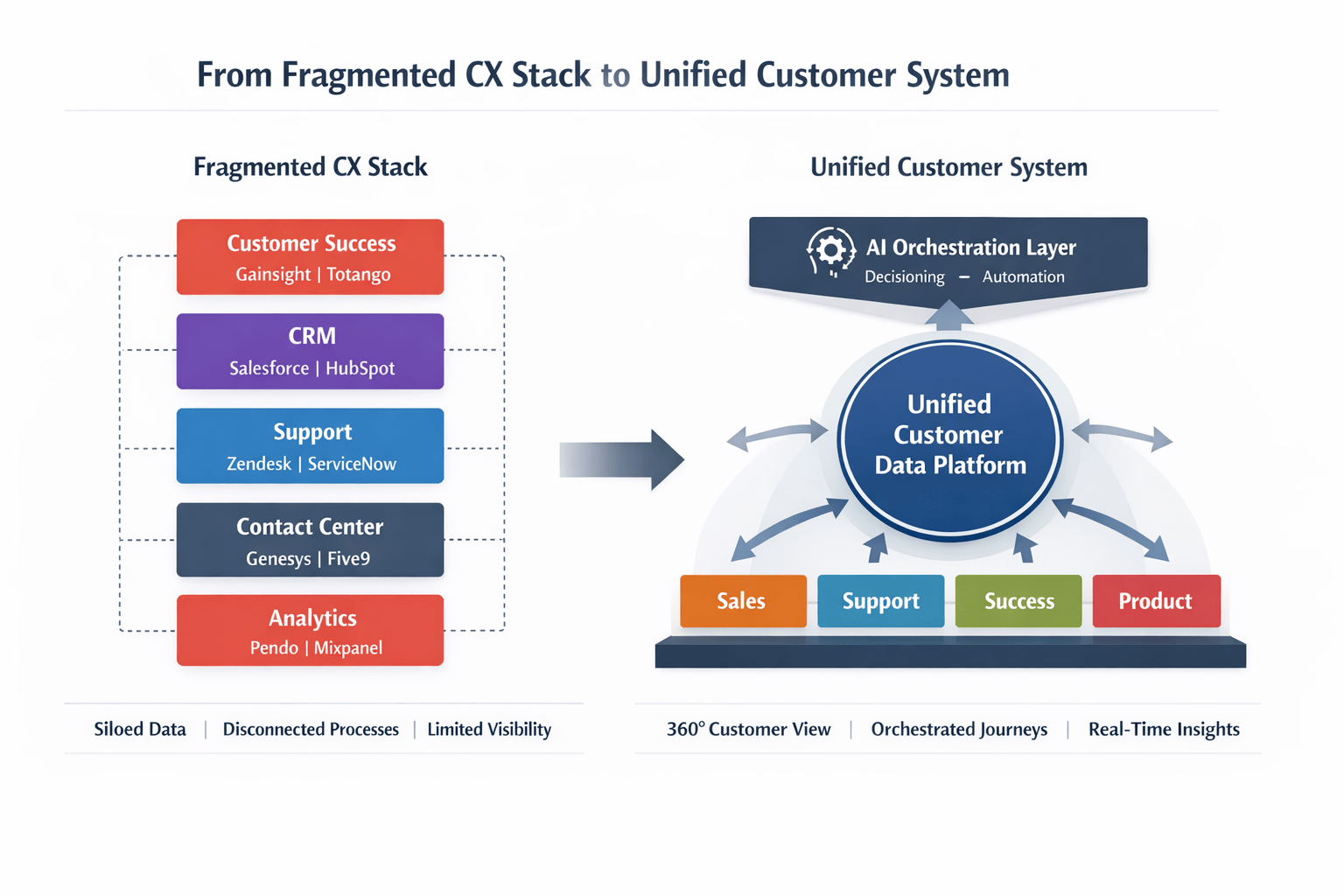
AI customer service architecture compared to fragmented customer systems

As shown above, most organizations operate through disconnected customer-facing systems rather than a unified customer architecture. Customers experience the gaps between them.

A customer contacts support and discovers that service has no visibility into recent sales conversations. A customer success manager is unaware of unresolved support issues. Product usage signals never reach teams responsible for retention or expansion. Every system contains valuable information, but no system owns the complete story.

This challenge existed before AI.

AI does not create fragmentation. It simply exposes and accelerates the consequences of fragmentation that already exists.

What AI Customer Service Architecture Requires to Succeed

Many organizations assume that AI can compensate for fragmented systems and disconnected processes.

In reality, a successful AI customer service architecture depends on capabilities that must already exist before intelligent automation can consistently create value.

Research from McKinsey on AI in customer operationshas similarly shown that organizations achieve the greatest impact when AI is embedded within broader operational and customer experience transformations rather than deployed as a standalone technology initiative.

There are three capabilities that are especially critical.

Unified Context

AI requires a complete and current understanding of the customer.

That includes historical interactions, support activity, product usage, account health, lifecycle stage, transaction history, and organizational relationships. When information remains fragmented across multiple platforms, AI operates with an incomplete understanding of the customer.

The result is predictable. Recommendations become less accurate. Personalization becomes inconsistent. Customer interactions feel disconnected.

Decision Authority

AI can identify issues.

AI can recommend actions.

AI can generate responses.

What AI often cannot do is act across disconnected operating environments.

Resolving a customer problem may require coordination across support systems, CRM platforms, customer success tools, operational workflows, and product teams. Without integrated processes and execution capabilities, AI becomes another recommendation engine rather than a driver of outcomes.

Lifecycle Awareness

Most AI solutions are event driven.

Customers, however, experience journeys.

Customers move through onboarding, adoption, value realization, support, expansion, renewal, and advocacy. Understanding a single interaction is useful. Understanding where that interaction fits within the broader customer lifecycle is what creates exceptional experiences.

Without lifecycle awareness, AI reacts.

With lifecycle awareness, AI orchestrates.

The Customer Impact

When organizations lack unified context, decision authority, and lifecycle awareness, the customer experience suffers.

Customers repeat information across channels.

AI delivers incomplete or contradictory responses.

Issues are transferred rather than resolved.

Accountability becomes unclear.

Continuity disappears.

These outcomes are often described as AI failures.

In reality, they are architecture failures.

AI is operating exactly as the surrounding systems allow it to operate.

The Root Cause: Function-Led Rather Than Customer-Led Design

Most organizations are structured around functions.

Each team makes rational decisions within its own area of responsibility.

The result, however, is an ecosystem optimized around departmental effectiveness rather than customer experience.

No one owns the customer system as a whole.

This is not primarily a technology problem.

It is a governance problem.

It is an operating model problem.

And it is one of the primary reasons organizations struggle to scale AI successfully.

Many organizations expect AI to solve operational fragmentation. In reality, AI depends on organizational alignment, process consistency, and system integration that must already exist before intelligent automation can achieve meaningful outcomes.

The Foundations Required for AI Customer Service Architecture

The Foundations Required for AI Success

For years, organizations have approached AI as a technology initiative.

The organizations achieving the strongest results are approaching it as an enterprise capability.

AI requires far more than a model, chatbot, assistant, or copilot. It requires a foundation built across both technology and organizational capabilities.

Successful AI initiatives depend on both.

The relationship between these foundations is illustrated below:
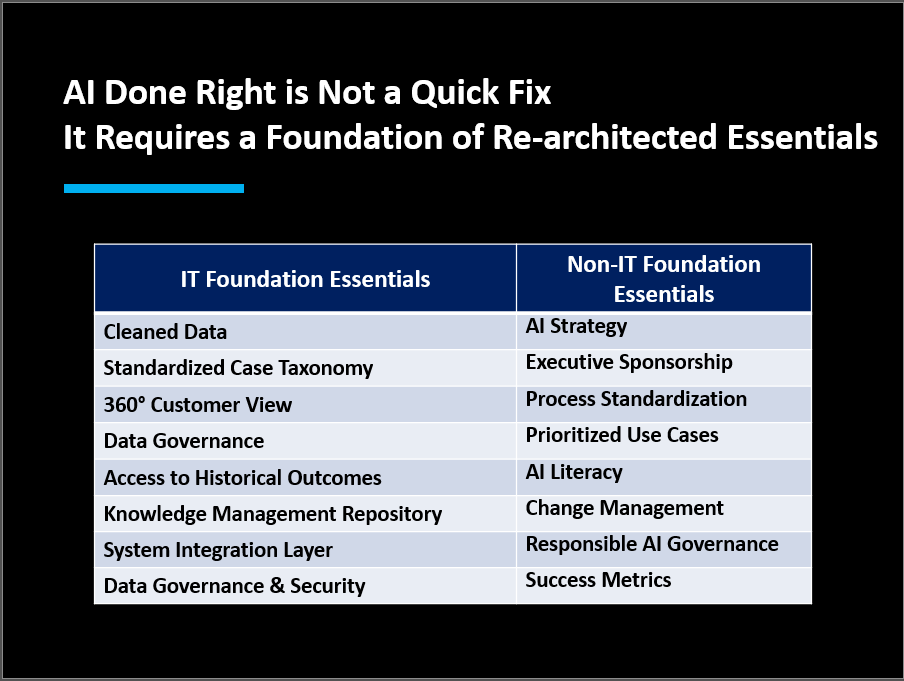
Technology and organizational foundations required for successful AI

Success depends on both technical foundations and organizational readiness. Weakness in either area limits the value AI can deliver.

Technology Foundations

  • Data governance and quality management
  • Access to historical outcomes and decisions
  • Centralized knowledge management platform
  • Enterprise integration and API architecture
  • Security, privacy, and compliance controls

Organizational Foundations

  • Enterprise AI strategy
  • Executive sponsorship
  • Process standardization
  • Prioritized use cases
  • AI literacy and workforce readiness
  • Change management
  • Responsible AI governance aligned with the NIST AI Risk Management Framework.
  • NIST AI Risk Management Framework.
  • Success metrics and accountability

These capabilities are not optional.

They determine whether AI creates measurable business value or simply magnifies existing organizational weaknesses.

The better the foundation, the more effective the AI.

A Real-World Example: Foundations Matter

A useful example comes from Ford.

Company leaders publicly discussed the limitations of relying on AI and automation without sufficient supporting expertise, institutional knowledge, and operational rigor. After increasing reliance on automated approaches, Ford ultimately brought back experienced engineers and technical specialists to strengthen the quality systems, processes, and expertise supporting product development.

One executive summarized the lesson directly:

“Mistakenly, we thought that by just introducing artificial intelligence and ingesting the design requirements that we had, that that would produce a high-quality product.”

The lesson is not that AI failed.

The lesson is that foundations matter.

Before pursuing large-scale AI initiatives, executive teams should ask several critical questions:

  • Have we standardized and governed our data?
  • Do we have a unified view of customers, products, or operations?
  • Have we captured critical institutional knowledge?
  • Are our processes consistent enough to automate?
  • Do employees understand how to work effectively with AI?
  • Is leadership aligned around measurable business outcomes?
  • Have we established governance and accountability?

Or are we expecting AI to compensate for problems that already exist within the organization?

Ford’s experience serves as a reminder that AI does not create operational excellence.

AI amplifies the quality of the foundation beneath it.

Organizations interested in the Ford example can read more here:


If AI Needs Foundations, What Should Organizations Build?

The answer is not another application, another database, or another AI tool.

The answer is a unified customer architecture that connects customer data, lifecycle orchestration, decisioning, and execution into a single coordinated system.

This is what a unified customer system actually looks like:
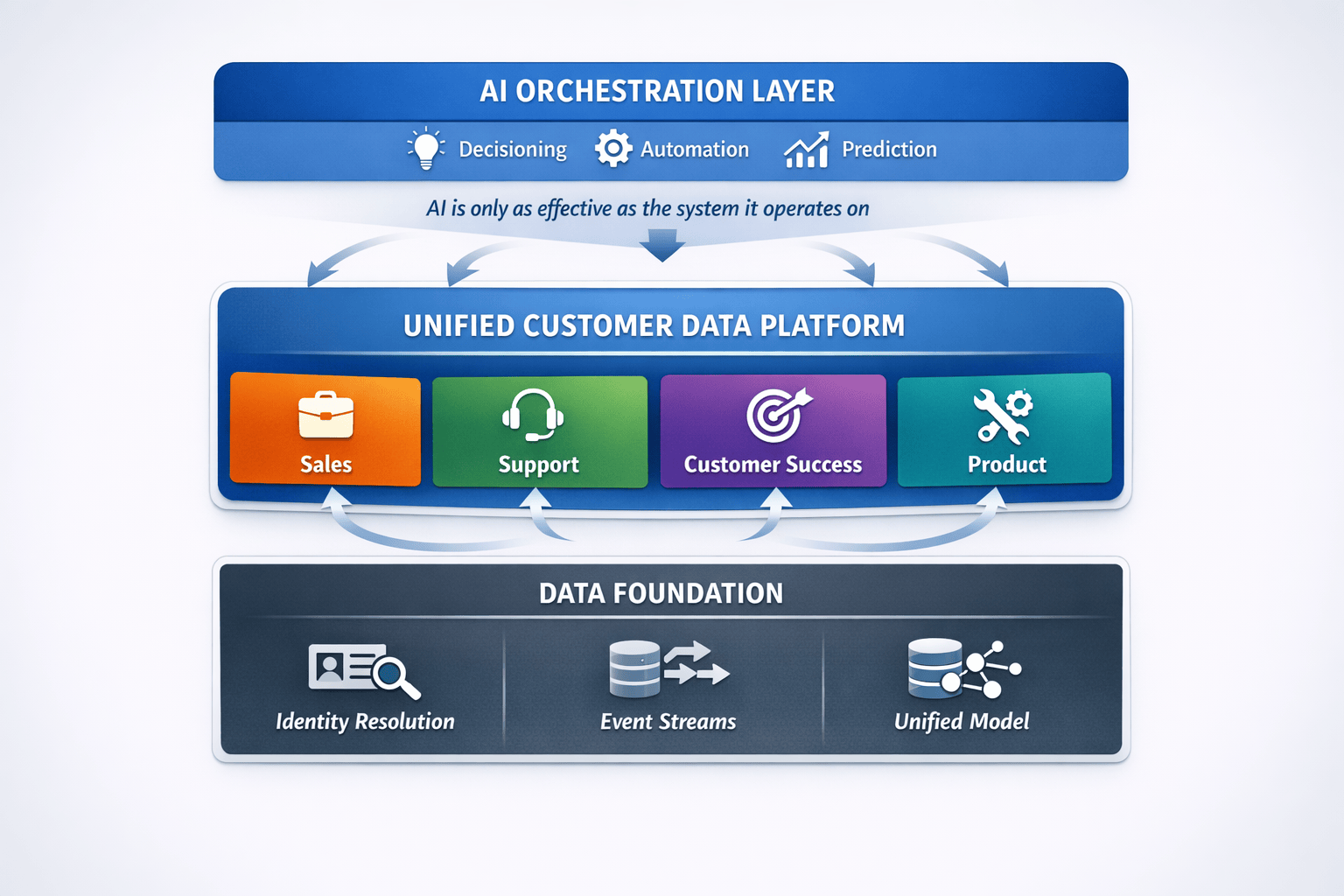
Unified customer architecture for AI customer service

A unified customer architecture connects data, orchestration, AI decisioning, and execution into a coordinated customer operating model.

AI only works when built on a unified customer architecture, not layered on top of fragmented systems.

A Reference Architecture for AI-Powered Customer Experience

Most organizations seeking to scale AI-driven customer experiences discover that success depends on the strength of their underlying AI customer service architecture.

AI Customer Service Architecture Model

The Unified Customer System Model

Organizations must move from a collection of tools to a coordinated system built across five layers:

1. Data Layer — Unified Customer Model

  • Identity resolution across systems
  • Event-level data standardization
  • Real-time synchronization

The Data Layer establishes a single source of truth for customer information across the enterprise. By connecting identities, interactions, and events across systems, organizations create the unified context that both AI and customer-facing teams required to make informed decisions. Without this foundation, every downstream capability operates on incomplete or inconsistent information.

2. Orchestration Layer — Lifecycle Management

  • Onboarding → Adoption → Value Realization → Expansion → Renewal
  • Cross-system triggers and workflows

The Orchestration Layer connects customer activities across the lifecycle and ensures that customer experiences are coordinated rather than isolated. Instead of departments responding independently to events, workflows span systems and functions, enabling proactive engagement, consistent handoffs, and customer journey continuity. Link to my thought leadership article on the quantifiable customer journey map.

3. AI Layer — Decisioning and Intelligence

AI should not sit inside tools.

It should sit above them.

AI becomes:

  • Decision engine
  • Orchestration trigger
  • Experience coordinator

In a mature architecture, AI serves as a cross-functional intelligence layer rather than a standalone feature inside an individual platform. With access to complete customer context and orchestrated workflows, AI can identify opportunities, recommend actions, automate decisions, and coordinate experiences across the customer lifecycle.

4. Execution Layer — System Activation

  • CRM
  • Support
  • Customer Success
  • Product Systems

These systems execute—but do not define—the experience.

The Execution Layer contains the operational systems that perform the actual work. CRM, support, customer success, contact center, and product platforms remain essential, but they function as execution points within a larger customer architecture rather than isolated systems operating independently.

5. Experience Layer — Customer Outcomes

  • Resolution without repetition
  • Proactive engagement
  • Seamless cross-channel journeys

The Experience Layer is where customers ultimately judge the effectiveness of the entire architecture. Customers do not evaluate data models, integrations, or AI algorithms. They evaluate whether interactions feel connected, consistent, relevant, and easy across every stage of their relationship with the organization.


What World-Class AI Customer Service Architecture Looks Like

When this architecture is in place, the experience changes fundamentally:
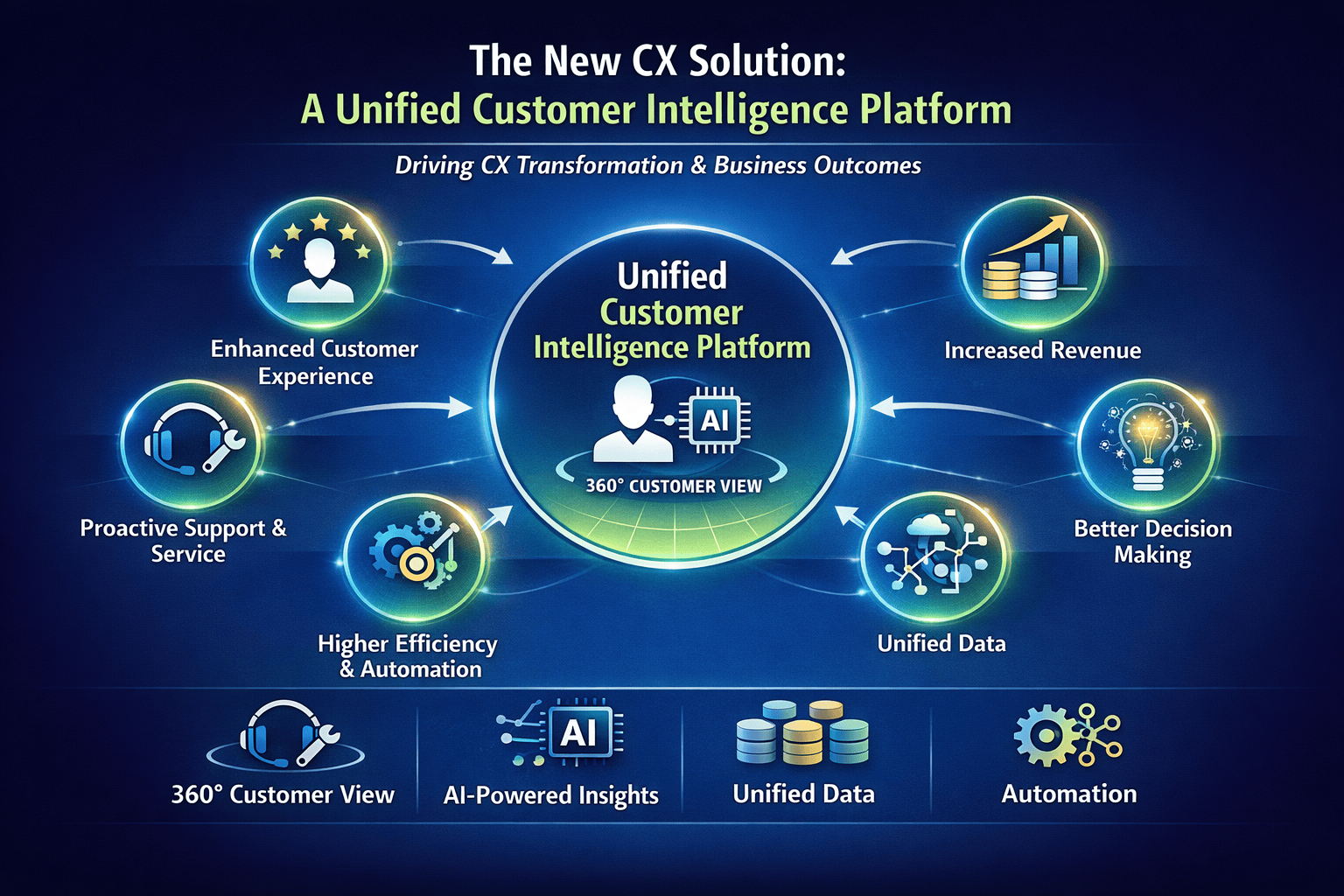
Unified customer intelligence platform for customer experience

The shift is not incremental. It’s from reactive service to orchestrated experience.

  • Customers no longer repeat themselves
  • AI understands full context immediately
  • Issues are resolved across systems in one interaction
  • Outreach happens before problems escalate
  • Digital and human interactions feel seamless

This is not better customer service.

This is a fundamentally different operating model.

Organizations with unified customer architectures move beyond isolated transactions and disconnected interactions. Instead, they create a coordinated customer experience where data, intelligence, automation, and human engagement work together across the entire lifecycle.


Final Thought on AI Customer Service Architecture

AI has reached a point where its success is determined less by the technology itself and more by the quality of the foundation beneath it. Organizations that invest in unified customer architecture, governance, and orchestration are best positioned to realize its full potential.

The organizations that create lasting advantage with AI will not be those that simply deploy the most tools.

They will be the organizations that first establish the foundations required for AI to succeed.

  1. Data.
  2. Knowledge.
  3. Governance.
  4. Process.
  5. Integration.
  6. Leadership.
  7. Change.
  8. Architecture.

Because when AI is finally sitting on top of a truly unified customer system—

It doesn’t just respond faster.

It doesn’t just automate.

It delivers something most companies still cannot:

A complete, consistent, and intelligent customer experience.

It becomes clear why leading organizations are investing in unified customer architectures as the foundation for the next generation of customer experience.

Frequently Asked Questions

What is AI customer service architecture?

AI customer service architecture is the combination of customer data, operational systems, governance, workflows, and orchestration capabilities that enable artificial intelligence to deliver consistent experiences across channels.

Why do AI customer service initiatives fail?

Many fail because customer data, processes, and systems remain fragmented, preventing AI from accessing complete customer context.

What is a unified customer system?

A unified customer system connects customer data, workflows, and technology platforms into a coordinated architecture that supports the entire customer lifecycle.

Why is a 360-degree customer view important for AI?

AI performs best when it can access a complete view of customer interactions, history, behavior, and lifecycle status.

What is customer lifecycle orchestration?

Customer lifecycle orchestration coordinates activities across onboarding, adoption, support, expansion, and renewal to create a seamless customer experience.

Author Bio

Steven Jeffes is a Customer Experience, Customer Success, CRM, and AI transformation leader who helps organizations build scalable customer operating models that improve growth, retention, and operational performance.

Ready to Build a Customer System AI Can Actually Power?

If your customers are repeating themselves across channels, your teams are working from fragmented data, or your AI initiatives aren’t delivering the outcomes you expected, it may be time to rethink the underlying foundation. The organizations realizing the greatest value from AI aren’t simply deploying new technologies—they’re creating unified customer systems that connect data, processes, people, and intelligence across the entire customer lifecycle.

At LegendaryCX we help organizations transform Customer Experience, Customer Success, Customer Service, CRM, and AI strategies into scalable operating models that drive measurable business outcomes. Whether you’re evaluating your customer architecture, developing an AI roadmap, redesigning customer journeys, improving operational performance, or building a unified customer experience strategy, we can help.

Explore more insights: LegendaryCX – https://www.legendarycx.com/
Read additional thought leadership articles: https://stevenjeffes.com/
Connect with us: https://www.linkedin.com/in/stevenjeffes
Schedule a conversation: 518-339-5857 or stevenjeffes@gmail.com

The future of customer experience isn’t about adding more technology. It’s about building the foundation that allows technology—and AI—to actually deliver on its promise.

Let’s start that conversation.

The 6 Pillars of High-Performance Customer Service Leadership: A Complete Guide to Building Exceptional Teams

Introduction

Customer service leadership has never been more challenging.

Today’s leaders are expected to improve customer satisfaction, increase retention, reduce costs, develop employees, embrace artificial intelligence, and drive operational excellence—all while navigating rapidly changing customer expectations.

Yet despite investments in technology, automation, analytics, and process improvement, many organizations continue to struggle with employee engagement, inconsistent performance, and customer dissatisfaction.

The reason is often surprisingly simple.

Exceptional customer experiences are not created by technology alone. They are created by people.

More specifically, they are created by leaders who understand how to align people, processes, culture, and technology around a common objective: delivering exceptional value to customers. Organizations that consistently outperform their competitors almost always have leadership systems that intentionally develop employees, reinforce accountability, and foster continuous improvement. While technology and artificial intelligence continue to transform customer service, the organizations generating the greatest results recognize that leadership remains the ultimate differentiator. For additional insights into how AI is reshaping customer service operations, read my article, https://bit.ly/4aaFUNy, “The 10 Most Powerful Applications of AI in Customer Service — And the Platforms Actually Leading the Market”.

More specifically, they are created by leaders who establish clear expectations, develop talent, inspire purpose, foster trust, create customer-centric cultures, and continuously challenge their teams to improve.

When Customer Service Teams Struggle

When customer service teams struggle, the root cause is rarely the employees themselves. More often, the issue lies in the leadership systems, coaching practices, culture, and accountability structures that shape daily performance.

After more than two decades leading customer service, customer success, customer experience, CRM, consulting, sales, and operations organizations, I have learned that technology, processes, and organizational structures matter far less than most leaders believe. The highest-performing teams consistently excel in six critical leadership disciplines.

These six pillars form the foundation of a high-performance customer service organization capable of delivering exceptional customer experiences, engaged employees, operational excellence, and sustainable business results.

Effective customer service leadership requires far more than managing operations and service metrics. It requires creating an environment where employees can consistently deliver exceptional experiences while growing professionally and contributing to organizational success.

Customer Service Leadership framework showing the six pillars of high-performance teams

Pillar 1: Customer Service Leadership Through Performance & Accountability

Performance creates predictability. Accountability creates consistency.

Without clearly defined expectations, even the most talented employees can struggle. Great customer service organizations establish objective performance standards and create a culture where everyone understands what success looks like.

The first step is establishing SMART goals that are specific, measurable, achievable, relevant, and time-bound. Employees should understand not only what is expected of them but also how their performance contributes to broader organizational objectives.

Successful leaders balance operational metrics such as Average Speed of Answer (ASA), Time to Resolution (TTR), First Contact Resolution (FCR), Customer Satisfaction (CSAT), Customer Effort Score (CES), and Net Promoter Score (NPS) with behavioral expectations around teamwork, professionalism, and customer advocacy.

Customer Service Leadership performance management and accountability model

Performance management should never be viewed as a once-a-year event. Instead, it should be reinforced through regular coaching discussions, performance reviews, and ongoing feedback.

One of the most important leadership responsibilities is distinguishing between skill issues and will issues. Skill issues require coaching, training, and development. Will issues require accountability and performance management. Leaders who fail to recognize the difference often apply the wrong solution to the wrong problem.

High-performing teams also develop peer accountability. Team members hold one another accountable for commitments, collaboration, and customer outcomes. Accountability becomes part of the culture rather than something imposed by management.

Leaders must also model accountability themselves. Employees quickly notice whether leaders follow through on commitments, communicate transparently, and hold themselves to the same standards they expect from others.

Leadership Takeaway

Great cultures are not built on good intentions. They are built on clear expectations, objective measures, consistent coaching, and accountability at every level of the organization.


Pillar 2: Customer Service Leadership Through Coaching & Mentoring

Great leaders do more than manage performance, they develop people.

While performance management focuses on today’s results, coaching and mentoring focus on tomorrow’s potential.

Every employee brings a unique combination of strengths, experiences, interests, aspirations, and challenges. Effective leaders invest time in understanding what motivates each team member and where they want to grow professionally.

The best coaching begins with curiosity. Leaders should seek to understand each employee’s career goals, strengths, preferred learning styles, and development opportunities. What motivates one employee may have little impact on another.

Empathy is equally important. Team members face personal and professional challenges that affect performance. Great leaders listen, seek understanding, and demonstrate genuine concern for their employees’ well-being. However, empathy should never replace accountability, and instead, it should enhance the effectiveness of performance conversations.

Individual development plans can be powerful tools for growth. These plans should identify key strengths to leverage, skill gaps to address, and career aspirations to support. Development should be personalized rather than standardized.

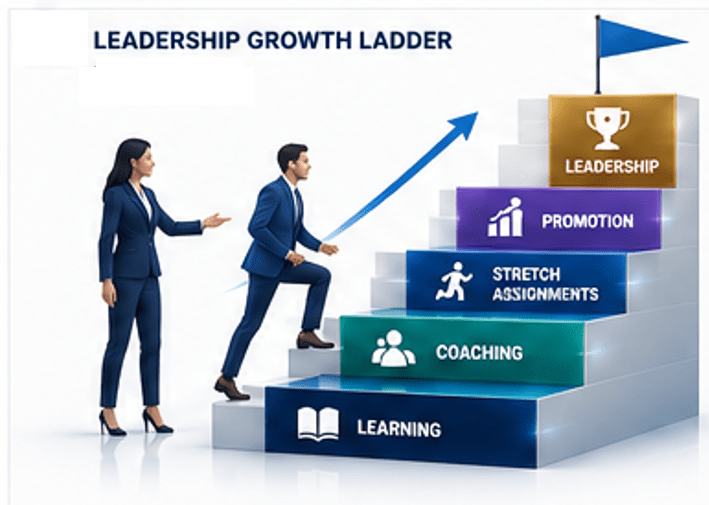
Stretch assignments are another critical leadership tool. Employees build confidence and competence when given opportunities to take on new responsibilities, lead projects, participate in cross-functional initiatives, or solve complex customer challenges.

Customer Service Leadership coaching and mentoring employeesShow more lines

Future leaders are often identified through these opportunities. Organizations that consistently develop internal talent create stronger succession pipelines and higher employee engagement.

The strongest examples of customer service leadership recognize that developing people is not a secondary responsibility—it is one of the primary drivers of long-term organizational performance.

Leadership Takeaway

The greatest legacy of any leader is not what they accomplish personally, but what they help others become.


Pillar 3: Service Leadership Through Motivation & Inspiration

Employees perform at higher levels when they understand why their work matters.

Unfortunately, many customer service teams become disconnected from the larger mission of the organization. Team members see transactions instead of impact. They observe tickets instead of customers. They analyze processes instead of purpose.

I once worked with a customer service organization supporting a medical device company. Despite supporting products that significantly improved patients’ lives, many employees viewed their roles as simply answering calls and resolving issues.

When leadership began sharing patient success stories and connecting daily activities to real human outcomes, employee engagement increased dramatically. Team members began to understand that their work extended far beyond service metrics. They were helping people live healthier, safer, and more productive lives.

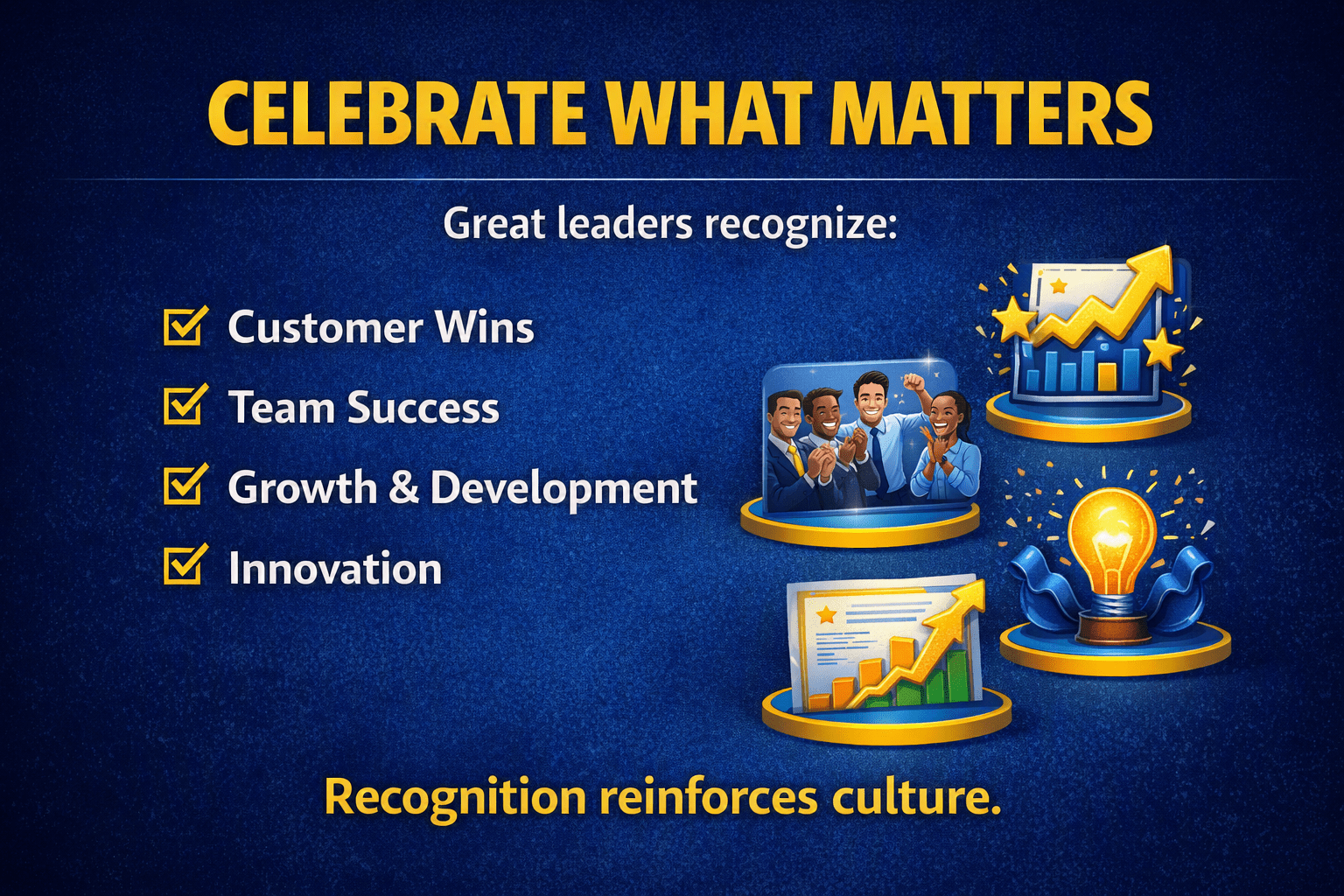
Adding on to that, purpose is one of the most powerful motivators available to leaders. Recognition is equally important. Employees want to know their contributions matter. Great leaders celebrate professional accomplishments, personal milestones, certifications, promotions, work anniversaries, and examples of exceptional teamwork

Service leadership strategies for motivating and inspiring customer service teams

Motivation also increases when employees feel trusted and empowered. Leaders should provide appropriate decision-making authority and encourage ownership of customer outcomes.

Healthy competition can further enhance engagement. Team challenges, performance recognition programs, and collaborative goals can create energy and excitement when implemented thoughtfully.

Leadership Takeaway

Lastly, motivation occurs when employees understand the purpose behind their work, feel valued for their contributions, and believe their efforts make a meaningful difference.


Pillar 4: Customer Service Leadership – Creating a Customer First Culture

Many organizations claim to be customer-centric but fewer actually operate that way.

Customer-first cultures are built intentionally through leadership behaviors, organizational priorities, and daily decision-making.

A customer-first culture begins with a simple question:

“What is best for the customer?”

This last question should influence decisions ranging from process design and policy development to technology investments and employee behaviors.

Therefore, leaders should regularly share customer feedback, success stories, testimonials, and Voice of Customer insights with their teams. Customer comments help employees understand how their actions affect customer experiences.

Additionally, recognition programs should highlight employees who go above and beyond for customers. Whether resolving a difficult issue, saving a customer relationship, or creating a memorable experience, these stories reinforce desired behaviors throughout the organization.

Customer journey mapping can further strengthen customer-centric thinking. When employees understand the entire customer experience—not just the touchpoints they directly support—they make better decisions and identify opportunities for improvement.

Customer Service Leadership and customer-first culture development

Organizations should also treat customer complaints as valuable sources of insight. Complaints often reveal friction points, process failures, communication gaps, and unmet expectations that can drive meaningful improvements.

Leadership Takeaway

Customer-first cultures are not created through mission statements or posters on walls. They are built through daily actions, leadership decisions, and an unwavering commitment to customer success.


Pillar 5: Customer Experience Leadership Through Collaboration & Trust
Show more lines

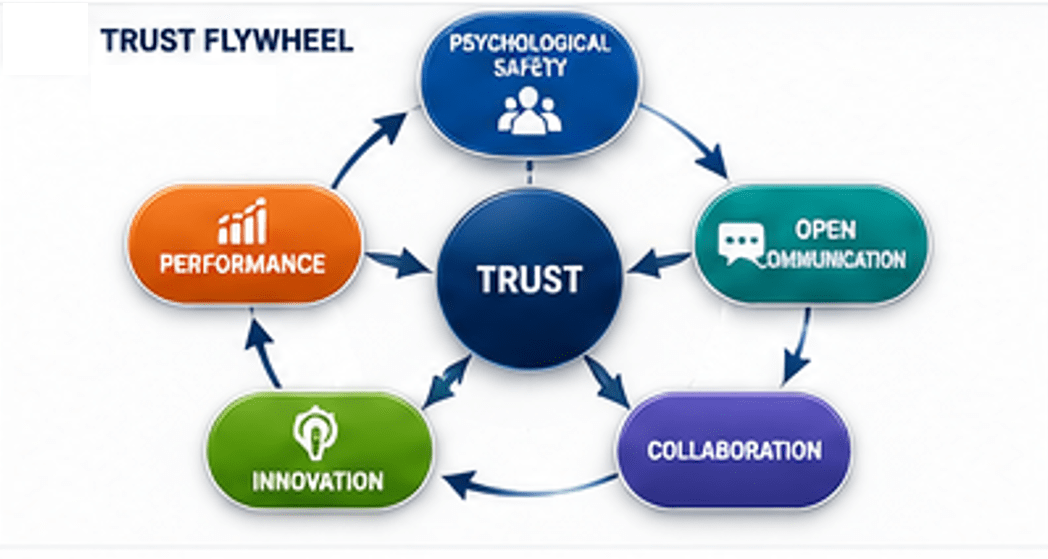
Trust is the foundation upon which all high-performing teams are built.

Without this trust, accountability feels punitive. Feedback feels personal. Collaboration becomes transactional. Innovation becomes risky.

Trust begins with psychological safety. Employees must feel comfortable sharing ideas, asking questions, admitting mistakes, and expressing concerns without fear of embarrassment or retaliation.

Consequently, research consistently shows that psychological safety is one of the strongest predictors of team effectiveness, collaboration, and innovation. Leaders who create environments where employees can speak openly, share concerns, and challenge assumptions without fear are more likely to build high-performing teams. Readers interested in exploring this concept further may find Harvard Business Review’s seminal article on psychological safety especially valuable: https://hbr.org/2023/02/what-is-psychological-safetyWhat Is Psychological Safety?.

Open communication is essential. Leaders should communicate transparently, provide regular updates, explain decisions, and encourage dialogue. Employees rarely expect leaders to have all the answers, but they do expect honesty.

Also, high-trust teams assume positive intent. Rather than immediately assigning blame, they focus on understanding situations, solving problems, and supporting one another.

Conflict should be addressed quickly and constructively. Healthy disagreement often leads to better decisions, but unresolved conflict can damage relationships and performance.

Successful teams also establish shared operating principles that guide behaviors and expectations. Examples include:

  • We communicate openly.
  • We support one another.
  • We hold each other accountable.
  • We assume positive intent.
  • We put customers first.
  • We solve problems together.

Correspondingly, cross-functional collaboration is another critical component of trust. Customer service rarely operates in isolation. Partnerships with sales, marketing, product, operations, finance, and technology teams are essential to delivering exceptional customer experiences.

Customer service leadership becomes significantly more effective when trust exists between leaders, employees, and cross-functional partners. Without trust, even the best processes and performance systems struggle to achieve their intended results.

Customer experience leadership built on trust and collaboration

Leadership Takeaway

Trust transforms a group of employees into a team. It accelerates performance, strengthens relationships, and enables every other leadership practice discussed in this article.


Pillar 6: Customer Service Leadership Through Innovation & Continuous Improvement

The strongest customer service teams do not simply execute processes efficiently but rather they continually improve them.

This is where great organizations separate themselves from good ones.

Customer expectations evolve. Technology evolves. Competitive pressures evolve. Teams that fail to innovate inevitably fall behind.

Furthermore, one of the most influential continuous improvement philosophies emerged from General Electric’s Work-Out initiative. Its premise was simple yet powerful:

Find a Better Way, Every Day.

The philosophy encouraged employees closest to the work to identify inefficiencies, eliminate bureaucracy, challenge assumptions, and continuously improve processes.

Customer service leaders should adopt a similar mindset.

Encourage teams to ask:

  • Why do we do it this way?
  • Is there a simpler approach?
  • Can we automate this process?
  • Can we reduce customer effort?
  • Can we improve the employee experience?
  • Can we eliminate unnecessary work?

Innovation should become part of everyday operations rather than an annual planning exercise.

Front-line employees often identify the best opportunities for improvement because they interact with customers daily. They see recurring pain points, process breakdowns, communication failures, and inefficiencies long before executives do.

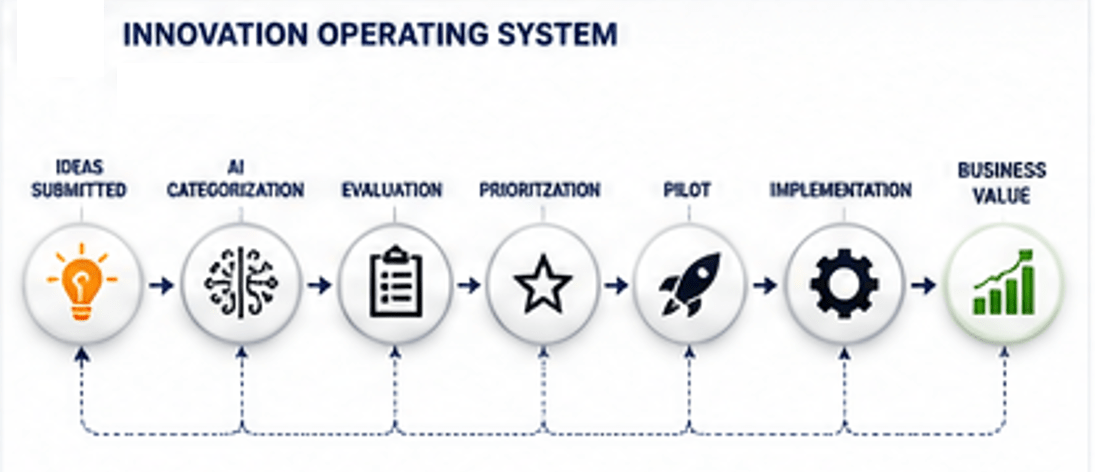
The challenge is creating systems that capture and act upon those ideas.

Unquestionably, many organizations still rely on spreadsheets, email chains, or suggestion boxes to manage innovation. Unfortunately, good ideas often disappear into a black hole.

Leveraging Innovation Management Platforms

Consequently, leading organizations increasingly leverage Innovation Management Platforms to formalize and automate the innovation process.

Examples include:

  • Brightidea
  • IdeaScale
  • Qmarkets
  • HYPE Innovation
  • ITONICS
  • Wazoku
  • Planview IdeaPlace
  • Ideawake
  • Planbox
  • InnovationCast
  • Viima
Customer Service Leadership innovation and continuous improvement framework

Additionally, these platforms help organizations:

  • Capture employee ideas
  • Launch innovation campaigns
  • Facilitate collaboration
  • Prioritize initiatives
  • Track implementation progress
  • Measure business impact
  • Manage recognition programs
  • Leverage AI-assisted idea evaluation and categorization

The result is a repeatable innovation process rather than sporadic brainstorming sessions.

Leaders should also establish structured innovation programs that include:

  • Weekly idea submissions
  • Monthly innovation reviews
  • Quarterly improvement initiatives
  • Customer feedback workshops
  • Cross-functional innovation sessions
  • Continuous improvement councils

Equally important is recognizing innovation. What gets recognized gets repeated.

The Optimal Company & Team Innovation Operating System

Consider implementing:

Weekly Innovation Spotlight

Recognize employees who identify:

  • Customer experience improvements
  • Process enhancements
  • Automation opportunities
  • Cost-saving initiatives

Quarterly Innovation Awards

Recognize:

  • Most impactful implemented idea
  • Largest customer satisfaction improvement
  • Best productivity improvement
  • Most valuable cross-functional innovation

Annual Innovation Excellence Awards

Recognize:

  • Innovator of the Year
  • Customer Experience Innovation Award
  • Continuous Improvement Champion
  • Team Innovation Award

Innovation should ultimately connect back to measurable outcomes, including:

  • Higher CSAT
  • Higher NPS
  • Lower CES
  • Improved FCR
  • Faster TTR
  • Increased employee engagement
  • Greater productivity
  • Reduced cost-to-serve

Leadership Takeaway

Lastly, the best customer service organizations are not those with the smartest leaders. They are the ones that create systems enabling every employee to contribute ideas, challenge the status quo, and continuously improve the business.


Conclusion

Exceptional customer service leadership is not about managing tickets, queues, or service levels alone.

The most successful customer service leadership practices focus on building strong cultures, developing employees, strengthening accountability, and creating sustainable systems for continuous improvement.

Rather, it is about building an environment where people can perform, grow, contribute, collaborate, innovate, and consistently deliver exceptional customer experiences.

The six pillars of high-performance customer service leadership are:

  1. Managing Performance & Accountability
  2. Coaching & Mentoring Team Members
  3. Motivating and Inspiring the Team
  4. Creating a Customer-First Culture
  5. Building Collaboration & Mutual Trust
  6. Driving Innovation & Continuous Improvement

Organizations that master these six disciplines don’t simply create better customer service teams.

They create cultures capable of delivering sustainable competitive advantage through people, purpose, customer obsession, trust, and continuous improvement.

The Leadership Multiplier

In a world increasingly shaped by automation and artificial intelligence, leadership remains the ultimate differentiator. Technology may enable great customer experiences, but exceptional leaders create the cultures that make them possible.

Therefore, the organizations that thrive in the years ahead will not necessarily be those with the most advanced technology. They will be the ones whose leaders consistently develop people, inspire innovation, and empower teams to deliver extraordinary value to customers every day.

Customer Service Leadership creating sustainable competitive advantage

HOW I HELP ORGANIZATIONS BUILD HIGH-PERFORMANCE CUSTOMER SERVICE CULTURES

Understanding the six pillars of customer service leadership is one thing.

Successfully embedding them into an organization’s culture, operating model, leadership practices, and employee experience is something entirely different.

Many organizations struggle not because they lack capable employees, but because they lack the leadership framework, accountability systems, coaching disciplines, customer-centric culture, and continuous improvement processes required to consistently achieve exceptional results.

Over the course of my career, I have helped organizations ranging from startups to Fortune 500 enterprises improve customer service, customer experience, customer success, CRM, sales, operations, employee engagement, organizational effectiveness, and digital transformation initiatives.

My experience includes leadership, consulting, and transformation work supporting organizations such as:

American Express • HP Verizon • AT&T • Microsoft • Amazon • Hilton Southwest Airlines • Ritz-Carlton • Pfizer • Toyota • SAP • MacysPfizer • Salesforce • Intuit • Cox Automotive • General Mills INEOS Automotive and many other global brands (see below for full list).

I work with executive teams and customer-facing organizations to:

  • Build high-performance customer service cultures
  • Improve customer satisfaction, loyalty, and retention
  • Develop stronger leadership and management capabilities
  • Create effective coaching and mentoring programs
  • Design customer-centric operating models
  • Improve employee engagement and accountability
  • Implement continuous improvement and innovation frameworks
  • Transform customer experience into a measurable competitive advantage
  • Align AI, technology, and process improvements with business outcomes

Therefore, the objective is straightforward:

Help organizations create stronger employees, stronger leaders, stronger customer relationships, and stronger business results.


ABOUT THE AUTHOR

Steven Jeffes
Managing Director, LegendaryCX

Customer Experience Strategist | Customer Service Executive | Customer Success Leader | CRM & Digital Transformation Consultant | AI & Customer Experience Advisor

🌐 LegendaryCX: https://www.legendarycx.com
🌐 Professional Website: https://www.stevenjeffes.com
📧 Email: stevenjeffes@gmail.com
📞 Phone: (518) 339-5857

Lastly, to learn more about my background, leadership experience, consulting engagements, transformation initiatives, and career accomplishments, visit my professional career profile pages and website portfolio:

  • Executive Career Profile
  • Career Specialties & Expertise Overview
  • Leadership Accomplishments Portfolio
  • Selected Clients, Companies & Industry Experience
  • Speaking, Consulting & Advisory Services

LET’S START THE CONVERSATION

If your organization is looking to improve customer service performance, leadership effectiveness, customer experience, employee engagement, customer success, operational excellence, or AI-enabled service transformation, I would welcome the opportunity to discuss your goals.

The organizations that outperform their competitors rarely do so because of technology alone. They outperform because they develop exceptional leaders, exceptional cultures, and exceptional customer experiences.

Let’s explore how your organization can do the same.

Steven Jeffes
Managing Director, LegendaryCX
🌐 http://www.legendarycx.com
🌐 http://www.stevenjeffes.com
📧 stevenjeffes@gmail.com
📞 (518) 339-5857

“Building Legendary Customer Experiences Through Exceptional Leadership, Culture, Innovation, and Execution.”

Steven Jeffes: Background & Experience
Steven Jeffes: Career Specialties