Improving Customer Service and Customer Experience Through Robotic Process Automation (RPA)

Robotic Process Automation (RPA) Illustration

A. What is RPA, a simple definition.
B. The customer experience and business benefits of RPA.
C. RPA market growth/trends.
D. RPA Use Cases & Examples of how RPA Enables Better Customer Service & Experience.
E. Top Companies embracing the use of RPA.
F. Top RPA Solution Platforms.
G. Top RPA System Integrators, Service Providers.
H. How to get started in leveraging RPA.
I. RPA Best Practices
J. RPA, 911 & where to get immediate RPA assistance and additional insights.

A) What is RPA, a simple definition:

Robotic process automation (RPA) is the automation of relatively basic, repetitive, and traditionally lower value business functions and tasks.

RPA automation is achieved through software or hardware systems that deliver several functions and processes that human resources would traditionally accomplish.

B) The customer experience and business benefits of RPA

RPA allows companies to offload an array of manual and repetitive tasks so that company team members can be freed up to focus more exclusively on important higher value-added functions including improving customer service and experience. Tasks that are automated include both front-office and back-office tasks and range in function from sales to finance to HR to customer service. Verticals that are more heavily invested in RPA currently include retail, telecommunications, and financial services. There are numerous use cases for RPA and I cover samples of these use cases more in depth in section E of this article. The chart below is a great summary of both the customer experience and business benefits of RPA.

Customer Experience and Business Benefits of Robotic Process Automation (RPA)

C) RPA Market Growth/Trends:


• Gartner Says “Worldwide Robotic Process Automation Software Revenue to Reach Nearly $2 Billion in 2021

• Garner also states that the “RPA Market Forecast to Grow at Double-Digit Rates Through 2024 Despite Economic Pressures from COVID-19”

Table 1. Worldwide RPA Software Revenue (Millions of U.S. Dollars)
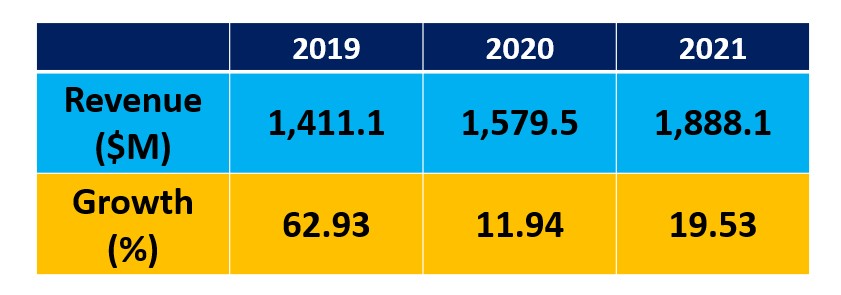
Robotic Process Automation (RPA) Market Growth, Source: Gartner (September 2020)

• The pandemic and ensuing recession increased interest in RPA for many enterprises. Gartner predicts that 90% of large organizations globally will have adopted RPA in some form by 2022 as they look to digitally empower critical business processes through resilience and scalability, while recalibrating human labor and manual effort.

Source: https://www.gartner.com/en/newsroom/press-releases/2020-09-21-gartner-says-worldwide-robotic-process-automation-software-revenue-to-reach-nearly-2-billion-in-2021

• According to the Research and Markets Report 2020, the Global Robotic Process Automation Market is expected to grow to $7.2 billion by 2025 at 32.6% CAGR.

Source: https://www.cmcglobal.com.vn/next-gen-technologies/top-rpa-technology-solution-providers/

D) RPA Use Cases & Examples of how RPA Enables Better Customer Service & Experience

1) RPA Use Case 1: Customer and Employee Onboarding:

Customer and Employee Onboarding RPA

The common tasks associated with employee and customer onboarding are very standard, structured, and repeatable. Therefore, these standard and repeatable tasks are perfect candidates for RPA. For example, RPA can handle the following customer and employee tasks:

a) Customers: RPA can be leveraged to establish customer profiles (e.g., segment, purchased products/services, payment and invoice financial accounts, credit worthiness checks and authorizations, etc.) and needed onboarding services (onboarding training, welcome kit delivery, initial sales account visits, etc.). Many of these customer onboarding processes are very standard with very few permutations and therefore are very likely candidates for the application of RPA.


b) Employees: RPA can be used to take employee and customer identifying information and update multiple information systems (payroll, emergency contacts, state employment and tax compliance, timesheet systems, training systems, security/access management, etc.). This behind-the-scenes RPA updating can save hours of valuable company resource time.

2) RPA Use Case 2: Customer Invoice and Payment Processing Automation:
Customer Invoice and Payments RPA

Customer invoicing and payment processing is a highly standardized and repeatable process. Take for instance the case of paying on an auto lease or financed purchase. The customer invoice and payment amounts are generally the same every month, usually at the same time of the month unless changed by request and, the calculation of the amount paid and remaining amount left to pay, a simple math exercise. The same is true for many other regular invoice and payment cycles: utilities, insurance, health plans, etc. These are all candidates for RPA whereby the robotic processing can automate the delivery of the standard customer process and experience delivery (vs. specialized 1-to-1 delivery). Some sophisticated rules-based RPA tools even allow for several complex permutations in the process invoice/billing amounts, timing, periodicity, etc.

3) RPA Use Case 3: Automation of Customer Calls:

Customer Call Center RPA

The Covid-19 pandemic has accelerated the acceptance of online self-service by customers, and they expect simple point and click solutions for inquiries, ordering, payments, providing feedback, pointing out issues and problems, etc. In short, they expect one and done customer service. Multi-channel customer interaction center (legacy term was call center) customer representatives have SLAs to meet in terms of time on call metrics (average time spent on each customer contact).

Much of the work of customer contact agents is standard and includes commonly performed tasks across all customer contacts. These common and repeatable tasks lend themselves perfectly to RPA to enable the contact agents to work on tasks that are higher value to the customer. Here are examples of customer contact center tasks that are likely candidates for RPA:
A) Data entry or update tasks
B) Generating customer acknowledgement or thank you notes
C) Completing a call after relevant customer information has been collected.
D) Populating customer order forms and invoices


There are many virtual attendant RPA solutions that make the job of the customer contact center agent easier while simultaneously enhancing the customer experience.

4) RPA Use Case 4: Customer Banking Automation:

Customer Banking RPA

Just like applying RPA to common and simple tasks for invoicing/payments and customer interaction centers, banking has numerous common tasks that are easily adaptable to RPA and IoT (reference my other blog article on IoT here: https://bit.ly/3DwQz2i ).

The common, routine, and repeatable banking tasks applicable for RPA include the following:
1) Opening and closing bank account.
2) Processing deposits.
3) Processing withdrawals.
4) Processing welcoming messages for new customers, customer buying new products.
5) Processing account updates or simple inquiries.
6) Processing account addendums (i.e., adding checking to savings).

5) RPA Use Case 5: Customer Order Management Automation:

Order Management RPA

How many times have you ordered items on the internet from online retailers and found the process very routine and repeatable? Well guess what? If you guessed this is a perfect process adaptable to RPA, then you are getting the concept. From a company’s perspective, the processing of orders manually is both time and cost intensive while not really adding much to the customer experience. Today, people want simple, fast, point and click instant self-service without having to rely on a human to get what they need. The common, routine, and repeatable order management tasks that are candidates for RPA include the following:
1) Processing orders.
2) Scheduling fulfillment and shipping.
3) Sending order status messages to customers (e.g., ordered, shipped, delayed, etc.),
4) Handling payments.
5) Processing returns and refunds.
6) Processing defect and warranty claims.

E) Top Companies Embracing the Use of RPA:


Here is a sampling of 20 of the more popular non-RPA service providers or consulting companies who are embracing the use of RPA:
1) Whirlpool
2) Siemens
3) Quest Diagnostics
4) LinkedIn
5) Linium (Now Cognizant (staffing))
6) Intel
7) Hewlett Packard Enterprise
8) Hess
9) General Motors
10) Dell
11) Comcast
12) Boston Scientific
13) AT&T
14) Adobe
15) Xerox
16) Vodafone
17) Ambit Energy
18) Avande
19) Zodiac Aerospace (now Safran Group)
20) Latam Airlines
Source: https://www.askeygeek.com/companies-using-robotic-process-automation/

F) Top RPA Solution Platforms:


Search the internet and you’ll find a great deal of rankings for the top RPA solution platform providers. Below is just one ranking of many that lists the top 10 vendors from a very well done article that lists the top 5 RPA service providers as UiPath, Automation Anywhere, Microsoft, EdgeVerve and Blue Prism (Softomotive removed since it was purchased by Microsoft, listed in #3 below, in 2020):

  1. UiPath (Gartner “Leaders” Magic Quadrant)
  2. Automation Anywhere (Gartner “Leaders” Magic Quadrant)
  3. Microsoft Power Automate (Gartner “Leaders” Magic Quadrant)
  4. EdgeVerve
  5. Blue Prism (Gartner “Leaders” Magic Quadrant)
  6. WorkFusion
  7. Kofax
  8. NICE
  9. Another Monday (Purchased by Hyland in 2020)
  10. Pegasystems
    Source: https://www.datamation.com/artificial-intelligence/top-15-robotic-process-automation-rpa-companies/

G) Top RPA Service and Consulting Companies:

Beyond the top RPA solution platform providers article listed in the previous section, there are very few articles that focus on the RPA service providers that help a company implement RPA. Below are the findings from a very well done analysis that puts the top 5 RPA service providers as EY, Capgemini, KPMG, TCS and Accenture. Below is the list of the entire ranked top 10 RPA service providers from this analysis:

Top 10 Ranking:
1) Ernst & Young
2) Capgemini
3) KPMG
4) Tata Consulting Services (TCS)
5) Accenture
6) IBM
7) Deloitte
8) Symphony Ventures (Now Sykes)
9) Cognizant
10) Infosys

Tata Consulting Services (TCS) is bolded above since I feel they are at the very top of services firms who can help other companies implement RPA.

Tata Consulting Services (TCS)

Source: https://www.horsesforsources.com/TOP-TEN-RPA-SERVICES-2018_120218

H) RPA Best Practices & How to get started in leveraging RPA:

Below is a simple step-by-step process I developed to help you get started in implementing RPA (vs. optimizing which is a separate list):

  1. Focus on tasks that are easy to implement, yet deliver high value impact
    Develop a list of tasks that are likely candidates for the application of RPA per the information provided above – simple/common tasks, repeatable tasks, few permutations to a task, etc. For each potential task listed create two additional columns as follows:
    A) Value to the organization and customers for task automation
    B) Ease of implementation
    Those chosen to move forward should be those easy to implement that create the highest value. I call these tasks the RPA “low hanging fruit” that are no brainers for automation.
  2. Start with small RPA pilots to demonstrate the proof of value
    Next find a way to limit the scope of the initial RPA pilot to include only exposing a limited (segment) of customers, choosing a task that is infrequently exercised (which still providing high value), or limit the time for testing the task automation (2-5 days, 1 week, etc.). Once the limited pilot is completed, document the results and value delivered from the pilot to build excitement and justification for full roll-out while make RPA adjustments based on lessons learned from pilot execution before going to full rollout.
  3. Measure, measure, measure – improve, improve, improve
    Similar to measuring the results from the pilot and refining the RPA components to further optimize the value derived from automating a RPA pilot, a continuous measurement & improvement process cycle should govern all RPA pilots, implementations, rollouts, etc.
  4. Focus on the simultaneous optimization of the internal organization and customer relationships
    A value delivery matrix should be developed that balances how to optimize the existing organization and labor costs such that resources are focused on delivering simultaneously the highest customer value and customer experience vs. focusing on routine and low value tasks.
  5. Obtain the advice and help of RPA consultants, professionals
    Just like the saying “don’t try this at home”, I don’t recommend tackling RPA initially without the help of a professional services/consulting firm that has a great deal of experience implementing RPA that closely resembles what you are seeking to accomplish. Refer to section G above for a great list of highly qualified RPA experts and services companies.

I) Summary:


1) RPA is the automation of repeatable, common, and typically lower value tasks to free up company resources to focus on higher value and strategic tasks like delivering improved customer experience and customer service.
2) The benefits of RPA are numerous, but RPA decreases company operating costs by reducing labor and labor costs while enabling better levels of customer intimacy, customer service and customer experience.
3) RPA, while not growing as fast as the complimentary IoT market, is very rapidly growing after taking a short growth respite in 2020 due to the Covid-19 pandemic.
4) There are many examples of RPA use cases that enhance customer service and experience and include invoice and payment processing, consumer banking, employee and customer onboarding, contact and call center automation, and order management .
5) The top 10 platform vendors include UiPath, Automation Anywhere, EdgeVerve, Blue Prism, Softomotive, WorkFusion, Kofax, NICE, Another Monday, and Pegasystems.
6) The top 10 RPA service and consulting companies include Ernst & Young, Capgemini, KPMG, Tata Consulting Services (TCS), Accenture, IMB, Deloitte, Symphony Ventures, Cognizant, and Infosys.
7) RPA quick start best practices include starting with tasks that deliver high value that are easy to implement, start with limited pilots to build excitement and prove the value of RPA, measure the results to continually improve, focus on the simultaneous optimization of the company organization and customer relationships, and hiring the support of RPA service firms and consultants to aid your RPA planning and deployment.

J) RPA 911 & where to get immediate RPA assistance and additional insights:

If you are seeking some quick advice on RPA, I can help point you in the right direction, provide some summary advice and am more than willing to help others beginning on this journey.

If your organization is seeking experienced assistance in lowering your overall cost to serve and increasing CSAT with automated and RPA, AI and/or IoT powered customer service, then give me a call or e-mail me at 518-339-5857 or stevenjeffes@gmail.com.

Lastly, this is just one article of over 55+ articles I have written on customer strategy, customer experience, CRM, sales excellence, marketing, product management, competitive intelligence, corporate innovation, change management – all of which I have significant experience in delivering for numerous Fortune 500 companies. In fact, my blog is now followed by nearly 105,000 world-wide and was just named one of the top 100 CRM blogs on the planet by Feedspot, alongside Salesforce.com, Infor, Microsoft, SAS, etc. – Reference this informative site here: https://blog.feedspot.com/crm_blogs/.

World-Class Sales Processes & Methodologies – Insights into How to Achieve Sales Process Excellence

World-Class Sales Process

World-Class Sales Process

What you will quickly learn in this blog article:

  • The value and ROI of having a world-class sales process.

  • The top 10 benefits to having a clearly articulated sales process and associated methodology.

  • The specific components & elements within each detailed sales process that enables the sales team to maximize their effectiveness.

  • Sample sales metrics that should be collected as part of an overall sales process.

  • How a sales process helps align corporate communications and actions toward winning each and every sale.

  • How to infuse sales best practices right into your sales process at every stage of the sales cycle.

  • How to ensure all levels of the sales teams actions are coordinated in terms of communications, hand-offs, approvals, sales readiness, etc.

  • How a leading practices sales process will actually ensure that you deliver an optimum customer experience where customers will buy more and become loyal.

  • How a best practice based sales methodology will ensure your sales team is fully accountable for results and for the sales funnel.

  • Why a sales process can make it easier to on-board, train and retain a high performing sales team.

  • What critical sales process steps you can be automated once the sales process is fully developed and why sales automation alone (out of the box) won’t deliver sales process excellence.

  • How you can leverage artificial intelligence and robotic process automation (RPA) to offload mundane, lower value tasks from the sales team.

  • Proven and effective sales best practices I have diffused at various Fortune 500 company clients.

B) The Top 10 Reasons Developing & Maintaining a World-Class Sales Process is valuable for you and your company:

  1. Holds Sales Team Staff and Management Accountable

By having performance measures and toll gates baked right into the overall sales process, you can hold team members accountable for reaching select performance levels at each phase of the sales process


  1. Provides a clear & proven path for sales reps to close deals.

By having clearly defined best practice based steps and milestones that guide sales team members, from prospecting to proposal presentation, your company can avoid losing sales deals due to disorganization.

  1. Increases sales organization collaboration & synergy

World-class sales processes contain within them the definition of your entire sales communication process including the roles of each department supporting the sales process. This feature of the sales process definition ensures everyone is on the same page and collaborating and communicating at each critical juncture of the sales process to ensure the sale is won.

  1. Enables more efficient and effective on-boarding of new sales members

A standardized sales process makes training sales reps fast, simple, and nearly foolproof, by showing salespeople what they need to do in various sales situations without having to tie up the sales manager in the (re) training process. In addition, when the entire sales team is following the same road-map, any member of the existing sales team can pass on their knowledge and guidance to new hires.


  1. Provides the ability to constantly improve sales processes and methods.

Successful sales teams continuously refine their sales processes based on the collection of measurable data and constant feedback that will be built right into any world-class sales process. For example, understanding where most of your sales deals are getting bogged down or lost can help you identify the root cause of why those deals were stalled or lost and take steps to re-engineer the sales process. Without a process in place, deals are simply won or lost, and it’s hard to know which specific actions are succeeding or failing.

  1. Delivers better forecasting with higher predictability of sales and revenue.

A repeatable sales process provides sales teams with greater consistency in winning deals. Having a more accurate sense of your overall sales win rate enables your company to dependably forecast how many sales you’ll close from a given number of leads, and helps sales managers set realistic team member sales quotas.

  1. Drives more qualified leads, increased lifetime value, revenue and profitability

A well honed sales process also enables your sales team to be more effective at filtering out low-potential leads and identifying prospects that are most likely to purchase your product. Generating greater volumes of higher-quality leads shortens your sales cycle and reduces the effort wasted on lower probability sales deals.  This also ensures that your sales team focuses its efforts on the activities that deliver the most revenue and the highest levels of profitability.

  1. Enables improved communication between sales and supporting teams.

By having your sales team speaking a common company language (vs. sales specific) it can enable better collaboration among sales team members and with supporting company departments. A standardized best practice sales process contains common steps and common language that delivers simplified inter-company communication, reduces inter-departmental confusion, and enables your accounting, customer service, fulfillment, and marketing teams to provide the right sales actions and content at the right time. The following chart is an example of developing a framework for how various sales team members communicate, share and update information, etc.

Sales Organization Roles, Responsibilities, Communications

Sales Organization Roles, Responsibilities, Communications

         9. Provides greater measurement of sales team performance

When a sales team has no standardized sales process to follow, it is difficult to measure anything except for wins and losses. A standardized sales process has built into it more data measurement points at each phase of the sales process, allowing for deeper analysis of key sales performance metrics and targets.

        10. Delivers a better overall customer experience.

When a sales representative pressures a prospect into a sales stage they are not comfortable with, it can create mistrust, which can negate the sale and damage the relationship with the buyer. A standardized sales process ensures that sales team members and managers do not advance the sale until the prospect is ready to move forward.  A best practice sales process also is designed to reflect how each prospect (customized via prospect analytics and profiling) would want to move through the buying process, and making sure each step is designed (customized) to generate maximum trust and value. In this manner the sales process enables sales teams to deliver an optimum and positive customer experience during each sales phase.

C) Global Sales Major Process Definition

World-Class Sales Process Framework

World-Class Sales Process Framework

The above is a sanitized version of the highest level sales process architecture I developed for a global consumer products company. This “level 1” foundation sales process architecture depicts the major processes and supporting processes for the overall company sales process. Each of these major process modules will each be further broken down in detail until the actual process steps, procedures and policies are of sufficient detail that they can be clearly followed by all sales stakeholders (sales manages, sales team members, departments supporting the sales team, senior management, etc.).

Level 2 Process Flow, Sales Planning & Forecasting

Level 2 Process Flow, Sales Planning & Forecasting

D) Sales Process Detailed Definition – Responsibilities and Major Processes

Breaking down the major 1.0 level sales process, we flow into the next level of detail for the S.1.0 process which is “Planning and Forecasting” for sales.

Level 2 / 3 Sales Process, Update Sales Forecast

Level 2 / 3 Sales Process, Update Sales Forecast

Within the “Planning and Forecasting” module we depicted the major coordination and communications that occur with this Level 2 process. The horizontal subdivisions (a.k.a. swim lanes) shows a high level breakdown of responsibilities within the sales organization and between the various functions, regions, etc.   This was important for this client since it mapped out who did what and at what level to end up with either a new or revised sales forecast.

Level 3 Sales Process, Update Sales Forecast

Level 3 Sales Process, Update Sales Forecast

E) Sales Process Detailed Definition – Steps, Decision Support, KPIs, Best Practices, Key Metrics

Using the “Updated Forecast” process as an example, we then show the level 3 detail of this sales process.

Level 3 Sales Process, Update Sales Forecast

Level 3 Sales Process, Update Sales Forecast

As shown above, typically a level 3 or 4 process flow contains the sales process detail for it to be actionable by the sales team and supporting team (accounting, IT, fulfillment, product management, customer service, etc.).

Level 3 Sales Process, Update Sales Forecast : Specific Elements

Level 3 Sales Process, Update Sales Forecast : Specific Elements Detailed

F) Detailed Sales Process – Definition of each step & components:

Let’s examine each of the 4 major elements of this level 3.0 process flow titled “Update Forecast”.

The first element we examine is the flow from another detailed process step,  “Review Period to Date Results”,  that has a number of inputs that into this process step “Update Forecast” at the Division level that include (sample) the following sales period to date information:

  • Projected sales volume vs. actual results

  • Sales representatives goals vs. actual results

  • # of closed sales deals and at risk-deals vs. planned

  • Profitability per deal vs. target

  • Total revenue and profit for all cumulative sales deals vs. target

Sales Process Step 1 Detailed, Update Sales Forecast

Sales Process Step 1 Detailed, Update Sales Forecast

The 1st process element we examine is the examination and decision based on actual vs. planned period to date sales KPIs as follows:

  • Are we maintaining an upward linear growth rate as planned

  • Previous year same month sales vs. current month

  • Overall sales generated sales velocity ($$ per day, week, month) deltas

Sales Process Step 2 Detailed, Update Sales Forecast

Sales Process Step 2 Detailed, Update Sales Forecast

If key sales planned period to date KPIs are at risk based on a certain threshold, we move to the 2nd element where we update a number of pre-determined KPIs that are critical to ensuring we have an accurate sales forecast. In this sample, my client decided that these are as follows (sample):

  • Sales targets

  • Key sales assumptions (totals and per deal)

  • Sales benchmarks (top performance vs. average vs. lagging)

  • Sales process (i.e. adjust at-risk deal processes to match on the ground situations for each deal)

  • Sales team accountability plans (adjust according to 1-4 above).

Sales Process Step 2A Detailed, Update Sales Forecast

Sales Process Step 2A Detailed, Update Sales Forecast

If they are not at major risk, we might update a few smaller parameters and then move onto process step 2A.

Sales Process Step 3 Detailed, Update Sales Forecast

Sales Process Step 3 Detailed, Update Sales Forecast

The 3rd process element we examine is the examination and decision based on sales project results for period end KPIs as follows (sample):

  • Are lead flow projected rates at previously forecast levels?

  • Are the numbers of late stage sales deals on track to close in the period end (monthly for my client)?

  • Based on the deals closing in #2 above, does the aggregate revenue for those deals match the projected forecast for period end?

  • Specific to this process step, we have an embedded best practice “BP”. This best practice details that if pipeline coverage of sales representatives drops below 85%, an automated process (with its own set of best practice procedures), kicks off titled “Recovery Plan S.1.0” that will return coverage of pipeline to 100%.

Sales Process Step 4 Detailed, Update Sales Forecast

Sales Process Step 4 Detailed, Update Sales Forecast

If key sales project results for period end KPIs are at risk based on a certain threshold, we move to the 4th element where we simply update the key sales projections and KPIs based on investigating and validating actual sales actions, feedback, roadblocks, prospect and customer actions, etc. These include (small sample of actual client metrics) the following:

  1. At-risk deals (#’s, specific names, assigned representatives, etc.)

  2. Top deal watch list (revenue and margin #’s, names/clients, roadblocks, action plan status, etc.)

  3. Low sales performer watch list (names, action plans, mentor-ships, etc.)

Sales Process Step 4A Detailed, Update Sales Forecast

Sales Process Step 4A Detailed, Update Sales Forecast

If there are no major risks, we might update a few smaller parameters and then move onto process step 4A where we simply exit this process and enter another downstream process. 

Sales Process Step G (Global Process Best Practices) Detailed, Update Sales Forecast

Sales Process Step G (Global Process Best Practices) Detailed, Update Sales Forecast

A global element in this update forecast process is the embedded best practices that have been developed as a result of evolving the sales process continuously. These include (small sample):

  • Flagging the top 5 (based on revenue, important to company) at-risk sales deals.

  • Performing a weekly review of at-risk sales deals and coming up with an action plan for each, taking into account any sales process changes made above in element 3, step 4).

  • Updating the following metrics, key for sales management visibility:

  1. Number of at-risk deals weekly, monthly, YOY, etc.

  2. The success ratio of closed top deals vs. top deals lost.

  3. Average sales cycle duration & actual sales representative time spent selling.

Other Key sales metrics for the overall sales process to consider:

  1. Overall sales win rate.

  2. Average deal size.

  3. Lead average follow-up time. (The time a lead is received until a sale representative follows-up)

  4. Sales by lead source (important marketing to sales metric).

  5. Quota achievement % total and by sales representative.

  6. Based on a-c (and more) above, what are the action plans and automated workflows that need to be created to enact updated performance plan metrics?

 G) Sales Process Automation:

There is a huge difference between sales automation and sales process automation. Just because you purchased leading tools like Salesforce, Microsoft, Oracle, Zoho, etc. does not mean it will conform or deliver a highly automated sales process right out of the box. These tools can be customized to accommodate the automation of your sales process, but will take additional $$, effort and potentially additional licenses that you may not have accounted for in the initial expenditure of funds and resources. This step is as important as purchasing the package since without easy to use functionality and processes that aid the sales effort, the tool will be considered more of a hindrance that a help.

You will also need to automate your sales process via a number of other supporting tools that salesforce automation software packages are not optimized for out of the box such as the following:

  • E-mail process automation like triggered responses to new lead inquiries or automated bots on the website to interact and respond to simple initial inquiries.

  • Report generation being triggered based on system parameters, timing and critical thresholds being reached. Add on packages like Adobe, Tableau, Microstrategy, Oracle BI, SAS, Sisense, etc. all are great packages that can be added to bring additional horsepower to your sales analytics and reporting capabilities.

  • Artificial intelligence and robotic process automation (RPA) can aid in the performance of sales tasks such as lead distribution, auto-populating CRM systems via intelligent voice capture and data mining following a phone sales call.

  • Pipeline & Order Management – tools like Vendasta can help automate the management of your pipeline and order management.

H) Other Sales Best Practices to Kick Your Sales Volume & Success into Overdrive:

While these are not related to the above sales process per say, I have included these as they are sales related and **some** clients choose to implement these practices, processes:

  • Analyze sales rainmaker activities & behavior and then replicate their best practices back into the overall sales process, training, activities, sales approaches. In this manner good sales reps move up to rainmaker performance, average sales reps move up to good performance, etc. I did this for a major U.S. insurance company a few years ago and it improved their overall sales performance by 32%!

  • Develop a referral incentive system with your existing customers as existing customer referrals are likely to close 50+% of the time, with strong personal referrals with testimonials likely to close at 80+%. Compare this to warm leads at <30% and cool leads at <15%. I did this as the SVP of Operations at a startup and it catapulted our sales from <$1m to over $3m in just 8 months.

  • Develop a network of complimentary re-sellers (a.k.a. channel sellers) of your services where the products and/or services you sell are complimentary to the re-sellers normal line business. For example, a firm that sells cultural improvement and/or leadership development services should be seeking out an HR consulting firm to resell their services since the HR firm is uncovering these needs on a regular basis with generally nowhere to turn for servicing unearthed client needs. The HR consulting firm would then net a commission (5-10%) for merely opening the door to the new sales opportunity for the leadership development firm. Analogous to this on the web is affiliate sales and marketing. 

  • Invite satisfied customers to participate in the brand: guest blogger, posting testimonials, reviewing new concepts, products and/or services, participating on a Customer Advisory Board (e.g. top customers), etc. Studies have shown that the more they are invited to participate in the brand’s success, the more likely they are to share your brand’s success.

  • Let your existing customers know about your sales wins: The more your customers see you succeed and the strides your are making in the marketplace, the more likely they are to share these positive news stories. Examples: xyz company is winning contracts left and right, they must be doing something right, xyz is on fire, xyz services are selling like hotcakes, etc.

Related to the above topic, does your organization need consulting assistance developing and implementing a world-class sales process or any of the following: associated services?

  • Replicating the processes and behavior of your sales rainmakers to the rest of the sales team?

  • Infusing a set of sales cross-industry leading practices in your existing sales process?

  • Developing a best practice sales measurement and metric system?

  • Automating the sales process to offload the non-value sales tasks from your sales team so they can focus on meeting with prospects/customers and closing deals?

  • Investigate how to apply Artificial Intelligence (AI) and Robotic Process Automation (RPA) to sharpen your sales insights, targeting, lead generation flow, etc.?

If so, give me a call, I call help you implement sales process excellence that will  enable you to surpass your competition and bring your organization to the next level of sales performance and revenue.

Lastly, this is just one article of nearly 50 total I have written on Customer strategy, CRM, marketing, product management, competitive intelligence, corporate innovation, change management – all of which I have significant experience in delivering for Fortune 500 companies.  In fact, my blog is now followed by nearly 120,000+ world-wide and was just named one of the top 100 CRM blogs on the planet by Feedspot, alongside Salesforce.com, Infor, Microsoft, SAS, etc. – Reference this informative site here: https://blog.feedspot.com/crm_blogs/