Improving Customer Service and Customer Experience Through Robotic Process Automation (RPA)
December 2, 2021 4 Comments

Robotic Process Automation (RPA) Illustration
A. What is RPA, a simple definition.
B. The customer experience and business benefits of RPA.
C. RPA market growth/trends.
D. RPA Use Cases & Examples of how RPA Enables Better Customer Service & Experience.
E. Top Companies embracing the use of RPA.
F. Top RPA Solution Platforms.
G. Top RPA System Integrators, Service Providers.
H. How to get started in leveraging RPA.
I. RPA Best Practices
J. RPA, 911 & where to get immediate RPA assistance and additional insights.
A) What is RPA, a simple definition:
Robotic process automation (RPA) is the automation of relatively basic, repetitive, and traditionally lower value business functions and tasks.
RPA automation is achieved through software or hardware systems that deliver several functions and processes that human resources would traditionally accomplish.
B) The customer experience and business benefits of RPA
RPA allows companies to offload an array of manual and repetitive tasks so that company team members can be freed up to focus more exclusively on important higher value-added functions including improving customer service and experience. Tasks that are automated include both front-office and back-office tasks and range in function from sales to finance to HR to customer service. Verticals that are more heavily invested in RPA currently include retail, telecommunications, and financial services. There are numerous use cases for RPA and I cover samples of these use cases more in depth in section E of this article. The chart below is a great summary of both the customer experience and business benefits of RPA.

Customer Experience and Business Benefits of Robotic Process Automation (RPA)
C) RPA Market Growth/Trends:
• Gartner Says “Worldwide Robotic Process Automation Software Revenue to Reach Nearly $2 Billion in 2021“
• Garner also states that the “RPA Market Forecast to Grow at Double-Digit Rates Through 2024 Despite Economic Pressures from COVID-19”
Table 1. Worldwide RPA Software Revenue (Millions of U.S. Dollars)
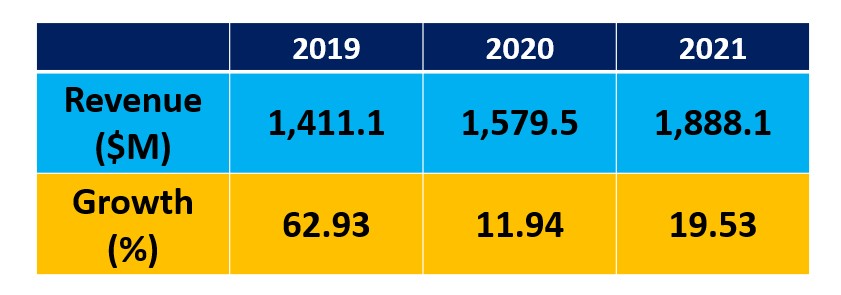
Robotic Process Automation (RPA) Market Growth, Source: Gartner (September 2020)
• The pandemic and ensuing recession increased interest in RPA for many enterprises. Gartner predicts that 90% of large organizations globally will have adopted RPA in some form by 2022 as they look to digitally empower critical business processes through resilience and scalability, while recalibrating human labor and manual effort.
• According to the Research and Markets Report 2020, the Global Robotic Process Automation Market is expected to grow to $7.2 billion by 2025 at 32.6% CAGR.
Source: https://www.cmcglobal.com.vn/next-gen-technologies/top-rpa-technology-solution-providers/
D) RPA Use Cases & Examples of how RPA Enables Better Customer Service & Experience
1) RPA Use Case 1: Customer and Employee Onboarding:

Customer and Employee Onboarding RPA
The common tasks associated with employee and customer onboarding are very standard, structured, and repeatable. Therefore, these standard and repeatable tasks are perfect candidates for RPA. For example, RPA can handle the following customer and employee tasks:
a) Customers: RPA can be leveraged to establish customer profiles (e.g., segment, purchased products/services, payment and invoice financial accounts, credit worthiness checks and authorizations, etc.) and needed onboarding services (onboarding training, welcome kit delivery, initial sales account visits, etc.). Many of these customer onboarding processes are very standard with very few permutations and therefore are very likely candidates for the application of RPA.
b) Employees: RPA can be used to take employee and customer identifying information and update multiple information systems (payroll, emergency contacts, state employment and tax compliance, timesheet systems, training systems, security/access management, etc.). This behind-the-scenes RPA updating can save hours of valuable company resource time.
2) RPA Use Case 2: Customer Invoice and Payment Processing Automation:
Customer Invoice and Payments RPA
Customer invoicing and payment processing is a highly standardized and repeatable process. Take for instance the case of paying on an auto lease or financed purchase. The customer invoice and payment amounts are generally the same every month, usually at the same time of the month unless changed by request and, the calculation of the amount paid and remaining amount left to pay, a simple math exercise. The same is true for many other regular invoice and payment cycles: utilities, insurance, health plans, etc. These are all candidates for RPA whereby the robotic processing can automate the delivery of the standard customer process and experience delivery (vs. specialized 1-to-1 delivery). Some sophisticated rules-based RPA tools even allow for several complex permutations in the process invoice/billing amounts, timing, periodicity, etc.
3) RPA Use Case 3: Automation of Customer Calls:

Customer Call Center RPA
The Covid-19 pandemic has accelerated the acceptance of online self-service by customers, and they expect simple point and click solutions for inquiries, ordering, payments, providing feedback, pointing out issues and problems, etc. In short, they expect one and done customer service. Multi-channel customer interaction center (legacy term was call center) customer representatives have SLAs to meet in terms of time on call metrics (average time spent on each customer contact).
Much of the work of customer contact agents is standard and includes commonly performed tasks across all customer contacts. These common and repeatable tasks lend themselves perfectly to RPA to enable the contact agents to work on tasks that are higher value to the customer. Here are examples of customer contact center tasks that are likely candidates for RPA:
A) Data entry or update tasks
B) Generating customer acknowledgement or thank you notes
C) Completing a call after relevant customer information has been collected.
D) Populating customer order forms and invoices
There are many virtual attendant RPA solutions that make the job of the customer contact center agent easier while simultaneously enhancing the customer experience.
4) RPA Use Case 4: Customer Banking Automation:

Customer Banking RPA
Just like applying RPA to common and simple tasks for invoicing/payments and customer interaction centers, banking has numerous common tasks that are easily adaptable to RPA and IoT (reference my other blog article on IoT here: https://bit.ly/3DwQz2i ).
The common, routine, and repeatable banking tasks applicable for RPA include the following:
1) Opening and closing bank account.
2) Processing deposits.
3) Processing withdrawals.
4) Processing welcoming messages for new customers, customer buying new products.
5) Processing account updates or simple inquiries.
6) Processing account addendums (i.e., adding checking to savings).
5) RPA Use Case 5: Customer Order Management Automation:

Order Management RPA
How many times have you ordered items on the internet from online retailers and found the process very routine and repeatable? Well guess what? If you guessed this is a perfect process adaptable to RPA, then you are getting the concept. From a company’s perspective, the processing of orders manually is both time and cost intensive while not really adding much to the customer experience. Today, people want simple, fast, point and click instant self-service without having to rely on a human to get what they need. The common, routine, and repeatable order management tasks that are candidates for RPA include the following:
1) Processing orders.
2) Scheduling fulfillment and shipping.
3) Sending order status messages to customers (e.g., ordered, shipped, delayed, etc.),
4) Handling payments.
5) Processing returns and refunds.
6) Processing defect and warranty claims.
E) Top Companies Embracing the Use of RPA:
Here is a sampling of 20 of the more popular non-RPA service providers or consulting companies who are embracing the use of RPA:
1) Whirlpool
2) Siemens
3) Quest Diagnostics
4) LinkedIn
5) Linium (Now Cognizant (staffing))
6) Intel
7) Hewlett Packard Enterprise
8) Hess
9) General Motors
10) Dell
11) Comcast
12) Boston Scientific
13) AT&T
14) Adobe
15) Xerox
16) Vodafone
17) Ambit Energy
18) Avande
19) Zodiac Aerospace (now Safran Group)
20) Latam Airlines
Source: https://www.askeygeek.com/companies-using-robotic-process-automation/
F) Top RPA Solution Platforms:
Search the internet and you’ll find a great deal of rankings for the top RPA solution platform providers. Below is just one ranking of many that lists the top 10 vendors from a very well done article that lists the top 5 RPA service providers as UiPath, Automation Anywhere, Microsoft, EdgeVerve and Blue Prism (Softomotive removed since it was purchased by Microsoft, listed in #3 below, in 2020):
- UiPath (Gartner “Leaders” Magic Quadrant)
- Automation Anywhere (Gartner “Leaders” Magic Quadrant)
- Microsoft Power Automate (Gartner “Leaders” Magic Quadrant)
- EdgeVerve
- Blue Prism (Gartner “Leaders” Magic Quadrant)
- WorkFusion
- Kofax
- NICE
- Another Monday (Purchased by Hyland in 2020)
- Pegasystems
Source: https://www.datamation.com/artificial-intelligence/top-15-robotic-process-automation-rpa-companies/
G) Top RPA Service and Consulting Companies:
Beyond the top RPA solution platform providers article listed in the previous section, there are very few articles that focus on the RPA service providers that help a company implement RPA. Below are the findings from a very well done analysis that puts the top 5 RPA service providers as EY, Capgemini, KPMG, TCS and Accenture. Below is the list of the entire ranked top 10 RPA service providers from this analysis:
Top 10 Ranking:
1) Ernst & Young
2) Capgemini
3) KPMG
4) Tata Consulting Services (TCS)
5) Accenture
6) IBM
7) Deloitte
8) Symphony Ventures (Now Sykes)
9) Cognizant
10) Infosys
Tata Consulting Services (TCS) is bolded above since I feel they are at the very top of services firms who can help other companies implement RPA.

Source: https://www.horsesforsources.com/TOP-TEN-RPA-SERVICES-2018_120218
H) RPA Best Practices & How to get started in leveraging RPA:
Below is a simple step-by-step process I developed to help you get started in implementing RPA (vs. optimizing which is a separate list):
- Focus on tasks that are easy to implement, yet deliver high value impact
Develop a list of tasks that are likely candidates for the application of RPA per the information provided above – simple/common tasks, repeatable tasks, few permutations to a task, etc. For each potential task listed create two additional columns as follows:
A) Value to the organization and customers for task automation
B) Ease of implementation
Those chosen to move forward should be those easy to implement that create the highest value. I call these tasks the RPA “low hanging fruit” that are no brainers for automation. - Start with small RPA pilots to demonstrate the proof of value
Next find a way to limit the scope of the initial RPA pilot to include only exposing a limited (segment) of customers, choosing a task that is infrequently exercised (which still providing high value), or limit the time for testing the task automation (2-5 days, 1 week, etc.). Once the limited pilot is completed, document the results and value delivered from the pilot to build excitement and justification for full roll-out while make RPA adjustments based on lessons learned from pilot execution before going to full rollout. - Measure, measure, measure – improve, improve, improve
Similar to measuring the results from the pilot and refining the RPA components to further optimize the value derived from automating a RPA pilot, a continuous measurement & improvement process cycle should govern all RPA pilots, implementations, rollouts, etc. - Focus on the simultaneous optimization of the internal organization and customer relationships
A value delivery matrix should be developed that balances how to optimize the existing organization and labor costs such that resources are focused on delivering simultaneously the highest customer value and customer experience vs. focusing on routine and low value tasks. - Obtain the advice and help of RPA consultants, professionals
Just like the saying “don’t try this at home”, I don’t recommend tackling RPA initially without the help of a professional services/consulting firm that has a great deal of experience implementing RPA that closely resembles what you are seeking to accomplish. Refer to section G above for a great list of highly qualified RPA experts and services companies.
I) Summary:
1) RPA is the automation of repeatable, common, and typically lower value tasks to free up company resources to focus on higher value and strategic tasks like delivering improved customer experience and customer service.
2) The benefits of RPA are numerous, but RPA decreases company operating costs by reducing labor and labor costs while enabling better levels of customer intimacy, customer service and customer experience.
3) RPA, while not growing as fast as the complimentary IoT market, is very rapidly growing after taking a short growth respite in 2020 due to the Covid-19 pandemic.
4) There are many examples of RPA use cases that enhance customer service and experience and include invoice and payment processing, consumer banking, employee and customer onboarding, contact and call center automation, and order management .
5) The top 10 platform vendors include UiPath, Automation Anywhere, EdgeVerve, Blue Prism, Softomotive, WorkFusion, Kofax, NICE, Another Monday, and Pegasystems.
6) The top 10 RPA service and consulting companies include Ernst & Young, Capgemini, KPMG, Tata Consulting Services (TCS), Accenture, IMB, Deloitte, Symphony Ventures, Cognizant, and Infosys.
7) RPA quick start best practices include starting with tasks that deliver high value that are easy to implement, start with limited pilots to build excitement and prove the value of RPA, measure the results to continually improve, focus on the simultaneous optimization of the company organization and customer relationships, and hiring the support of RPA service firms and consultants to aid your RPA planning and deployment.
J) RPA 911 & where to get immediate RPA assistance and additional insights:
If you are seeking some quick advice on RPA, I can help point you in the right direction, provide some summary advice and am more than willing to help others beginning on this journey.
If your organization is seeking experienced assistance in lowering your overall cost to serve and increasing CSAT with automated and RPA, AI and/or IoT powered customer service, then give me a call or e-mail me at 518-339-5857 or stevenjeffes@gmail.com.
Lastly, this is just one article of over 55+ articles I have written on customer strategy, customer experience, CRM, sales excellence, marketing, product management, competitive intelligence, corporate innovation, change management – all of which I have significant experience in delivering for numerous Fortune 500 companies. In fact, my blog is now followed by nearly 105,000 world-wide and was just named one of the top 100 CRM blogs on the planet by Feedspot, alongside Salesforce.com, Infor, Microsoft, SAS, etc. – Reference this informative site here: https://blog.feedspot.com/crm_blogs/.
