By Steven Jeffes
As companies seek ways to increase profitable revenue growth, the topic of Social Relationship Management (SRM), also known as RM 2.1, keeps getting more and more attention. Traditional RM systems reached out from the organization to target prospects and customers. By contrast, SRM tools put consumers in the driver’s seat, letting them interact with your company and brands on their own terms — reviewing products, creating community, making suggestions, creating brand sentiment. This outpouring of consumer activity translates into data to be sifted, analyzed, and reported, requiring new tools and techniques, often tied to traditional RM systems, in order to convert raw data into social media intelligence.
Unless you have been living in total isolation for the last 24-36 months, you have likely heard of or used Twitter, Facebook and/or LinkedIn among other social networking platforms. Chances are also likey that your company is vigorously interacting with customers and prospects online. You also also likely be unsure how to harness the new social media to raise your company’s profile on and off the Internet. Even more basic, you may be unsure how to discover what people are saying about your brand/products, and in which forums, called influence communities, they are commenting. Most companies are just starting to climb the social media learning curve. But time is of the essence since companies ‘not in the game’ are considered to be laggards in terms of being stakeholder and constituent proactive.
Your customers, prospects, and competitors are all using social networks like LinkedIn, Plaxo, Facebook, YouTube, and Identi.ca in record numbers every day — and new sites and tools appear almost as frequently. These tools are a powerful way to connect with people, ascertain their needs, liste to their preferences, and more flexibly and quickly respond to their needs. Although consumers have been leading the social media revolution, Business-to-Business (B2B) companies can learn from the successes and failures made by other businesses that sell to consumers in this new social community. Harnessing social media in the context of B2B is the next major frontier to master.
Ranging in price from free to fairly expensive, SRM tools provide a robust means of interacting with your customers, gathering intelligence on your competition, and staying abreast of topics, trends, and sentiment that will be impactful to your brands/products/services/etc. While somewhat more rudimentary, even the free tools can help you find out who’s talking about your organization/brands/products/services/etc. and what is being said.
Establishing an Effective SRM Program
If you are not already doing it, you should start monitoring what your customers and others are saying online about your brand & products. This way you will get early warning if there is a public relations disaster in the making or, conversely, advance notice of good news like a new product finding its targeted audience. Sites like Yelp let customers post reviews of businesses. Some say that, if Toyota employed an effective social media listening program, it might have discovered the set of product issues earlier than was the case. Listening, however, it just the first step toward building an effective social media program.
Customers are posting their opinions on all sorts of Web sites and forums, and not just in the obvious ones. You need to get a ahead of the tide of customer opinion — good, bad, ever-changing — and monitoring all of the potential sites manually is likely to be more than you can handle. Tools that help you aggregate and analyze social media sentiment or manage social media conversations in masse can keep you from drowning in the vast sea of on-line opinions.
I recently helped a credit card company analyze customer sentiment around its new-customer onboarding process. Using a sentiment analysis tool, I set thresholds for comment similarity and frequency. For example, if the number of negative customer comments regarding a certain credit card fee went over the pre-set threshold, an alert would be sent to the marketing and customer service teams, urging them to take action.
Each alert kicked off a workflow of tasks which provided guidance on how to respond to what was being said. An abundance of negative comments relating to fees might trigger a strategic set of campaigns to educate customers on how to reduce their fees, as an example. Additionally, if a significant number of customer comments concerned customer service issues relating to on-boarding process, then that would launch a workflow to address and rectify the situation. My client was able to adjust the number of comments that would trigger the alerts, and this threshold was easy to fine tune as necessary. Keeping on top of customer opinion helped this credit card company address customer complaints in a timely manner while also understanding which parts of the on-boarding process were working well and which processes needed improvement. The company was able to reduce its total on-boarding cycle time by 11 to 16% by implementing a continuous improvement program based on what was being learned via this social media ‘listening’. This credit card company has since expanded its sentiment analysis to other sectors of the business.
Identify & Interact with Key Influencers
Using an online sentiment analysis tool provides you with real-time awareness of the tide of customer/consumer opinion. What you do then with that knowledge is critical to successful social media program. Like my credit card client, you will likely want to tweak (or even completely change) your campaigns and communications strategy according to major trends in social media sentiment from key influencers. Whatever you do, my advice is to proceed with caution.
Although it is tempting to respond in kind to every negative commentary, that can be a dangerous path. I have all seen cases of tit-for-tat on all sorts of Internet forums — decorum is often not part of the debate. It is best to steer clear of vitriolic exchanges in any forum, no matter how tempting.
On the other hand, if done with common sense and sensitivity to the overall audience, there are certain instance in which you might choose to respond on an individual basis to a negative comment. You may want to engage if the comment is wrong or unfair, especially if the poster appears to be a key influencers (i.e., other people in the forum and/or community appear to be swayed by that person’s opinion).
As an example, Campbell’s Soup Co. recently used Twitter to take on a poster’s critique of the company’s advertisements for its 80-calorie Select Harvest Light soup. The person making the post via Twitter took exception to the commercial’s implication that competitors’ 300-plus-calorie soups were fattening. Campbell’s Soup Co. immediately fired back on Twitter, pointedly calling the poster’s views ‘extreme’. It remains to be seen if this was the right approach, but if a company believes it has been wrongly called out by someone, it has the same right to use social media to defend their brand image and reputation. Just beware of unintended consequences such as being considered brand myopic or being ‘big brother’ and not allowing any reasonable 3rd party opinions.
Another situation in which you should engage directly with a customer or influencer is when there is a legitimate customer service issue. In fact, some companies are using Twitter (e.g. Dell Computers, Southwest Airlines, Home Depot, Pandora, Starbucks, Comcast, H&R Block) as a customer support platform because of its ease of use and real-time interaction capabilities. The are many classic case stories such as the person stranded in the airport, stuck between flights and miserably tweeting about their negative experience. In a point-of-service situation like this, the airline can and should intervene to help this customer. By responding in a positive way, the potential for increased customer loyalty is immense, both from the customer who was helped and anyone else who might hear (and re-comment) about it. Everyone loves a feel-good story about a company going above and beyond to help their customers in need.
Get Them on Your Side: From Brand Detractor to Brand Advocate
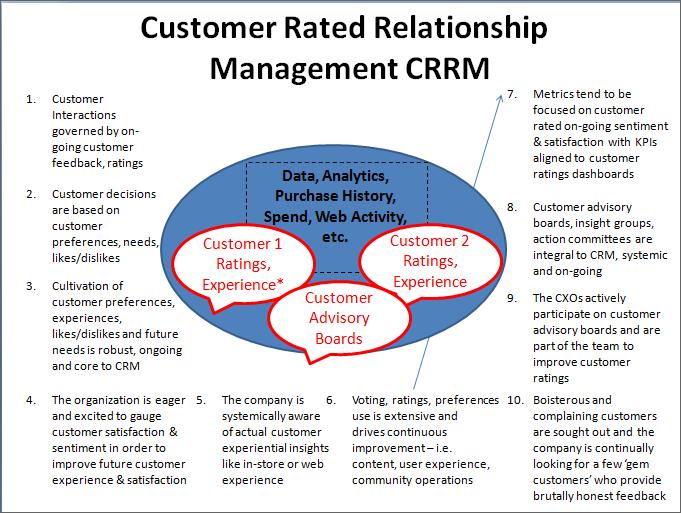
Another technique for handling specific negative commentary is to try to win him or her over and transform him or her from being a brand detractor (i.e., negative brand perceptions) into becoming a brand advocate (i.e., positive brand perceptions). Anyone who frequently makes posts to opinion web sites and micro-blogs clearly is willing to devote time and effort to the influencing the topic at hand. Many of these types are key opinion leaders and key influencers (i.e., the top reviewers on Amazon.com). If you can succeed in getting this key influencer on your side, you may gain a tireless brand champion, an invaluable asset in swaying online opinion toward having a positive image of your brands, products, services, etc.
In any case, you must approach a key opinion leader cautiously, as they are likely to be cynical about ‘corporate intent’ and ‘influencing’ efforts. Start incrementally by asking for additional input on a particular topic. Or, ask that person to join a client advisory board — but be sure to provide meaningful opportunities to provide feedback. Due to their savvy nature, key opinion leaders will immediately sense any attempt to manipulate their opinions, so small incremental interactions and progress is recommended. It is hard for customer, or even the sharpest critics, to fault a company that keeps asking for their thoughts and ideas in order to make their brand and customer experience better.
Another strategy to accomplish the same goal is even more subtle. Without interacting with key opinion leader directly, try to drive them to links to pages or sites where you are gathering specific product feedback. By allowing them to participate in shaping things, you are them demonstrating to them you are responsive and listening to your constituencies, communities and people who really count – their key stakeholders.
Some companies even go a little further, allowing online visitors to become active participants in shaping their next set of products, new services, or even TV advertisement (i.e., the Doritos user-generated Super Bowl ad). Called “crowd sourcing,” this technique may seem risky and chaotic, but can result in new products that more closely match customer needs. (Twenty million visitors all saying they want the same thing can’t be all that wrong).
Steps to Developing World-Class Social RM & Loyalty Programs
For many companies, developing an effective SRM strategy is still a work in progress. That’s understandable, but I strongly recommend to get started as soon as possible. If you’re unsure what to do next, consider the following concepts:
- Create your social media personality and develop positive brand perceptions. Social media offers strong opportunities for organizations to reinforce their brand image and differentiate themselves from other companies and brands. Social media can enable your brand to set forth and brand ‘personality’, one that customers, prospects and influencers can better resonate with. I recommend using short-term promotions to shape your visitor perceptions and create a positive buzz around your organization’s brand image.
- Engage customers, prospects and key influencers in bi-directional conversations in order to develop relationships. Facebook, Twitter, LinkedIn, YouTube and other similar tools offer you a chance to develop a relationship with your on-line visitors that goes beyond traditional transactions. The interactive capabilities of social media offer the chance to ask questions and post comments – finally a way to enable a two-way dialogue vs. the traditional company to customer monologue. For the organization, it enables an online & bi-directional relationship (SRM) that can assist in the improvement of customer service, product development, marketing, investor relations, etc.
- Interact and Disseminate Information at the ‘Speed of Need’: Facebook, Twitter, and LinkedIn can rapidly disseminate a message to a wide group of members or interested parties. This can be especially helpful for product alerts, special promotions, fraud alerts, service outages, or weather-related schedule changes. While your physical message might not reach everyone, getting the information even to a smaller group reinforces the perception of good customer service and might just become viral if the message is structured such that it encourages repeating via word-of-mouth means. The key here is to communicate at the speed of when it is needed (speed of need) by your customers and constituencies.
Social media sites, tools and programs are here to stay, and I consider that a good thing for your company and your brand. Arriving at the right SRM strategy requires a good deal of thought and care, but it is worth undertaking. With each passing minute, more of your competitors are mastering SRM, and in order to be considered credible in the marketplace, you must at least match their program. (The company with 3 million followers is demonstrably better off than the one with 3,000.)
More importantly, when your SRM program is optimized, customers will feel more connected to your brand. Social media also enables bi-directional customer intimacy, which customers in increasing numbers are expecting, and is a powerful hedge against the forces that are constantly eroding customer loyalty. The traditional push (i.e., monologue – company to customer) method of information flow does not mesh well with the on-line world. In this world, your customers are seeking more honesty, forthrightness, and transparency, and if you give them what they want, the potential for increased customer and brand loyalty is enormous.
About the Author
Steven Jeffes is a thought leader in developing world-class CRM, marketing, social media, loyalty, customer retention and customer experience programs. The recipient of many awards (http://www.stevenjeffes.com/stevenjeffes_awards.html), Steve is expert marketing strategy design & optimization: design, development and launch of world-class and best practice marketing and social media programs; change management organizational design and process excellence in marketing, sales, customer service, engineering, product management; and development of successful sales and sales management programs for Fortune 100 companies and government entities. He holds dual B.B.A. degrees in Computer Science and Finance from Temple University and a Master’s in Organizational Design and Excellence from the University of Pennsylvania/Wharton.
Steve can be e-mailed at stevenjeffes@yahoo.com or contacted via phone at 518-339-5857.
[LP3]Happened around 2/1/10.
http://jezebel.com/5459672/the-low+calorie-soup-war-campbells-defends-its-honor-on-twitter/gallery/