Change Management 101 Primer for Senior Executives (CEOs, COOs, CSOs, CMOs, CFOs, CCOs, etc.)
January 31, 2014 1 Comment
The following blog was written to provide a simple primer on Change Management for Top Executives. It is written so you ‘get it’ in 15 minutes or less of reading this article.
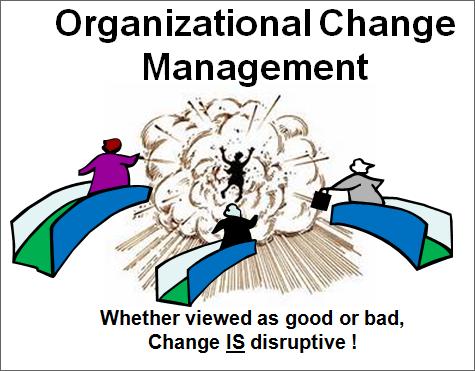
Change IS Disruptive, but Change Management Can Mitigate The Impact on Productivity
As a business leader, have you ever encountered the following challenges within your company:?
1. Implemented new technology or IT system and people failed to adopt & fully utilize it?
2. Implemented new processes and ways of doing business and your employees continued to follow the older methods?
3. Your competition continually seems to be evolving and innovating, developing new and more effective ways of doing business, while your company culture resists change and new ways of doing business?
The remainder of this blog is dedicated to sharing some of the techniques to get your organization to embrace and be supportive of change. These change management techniques are based on my years of implementing change at organizations like Macy’s, American Express, Intuit, AT&T, Pfizer, Bristol-Myers Squibb, Oracle, CBS Interactive, Wells Fargo, and numerous other Fortune 500 companies.
Topics in this blog:
1) What is Change Management – A Simple Definition
2) Why is it Important?
3) Why is change resisted by so many employees?
4) Do all employees approach change the same way and how do you harness the power of the innovators and change ‘early adopters’?
5) How Change Management Helps Accelerate Change
6) Change Management Mitigates the Impact on Productivity while Implementing Change
7) The Organizational Change Model Facilitates Change Success & Greater Business Results
8) Steps in the Organizational Change Model Ensure Change Project Success
9) The Importance of the eight (8) Change Management Steps
10) Summary – Change Management & Innovation Requires a 360°, holistic approach driven by skilled and experienced change management professionals
1) A simple definition of what change management is:
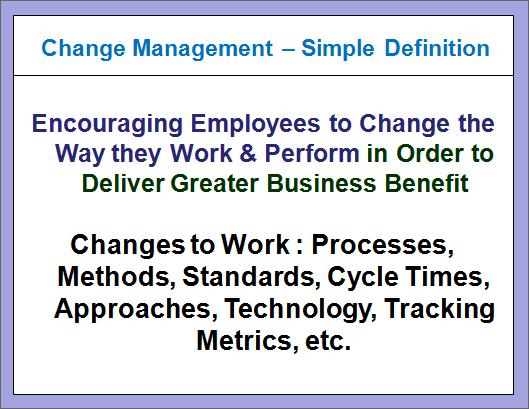
A Simple Definiton for Change Management
2) Why is change management so important?
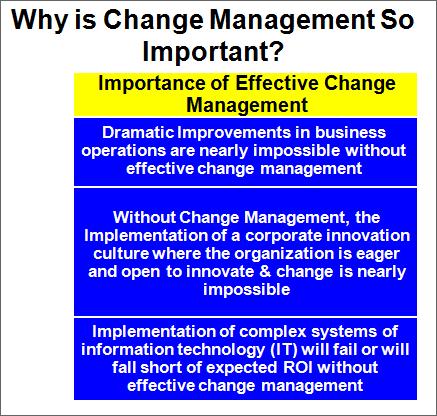
Why Is Change Management So Important?
3) Why is change resisted by many employees?
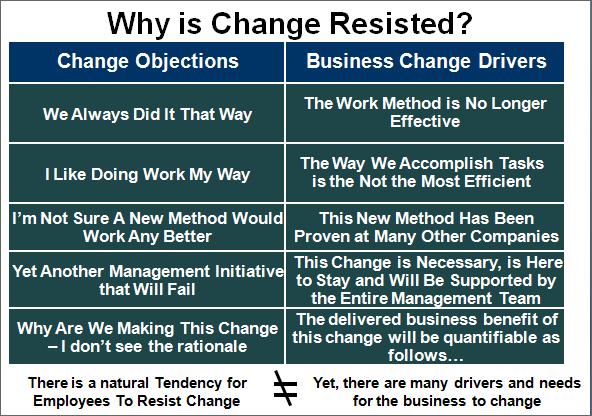
Why is change resisted by many employees?
Bottom Line: Without proper education and motivation, change is naturally resisted within the workplace by all but a few.
4) Do all employees approach change the same way?
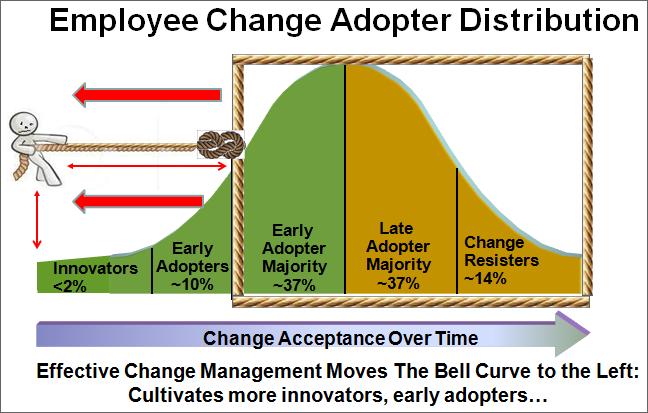
Employee Change Adopter Curve
As depicted by the above chart, employees range from ardent resisters to innovators. Change management solicits the support from innovators and early adopters to help diffuse organizational change to the remainder of the organization.
5) How Change Management Helps Accelerate Change
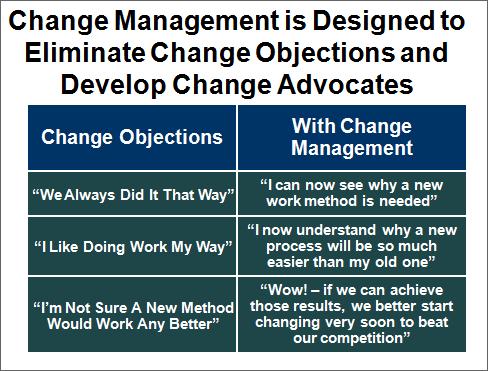
How Change Management Helps Accelerate Change
Change management not only removes obstacles to change, it helps develop enthusiasm and excitement for accelerated change in the future.
6) Change Management Mitigates the Impact on Productivity While Implementing Change
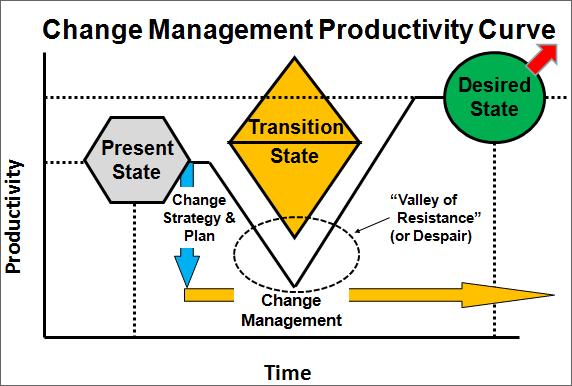
Change Management Productivity Curve
By having a robust change management methodology and plan, disruptions to business productivity can be minimized until the desired change state is achieved.
7) The Organizational Change Model Facilitates Change Success & Greater Business Results
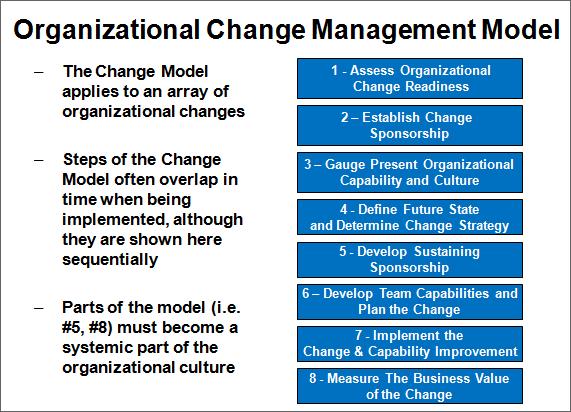
Organizational Change Management Model
By having a robust change management methodology and model, change success and enhanced business performance can be nearly guaranteed.
8) Steps in the Organizational Change Model Ensure Change Project Success
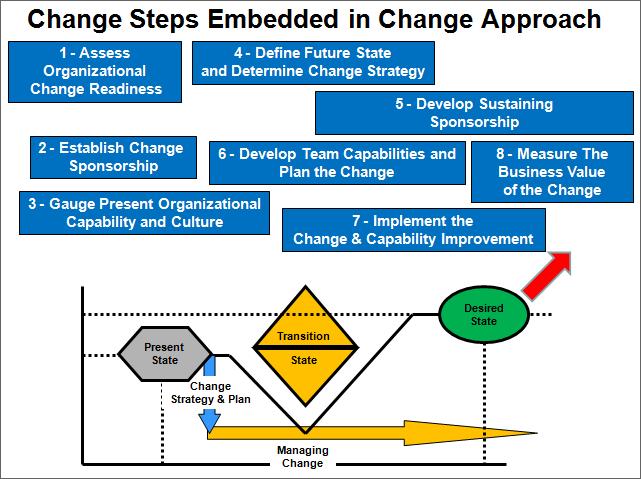
Change Steps in The Change Management Approach
Change projects must have clearly defined and measurable steps that align with the overall change methodology. This approach greatly enhances the chance that the change project will be successful as well as facilitates the achievement of desired-positive business outcomes.
9) The Importance of the eight (8) Change Management Steps
The next set of graphs highlight the importance of each step in the change management (project) process:
Step #1
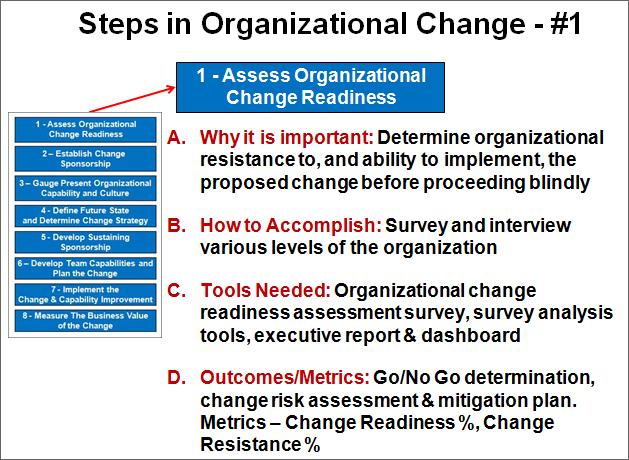
Change Management – Step #1
Step #2:
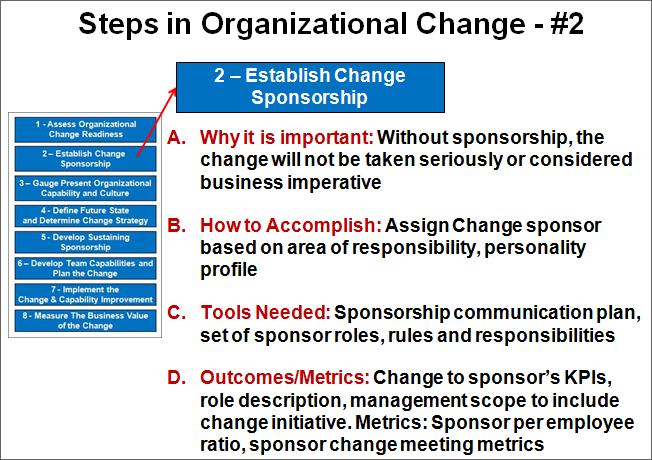
Change Management – Step #2
Step #3:
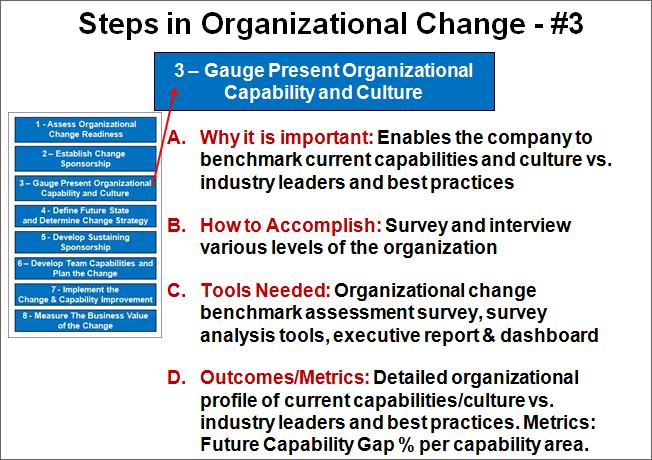
Change Management – Step #3
Step #4:
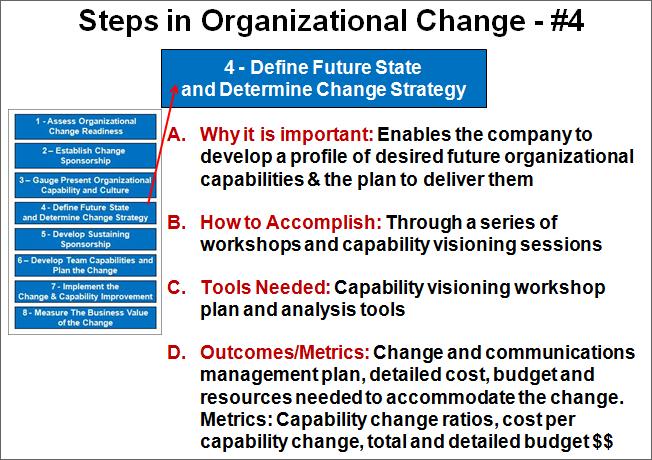
Change Management – Step #4
Step #5:
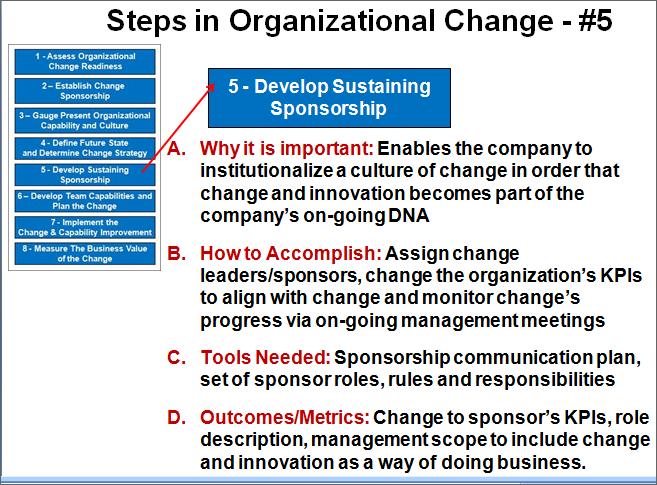
Change Management – Step #5
Step #6:
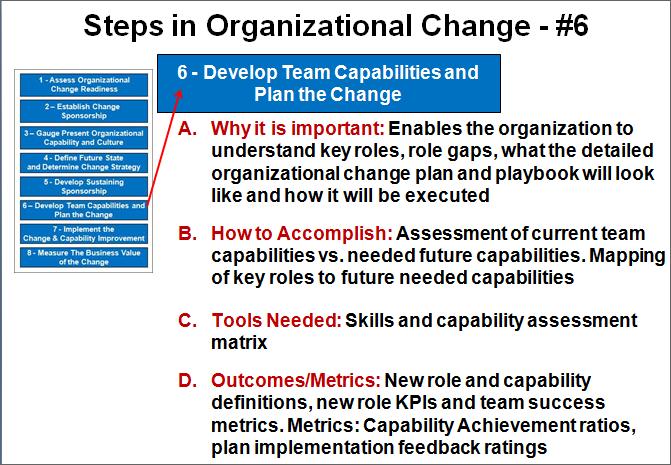
Change Management – Step #6
Step #7:
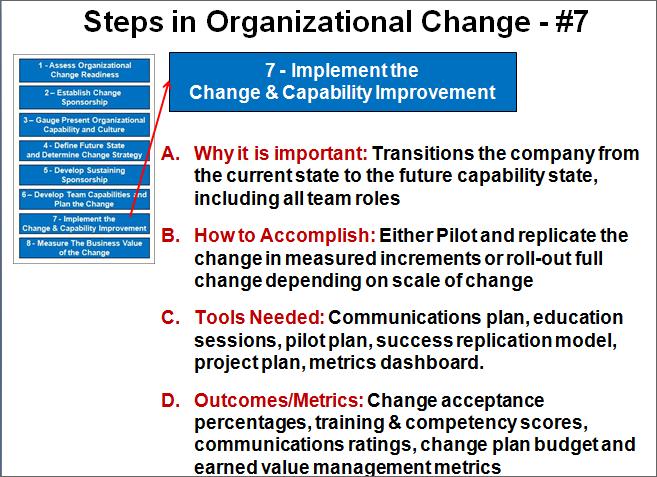
Change Management – Step #7
Step #8:
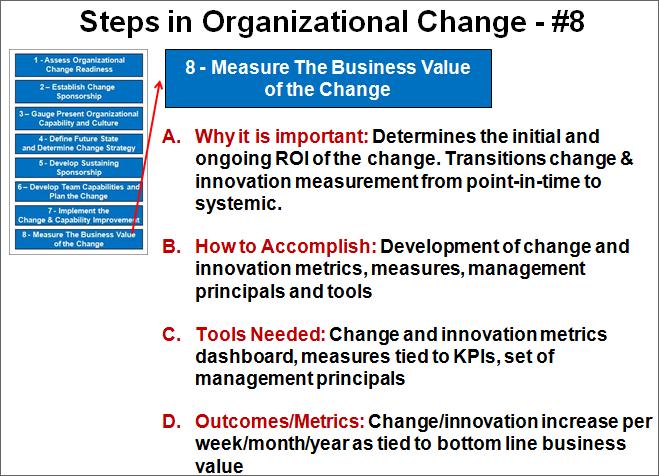
Change Management – Step #8
10) Summary – Change Management & Innovation Requires a 360°, holistic approach
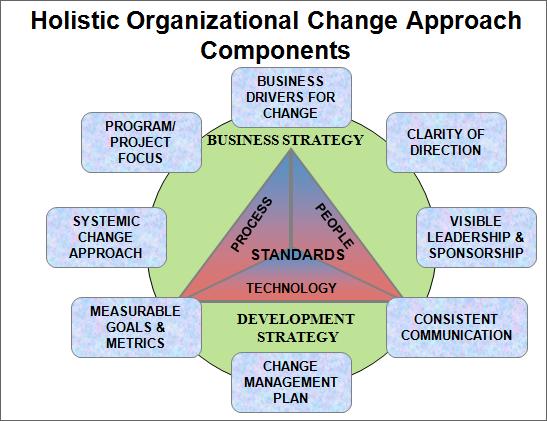
Holistic Organizational Change Components
In summary, change management requires leveraging a proven change methodology, skilled change management practitioners and a holistic approach to implementing corporate innovation and change. The above is a simple depiction of a best practice approach I have used on many change management projects at many of the Fortune 500 companies in the US.
