Believable or Bullshit? The Customer Reality Gap Behind Customer-Centric Companies
November 11, 2026 Leave a comment
Experiencing Customer Experience Gaps? – “Our Customer’s Come First, They Love us” – Believable or Bullshit?
THE EXECUTIVE DELUSION
Most organizations believe they are customer-centric.
Their customers often experience something very different.
Walk into almost any executive meeting and you’ll hear:
• “Our customers are our greatest asset.”
• “Our customers come first.”
• “The customer is always right.”
• “We deliver a warm, human touch.”
• “We know our customers.”
• “Our customers love us.”
On paper, these are exactly the right statements.
In practice, customers often experience:
• Repeated transfers
• Fragmented ownership
• Reactive service
• Disconnected systems
• Escalating frustration
• Operational friction disguised as customer care
Most companies do not intentionally create bad customer experiences.
But many are structurally incapable of delivering the experience they believe they are delivering consistently.
CUSTOMER EXPERIENCE GAPS, MEASUREMENT: BEFORE YOU READ FURTHER… TEST YOUR COMPANY
If you genuinely believe your organization is customer-first, validate it.
Not with branding.
Not with intent.
Not with internal dashboards.
With operational reality.
Several years ago, I created a Customer Centricity Test designed to help organizations evaluate how customer-oriented they actually are across culture, operations, responsiveness, accountability, and execution.
Customer Centricity Test Scoring Overview:
• 17–20 → Customer Fanatic
• 13–16 → Customer Committed
• 9–12 → Customer Reactive
• 5–8 → Customer Lip Service
• 0–4 → Customer Churn Engine
Take the customer centricity test here: The Customer Centricity Test – How Customer Oriented is **YOUR** Company or Organization? – http://goo.gl/i3I6CW
But there is an important warning.
Most organizations self-score themselves too high.
Not because they are dishonest.
Because they are grading their own exam.
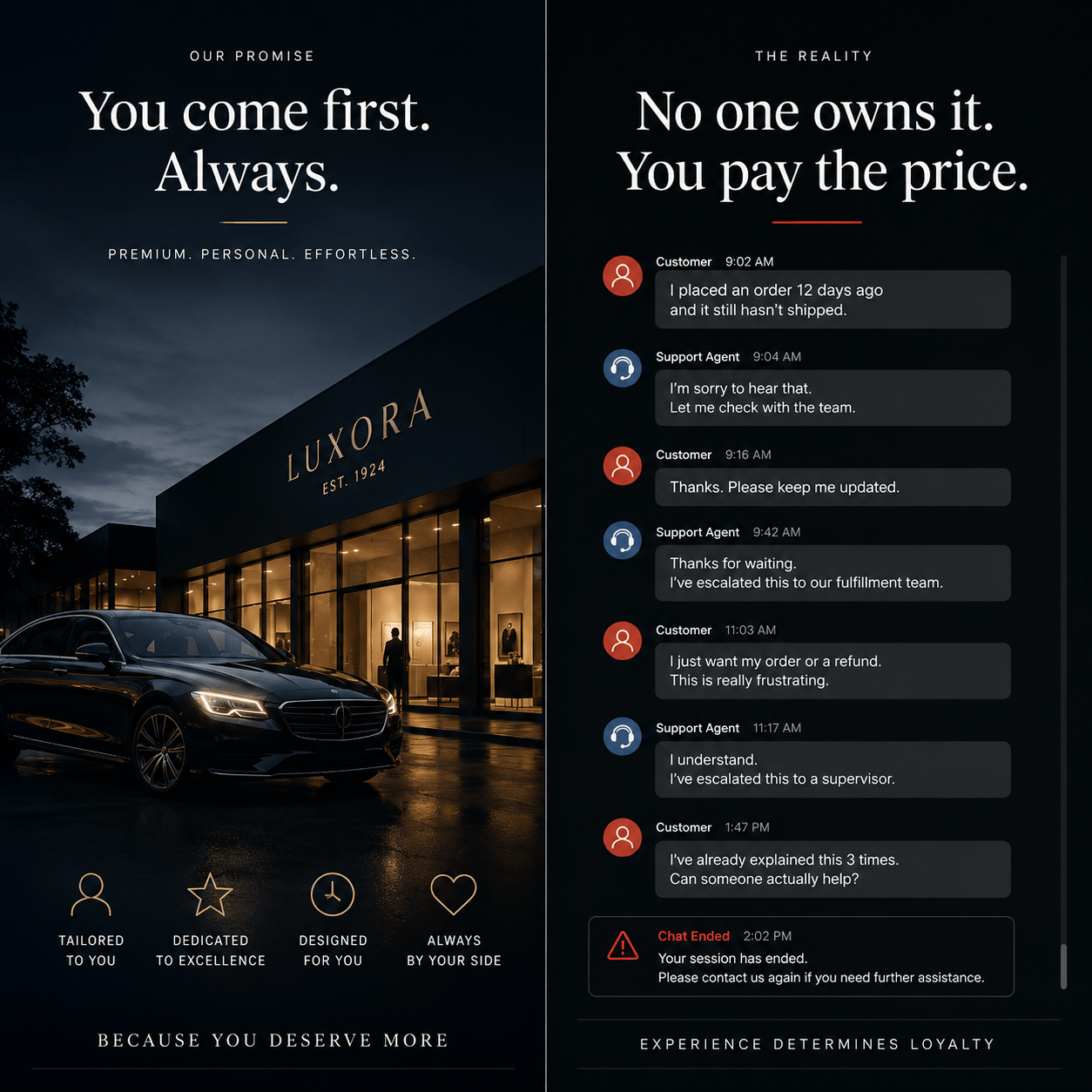
THE CUSTOMER REALITY GAP
There is a massive divide between:
What Companies Believe:
“We are customer-first.”
…and:
What Customers Experience:
“Inconsistent, reactive, fragmented, frustrating.”
This is not a branding problem.
It is an operational reality problem.
THE DASHBOARD ILLUSION
Many leadership teams genuinely believe they are customer obsessed.
Their dashboards are green.
Their metrics look stable.
Their SLAs appear acceptable.
But dashboards often measure operational efficiency — not customer reality.
Customers experience:
• Escalation loops
• Repeated explanations
• Reactive support
• Disconnected handoffs
• Ownership confusion
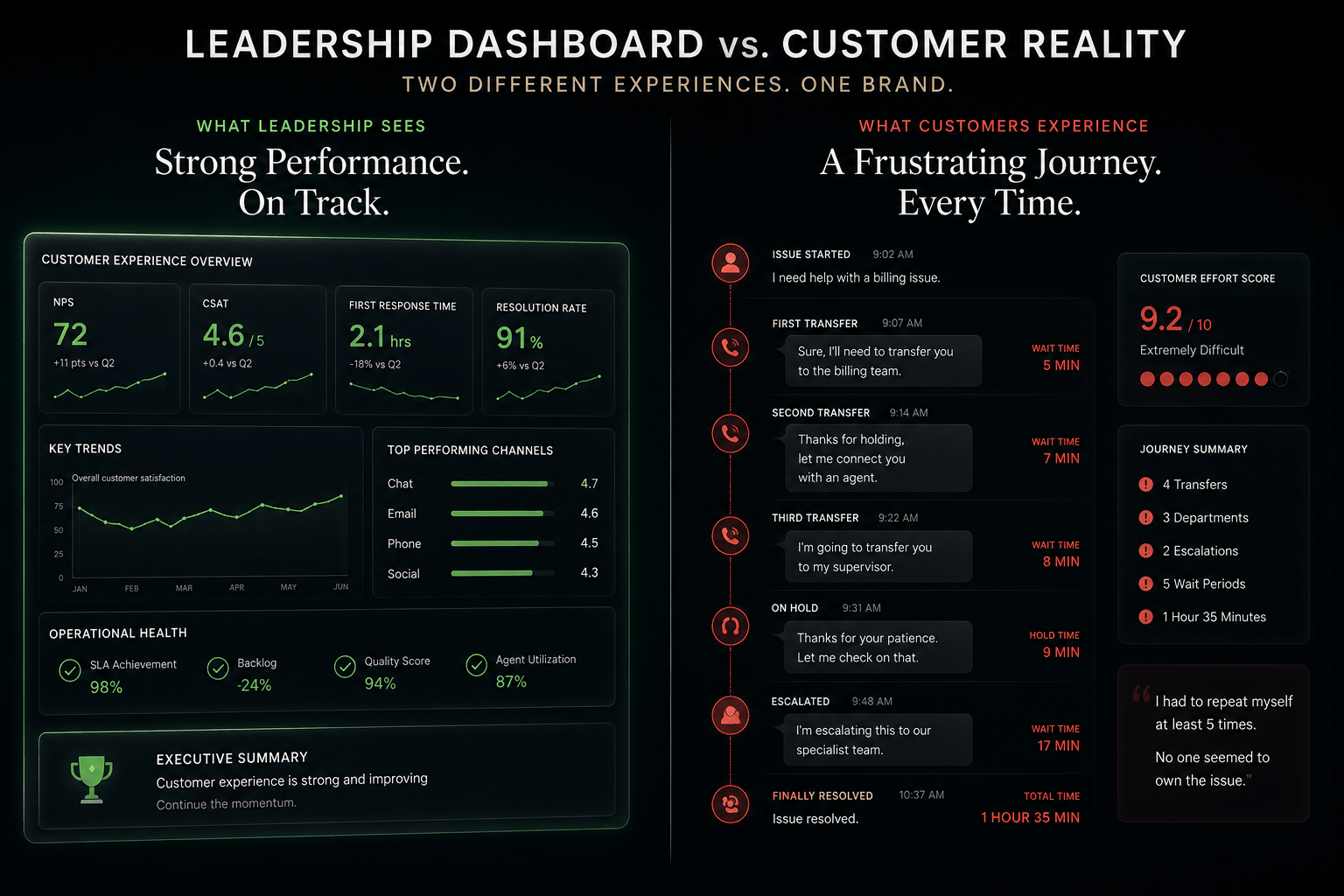
Executives often see summarized performance indicators.
Customers experience the operational reality underneath those indicators.
That gap is where loyalty erosion begins.
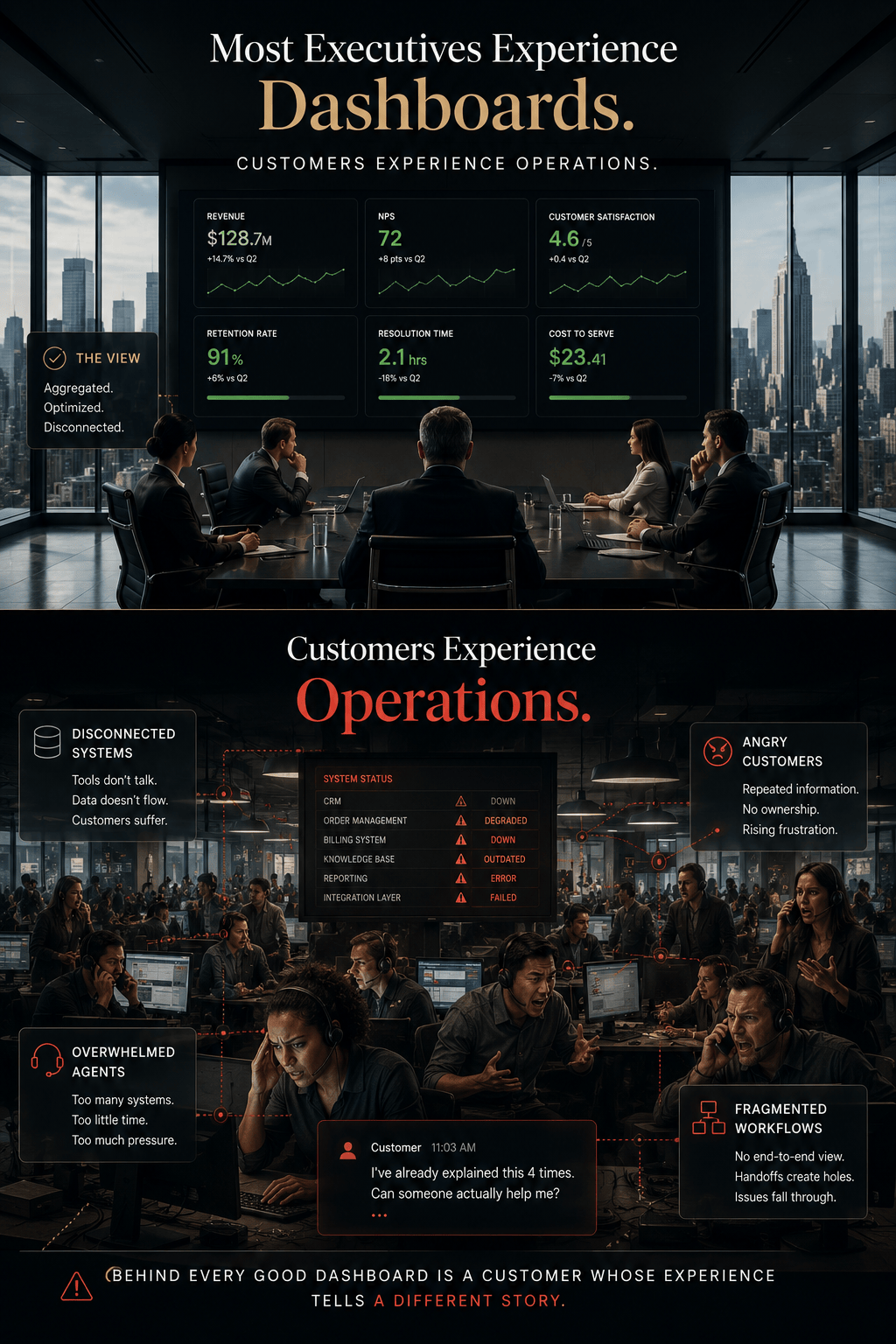
Behind many “green” dashboards sits a customer journey filled with friction, escalation, confusion, and inconsistent execution.
THE COST OF EXECUTIVE DISTANCE
Leadership teams experience:
• Summaries
• Escalations
• Reporting
• Dashboards
Customers experience:
• Operational fragmentation
• Delays
• Inconsistent execution
• Organizational silos
The farther leadership becomes from operational friction, the more dangerous the blind spots become.
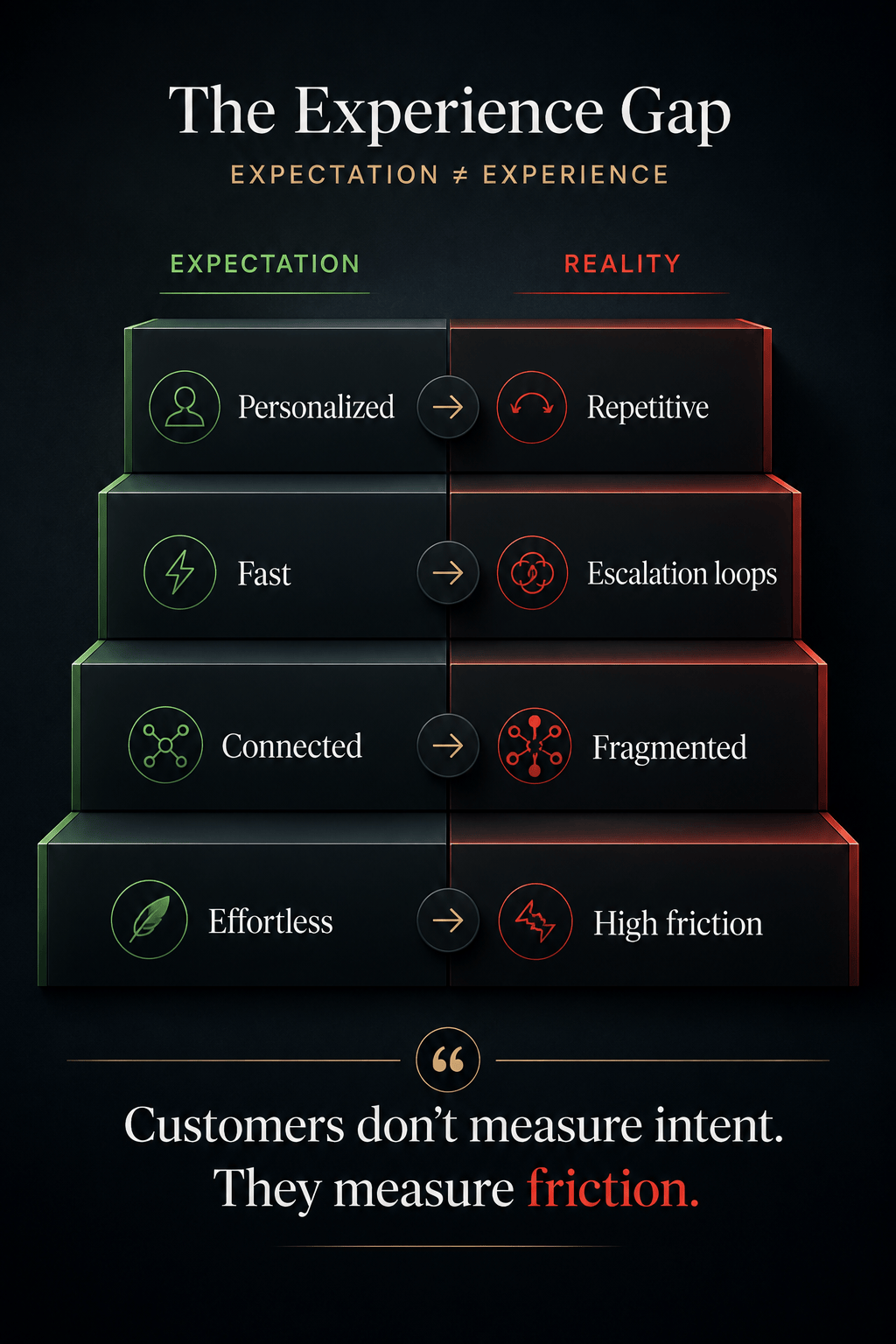
Customers do not measure intent.
They measure friction.
That distinction is critical.
CUSTOMERS EXPERIENCE OPERATIONS — NOT MISSION STATEMENTS
Most organizations believe customer experience is driven primarily by:
• Branding
• Training
• Friendliness
• Service culture
It is not.
Customer experience is the byproduct of:
• Process design
• System integration
• Workflow architecture
• Escalation logic
• Accountability structure
When those systems break, customers feel the breakdown immediately.
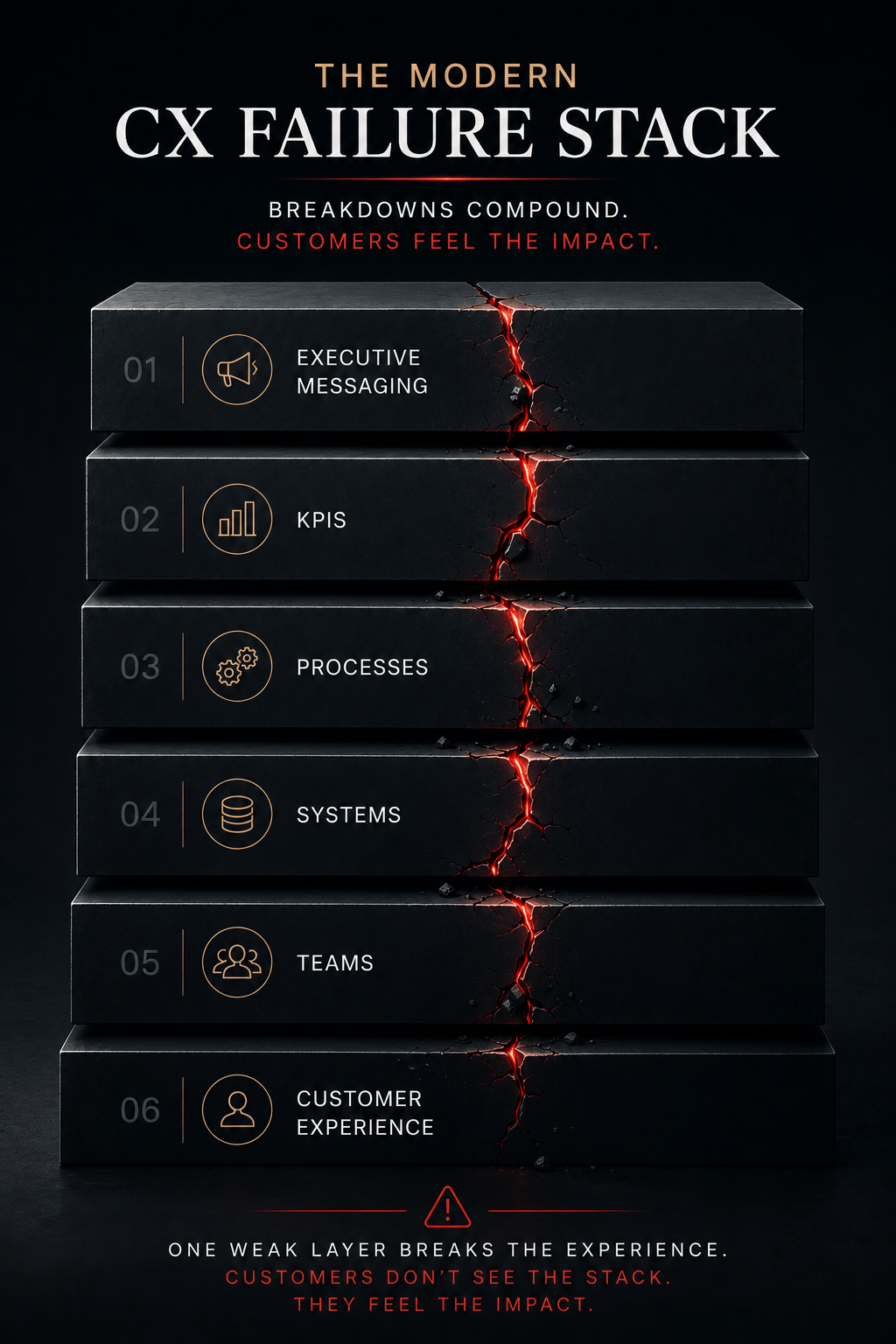
Customer experience failures rarely originate from a single breakdown.
They compound across layers of the organization.
Leadership messaging disconnects from KPIs.
KPIs disconnect from workflows.
Workflows disconnect from systems.
Systems disconnect from teams.
Eventually customers experience the cumulative failure of the entire operational stack.
WHY THIS HAPPENS
Across industries, the same patterns repeatedly emerge:
• Siloed teams
• Fragmented systems
• Reactive operations
• Cost-driven optimization
• Executive blind spots
• Misaligned incentives
Most organizations optimize functions individually instead of optimizing the total customer journey.
The customer becomes the integration layer between disconnected departments.
That is where friction begins.
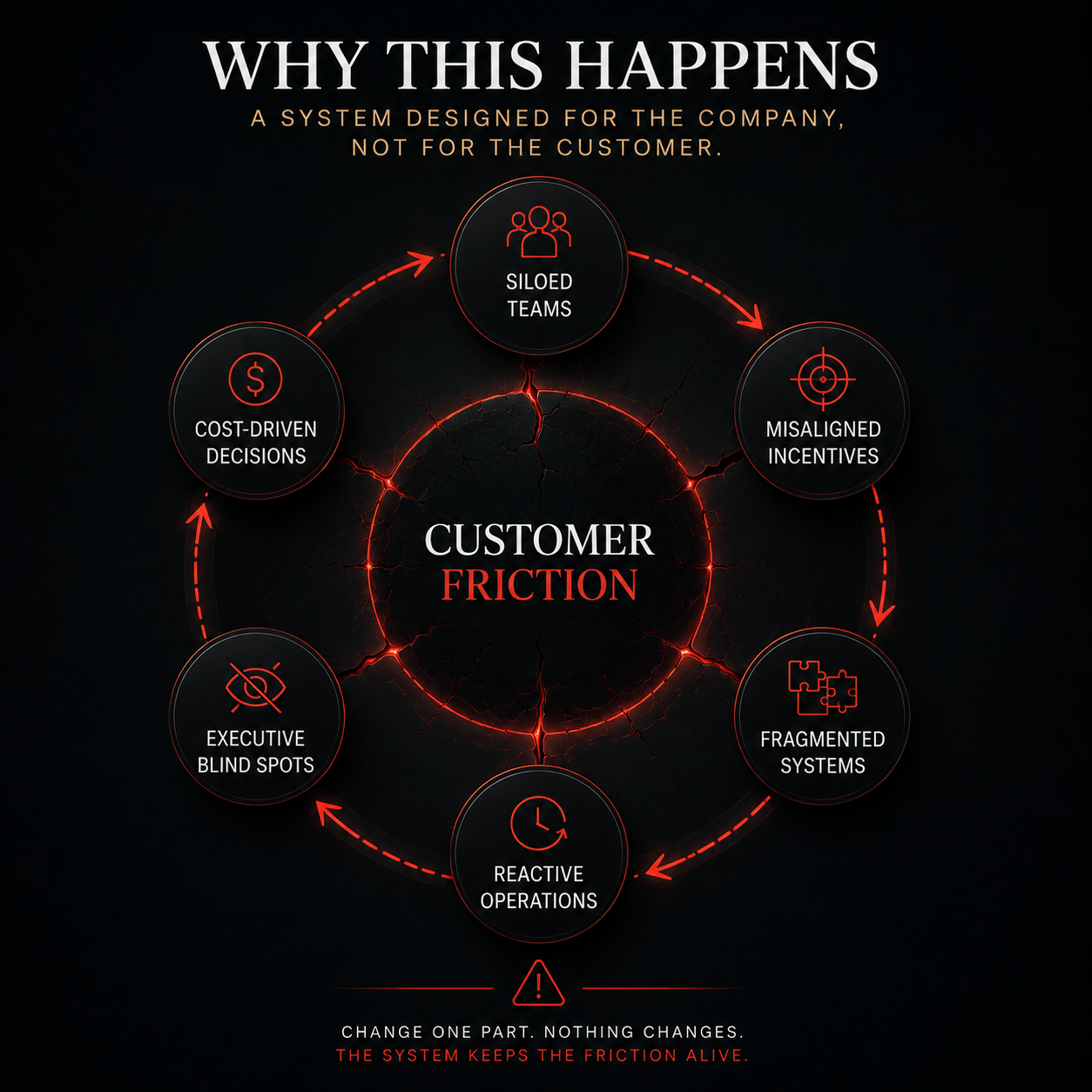
Customer friction is rarely caused by a single department.
It is usually the result of multiple disconnected decisions interacting together operationally.
MOST COMPANIES ARE GRADING THEIR OWN EXAM
This is one of the most dangerous dynamics in customer experience.
Organizations often evaluate themselves using:
• Internally defined KPIs
• Internally interpreted dashboards
• Internally reported outcomes
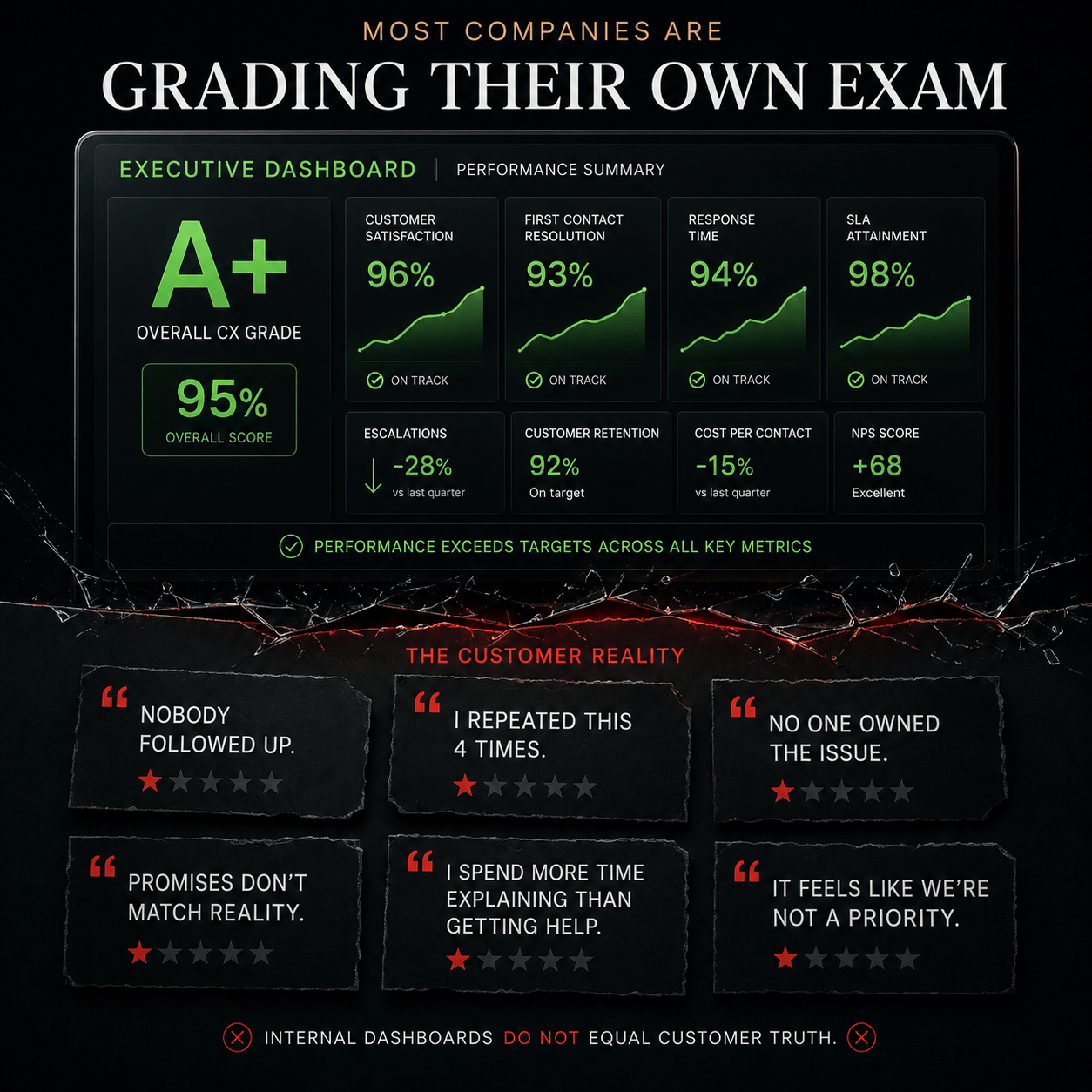
The problem:
Internal reporting does not equal customer truth.
Meanwhile customers are saying:
• “Nobody followed up.”
• “I repeated this 4 times.”
• “No one owned the issue.”
• “The company sounded premium. The experience didn’t.”
These are not isolated complaints.
They are operating model signals.
CUSTOMER EXPERIENCE GAPS – THE INDEPENDENT CUSTOMER QUALITY AUDIT
Most organizations have no independent mechanism for validating customer reality.
That is the missing discipline.
An Independent Customer Quality Audit evaluates:
• Operational consistency
• Customer effort
• Ownership clarity
• Escalation effectiveness
• Cross-channel continuity
• Friction patterns
• Revenue risk exposure
This is not about surveys.
It is about operational truth discovery.
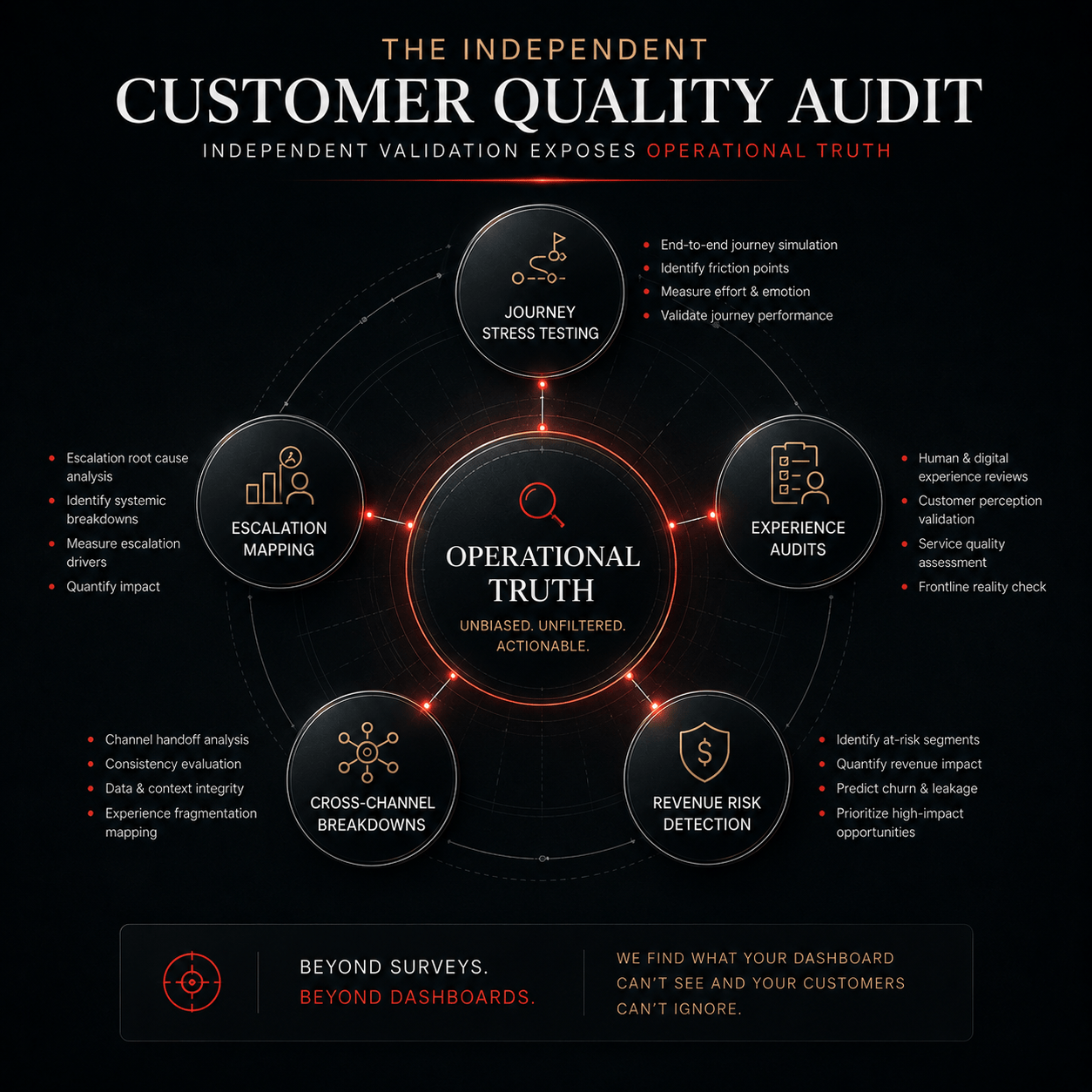
Most customer experience programs rely heavily on surveys, dashboards, and internal reporting.
The problem is that none of those mechanisms independently validate operational reality.
Organizations need a structured way to pressure test the actual customer journey:
• Where friction occurs
• Where ownership breaks down
• Where escalations fail
• Where trust erodes
• Where revenue leakage begins
This type of audit exposes the operational mechanics creating customer frustration underneath the surface.
CUSTOMER EXPERIENCE GAPS: WHAT ACTUALLY GETS MEASURED
Most organizations measure operational efficiency.
Customers measure emotional experience.
Organizations focus on:
• AHT
• SLA attainment
• Queue time
• Cost per contact
Customers evaluate:
• Effort
• Trust
• Ownership
• Confidence
• Emotional friction
These are not the same metrics.
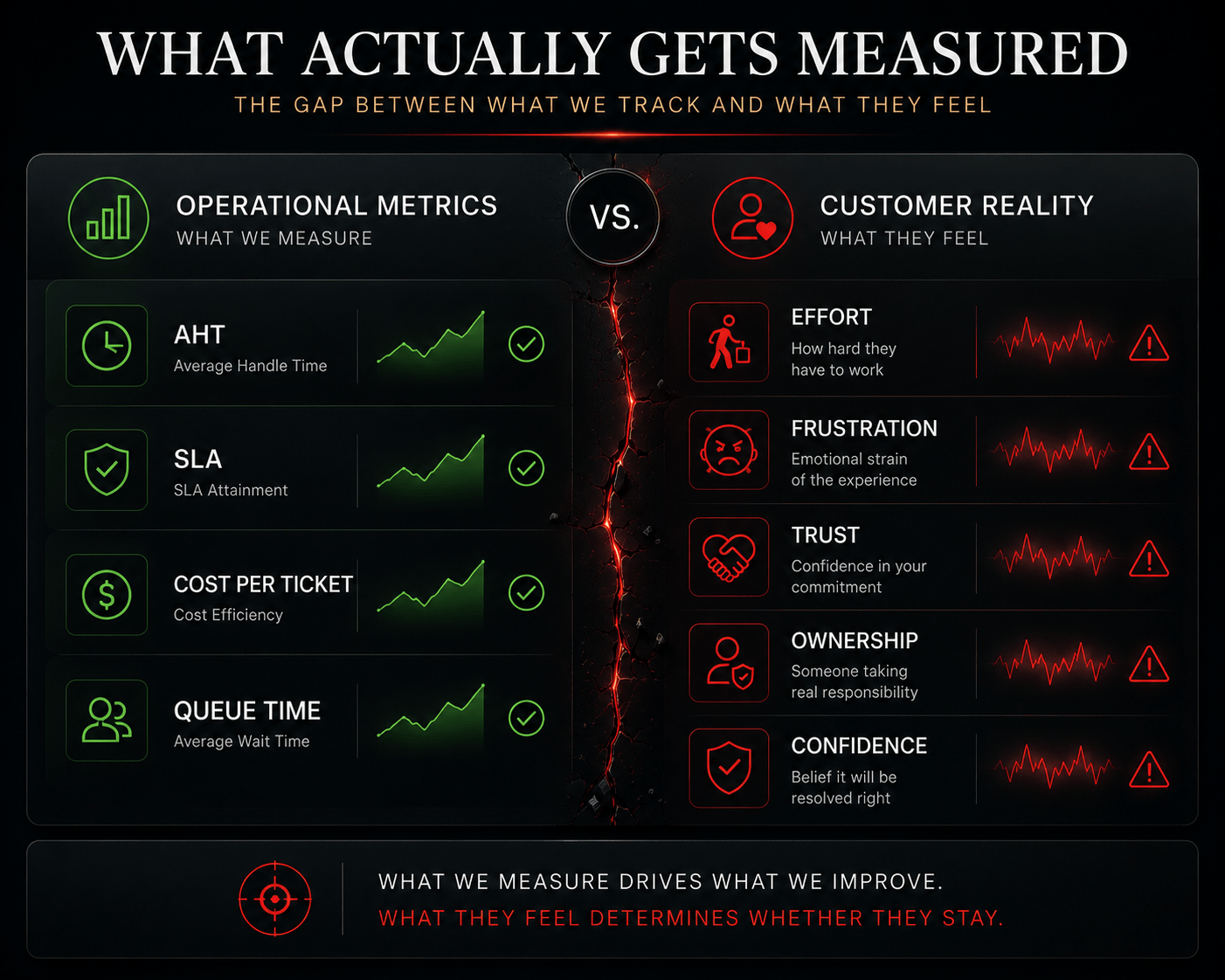
What companies measure drives what they optimize.
What customers feel determines whether they stay.
CUSTOMER FRICTION IS A REVENUE PROBLEM
Poor customer experience is not neutral.
It silently destroys:
• Retention
• Expansion
• Advocacy
• Trust
• Lifetime value
Most churn develops gradually through:
• Onboarding friction
• Delayed adoption
• Unresolved escalations
• Reduced trust
• Operational inconsistency
• Emotional fatigue
By the time churn appears in reporting, the customer often made that decision long before.
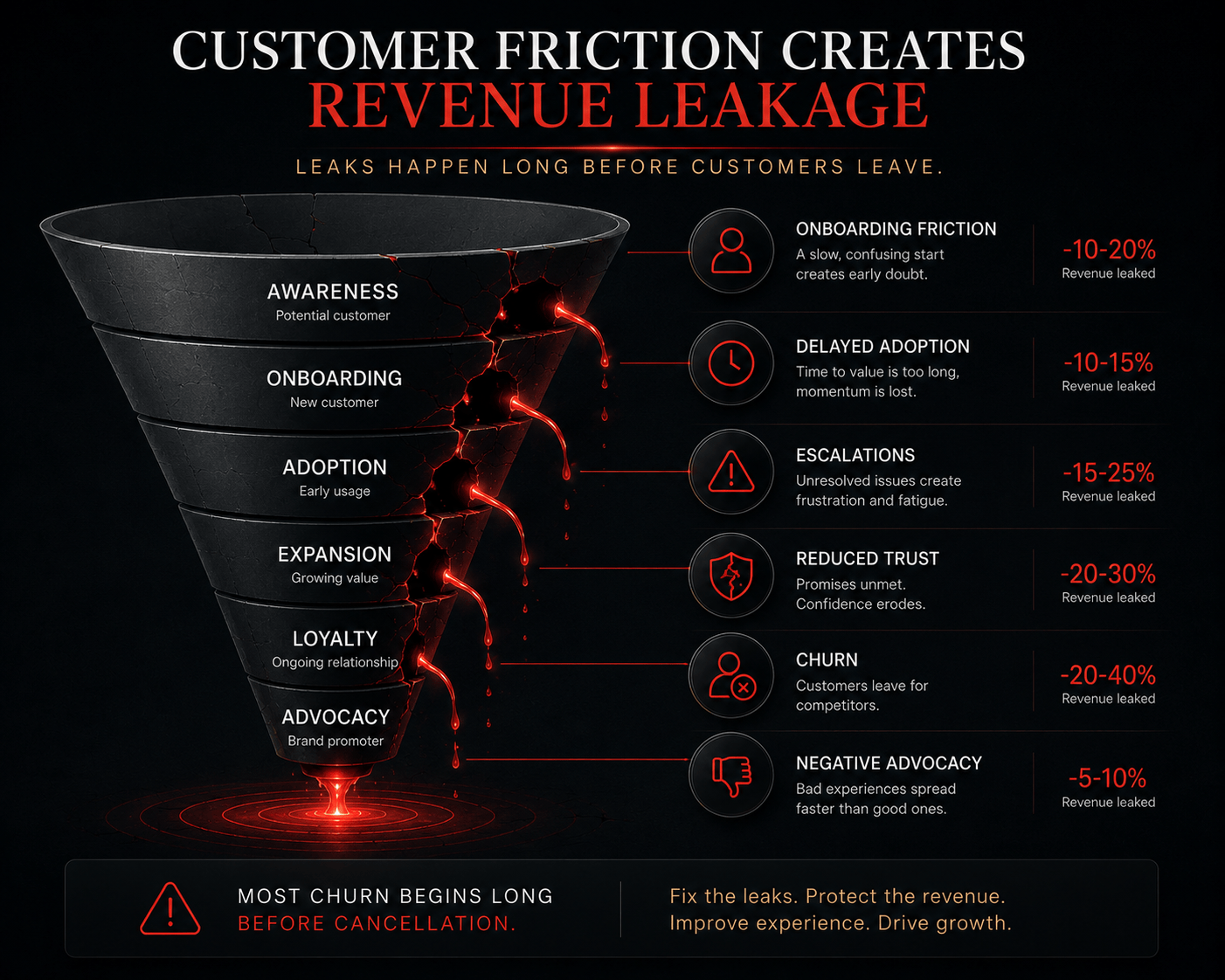
Most revenue leakage begins long before cancellation occurs.
Customers emotionally disengage before they formally churn.
FINAL THOUGHT
Most companies do not have a customer experience problem.
They have a customer reality problem.
They believe they are delivering something they are not structurally capable of delivering consistently.
Customers do not experience your mission statement.
They experience your operating model.
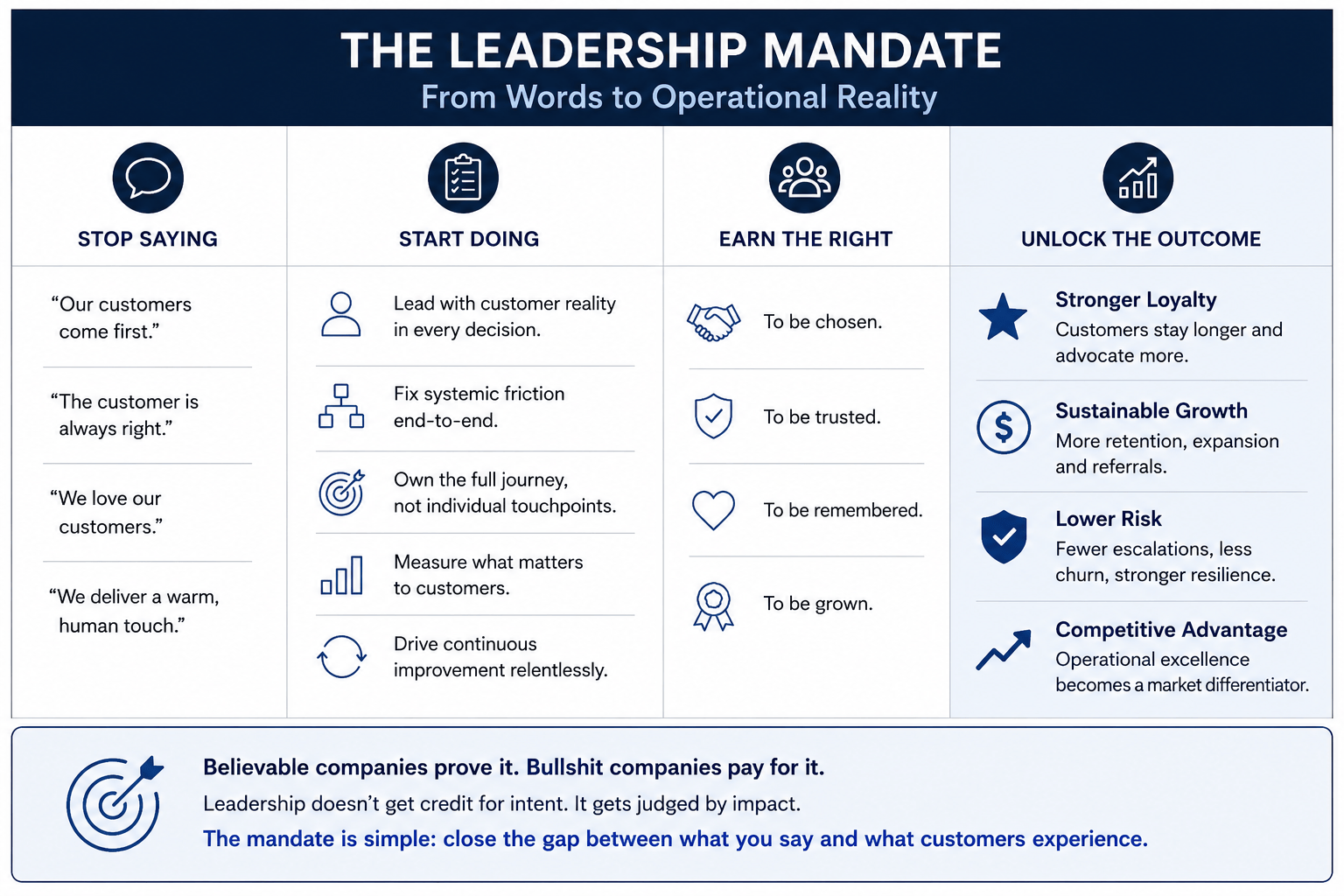
Until organizations independently validate operational reality instead of self-reporting customer centricity…
customers will continue calling customer experience gaps exactly what it is:
Bullshit.
Interested in conducting a customer experience independent audit to see how your customer really perceive your brand and service delivery? Contact Customer Experience strategist Steve Jeffes at stevenjeffes@gmai.com or 518-339-5857.
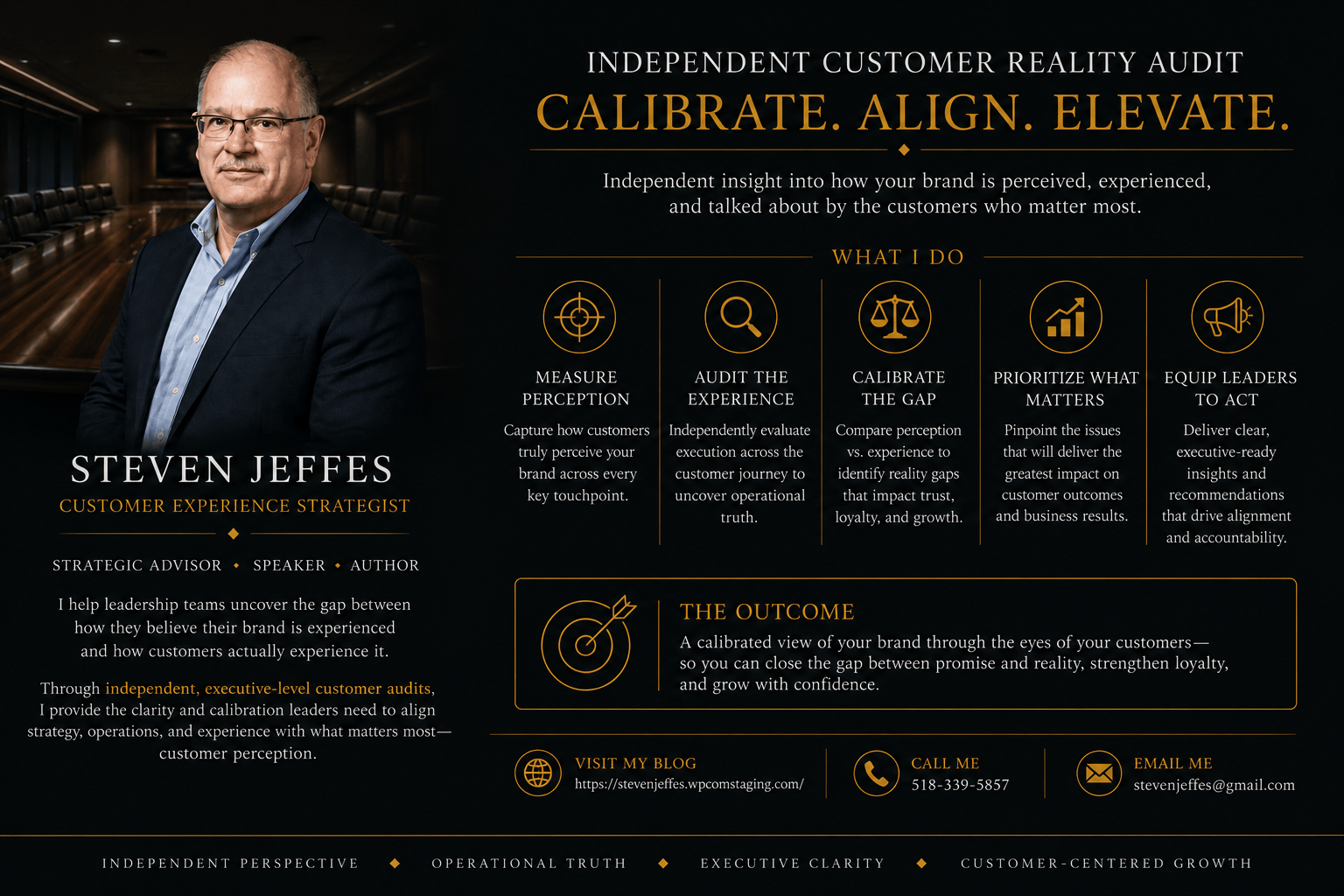
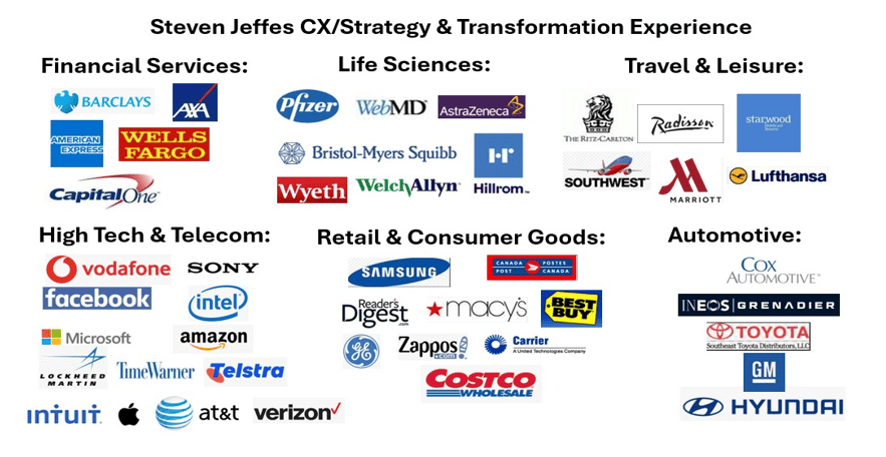
Below is a small sample of the companies I have helped elevate their customer experience to best in class.
For Additional Information on this topic, please refer to:
- The Perception Gap: Leaders widely overestimate how satisfied customers are or how well their service performs compared to direct consumer feedback. https://thefinancialbrand.com/news/customer-experience-banking/five-critical-gaps-in-banks-customer-experience-delivery-and-how-to-fix-them-188787
